
Track Sector De-risking and the Great Rotation in Latest News Stock Market Trends
Our latest news stock market coverage starts by monitoring sector-level capital flows rather than top-line index moves alone. When growth valuations get stretched and macro conditions turn volatile, capital moves toward businesses with visible cash flows, stable balance sheets, and dividend cushions.
On October 15, 2026, the Dow Jones Industrial Average gained 533 points (1.0%), while the tech-heavy Nasdaq Composite dropped 0.1% after tumbling more than 1% earlier in the trading day. Rather than pulling capital out of equities altogether, institutional investors reallocated funds into traditional industrial giants, consumer staples, and healthcare providers.
Keeping up with fast-moving changes in the latest news, stock market analysts track how capital flows across sectors rather than simply watching top-line index movements.
| Sector / Asset Class | Daily Performance (Oct 15, 2026) | Primary Driver | Market Stance |
|---|---|---|---|
| Dow Jones Industrial Average | +1.0% (+533 pts) | Rotation into value, healthcare, and retail | Defensive accumulation |
| Nasdaq Composite | -0.1% (Pared >1% drop) | AI debt fears and semiconductor sell-offs | Selective de-risking |
| 10-Year U.S. Treasury Yield | Fell to 5.10% | Safe-haven inflows and yield locking | Flight to quality |
| iShares Semiconductor ETF (SOXX) | Negative (8th straight drop) | Asian foundry pullbacks and supply concerns | Extended correction |
| Russell 2000 Index | In correction (-11% from peak) | High borrowing costs and debt refinancing | High vulnerability |
Evaluating AI Debt Pressures for Latest News Stock Market Followers
The primary catalyst behind the recent pullback in the artificial intelligence trade is capital expenditure financing. Over the past two years, AI infrastructure startups and cloud providers relied heavily on debt financing to procure high-end GPUs, build specialized data centers, and secure power capacity.
Markets grew skeptical of these leverage levels. A clear example occurred when CoreWeave shares tumbled more than 15% on October 14, 2026. Investors grew concerned about the firm’s debt-heavy balance sheet and questioned whether its revenue growth could scale quickly enough to cover rising interest expenses in a 5%+ rate environment.
At the same time, top-line AI spending remains substantial. Anthropic reported that its quarterly revenue expanded to $16.8 billion in the third quarter of 2026, up from $11.6 billion in the second quarter.
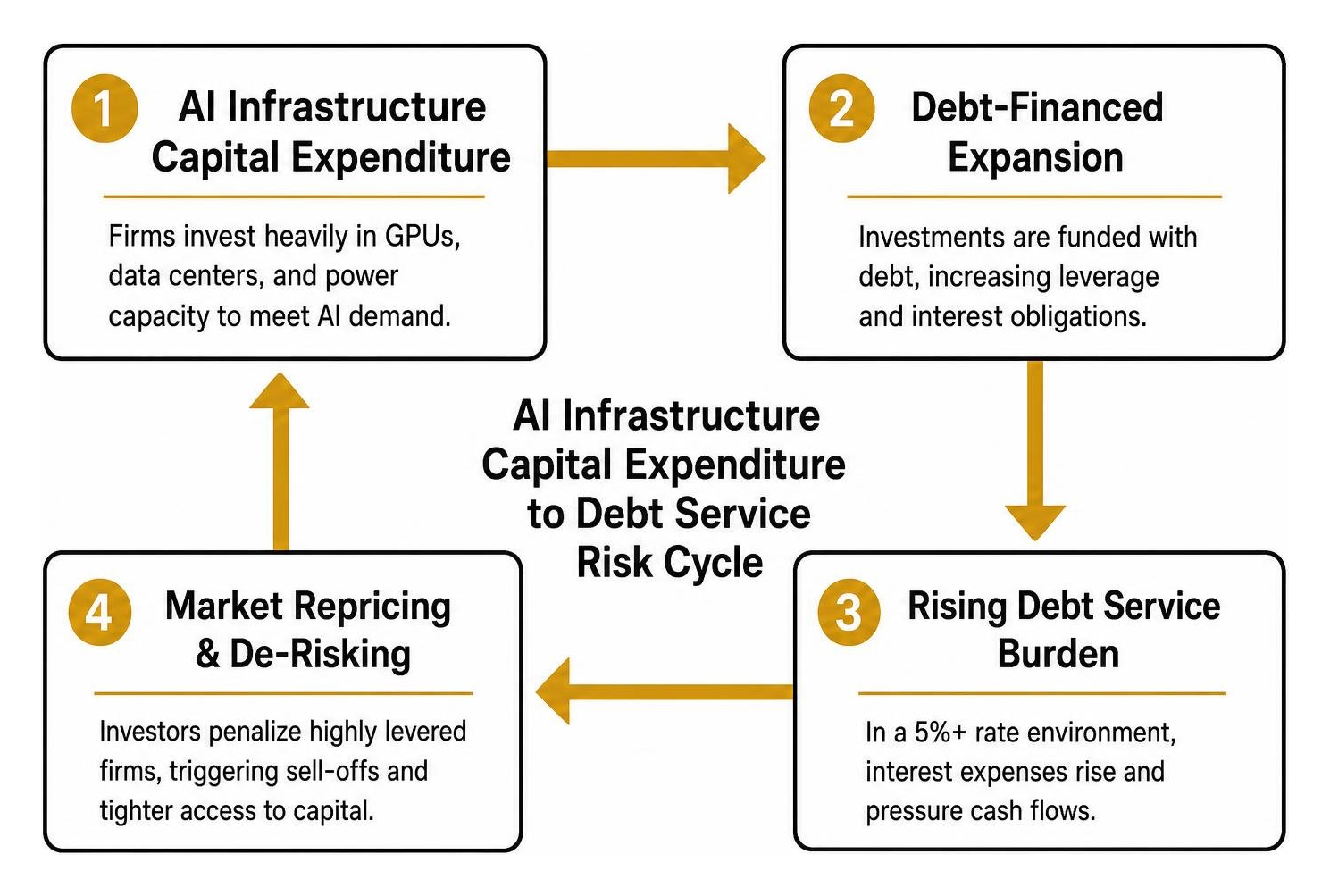
While operational demand for advanced models continues to rise, equity markets are penalizing balance sheets loaded with high-interest obligations.
Monitoring Market Breadth Beyond Mega-Cap Tech
Market breadth has quietly improved beneath the surface of the tech drawdown. When mega-cap tech stocks pulled back, sectors like consumer retail, banking, and pharmaceuticals picked up the slack. Companies like Walmart and Crocs posted notable gains, while defensive healthcare names absorbed substantial capital.
However, smaller firms are feeling the squeeze. As we explore in our analysis of Russell 2000 small caps, the index slipped into correction territory on October 14, 2026, down 11% from its record close on August 14. Small-cap firms carry a higher proportion of floating-rate debt compared to large-cap operators, making them far more vulnerable when benchmark interest rates remain elevated.
Decode Macro Inflation Signals and Treasury Yield Shifts
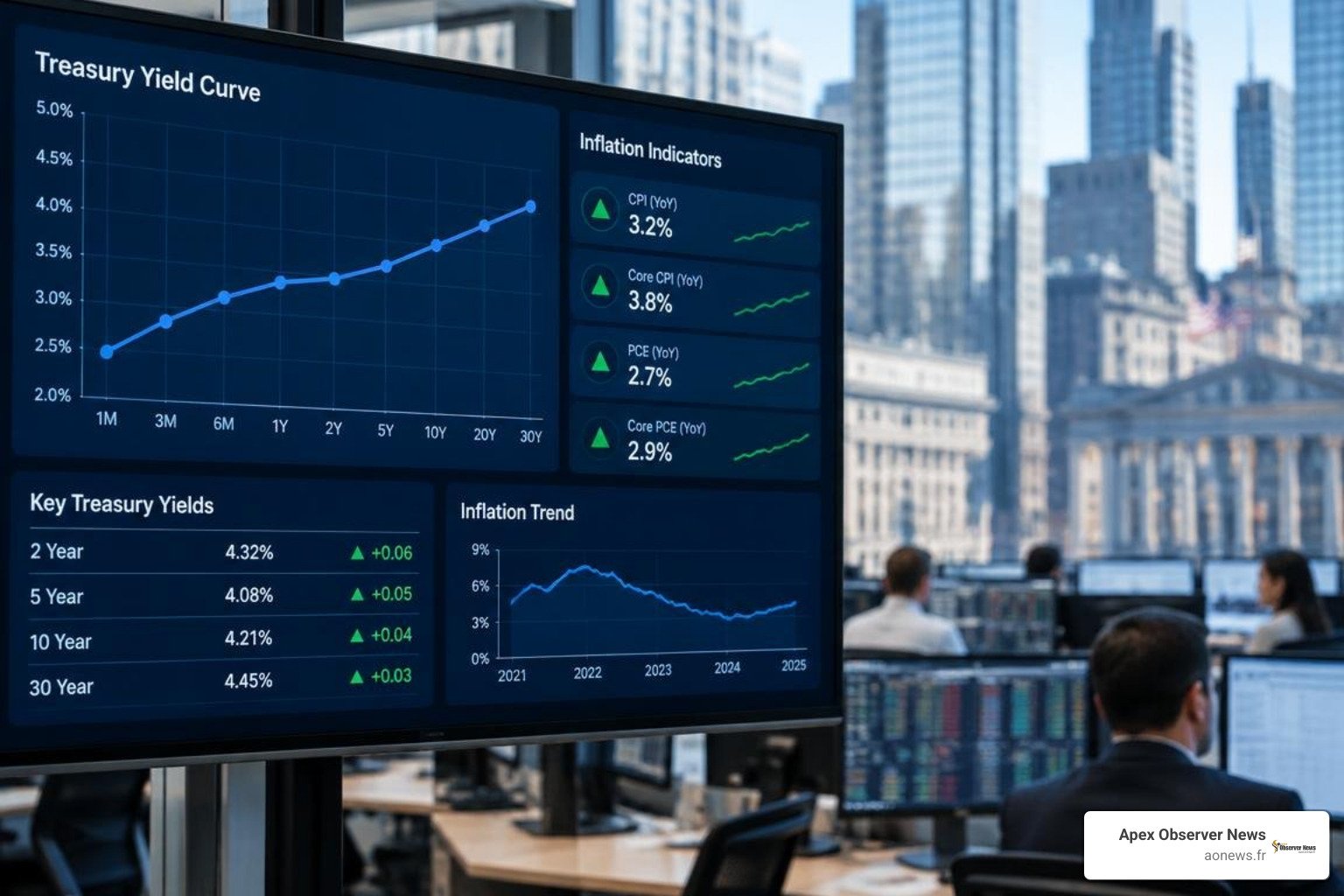
Understanding modern equity movements requires watching debt markets. Treasury yields serve as the discount rate for all financial assets; when yields climb, the present value of future corporate earnings drops.
On October 15, 2026, the 10-year Treasury yield dropped to 5.10%. Investors stepped in to purchase long-term government debt as a hedge against equity market volatility and economic uncertainty. Tracking shifts in the bond market helps investors see how safe-haven allocations directly influence stock valuations.
Analyzing September PPI Surges and Rate Expectations
The wholesale inflation numbers released in mid-October delivered an unwelcome surprise for rate-cut optimists. The September producer price index (PPI), as tracked by the U.S. Bureau of Labor Statistics, surged 6.3% year-over-year—the largest 12-month advance recorded since December 2022.
Month-over-month, producer prices advanced by 1.3%, driven by higher energy, transportation, and industrial component costs. This sustained price pressure makes it difficult for the Federal Reserve to implement rapid interest rate reductions. As detailed in our macroeconomic reporting guides, elevated wholesale inflation tends to pass directly through to consumer prices over subsequent quarters, cementing a “higher for longer” policy stance.
Navigating Bond Yield Fluctuations and Small-Cap Pressure
The drop in the 10-year Treasury yield to 5.10% provided relief to large-cap indices like the S&P 500 and Dow Jones, but broader financial conditions remain restrictive.
When benchmark yields stay above 5%, corporations must refinance maturing debt at significantly higher interest rates. Large balance-sheet tech titans with billions in cash reserves can weather these conditions easily, but leveraged AI startups and small-cap firms face mounting pressure.
Investors must distinguish between a temporary flight-to-safety drop in yields and a structural shift in central bank policy.
Analyze Global Semiconductor Turmoil and Cross-Border Spillover

Semiconductor equities are facing their most difficult period of the year. The iShares Semiconductor ETF (SOXX) fell for an eighth consecutive trading day in mid-October 2026, marking its longest uninterrupted slide since September 2015 and shedding over 15% of its value during that window.
Even blowout operational earnings have failed to lift sentiment. Taiwan Semiconductor Manufacturing Company (TSMC) posted record quarterly profits, yet its shares dipped 2% as traders locked in gains and prepared for broader supply-chain adjustments.
Tracking Asian Tech Sell-Offs in Latest News Stock Market Reports
Asian trading sessions experienced severe turbulence. On October 15, 2026, South Korea’s Kospi index plunged 7.57% to close at 5,554.22. Memory chip heavyweights absorbed the brunt of the damage:
- SK Hynix: Tumbled more than 11% in a single session.
- Samsung Electronics: Slumped nearly 10% amid rising Asian tech jitters.
Japan’s Nikkei 225 index retreated 4.9% to close at 64,425.95 during the same session. Beyond debt concerns, Asian chipmakers face intensifying domestic competition from Chinese semiconductor manufacturers, which have rapidly expanded their legacy and memory production capacities.
European Market Reactions and Geopolitical Energy Shocks
European exchanges also faced headwinds. Euro zone industrial production dropped further than economists projected, weighing on continental manufacturing and automotive shares. European chipmakers followed the downward trajectory set by their Asian counterparts.
Compounding these supply chain worries, geopolitical tensions escalated around the Strait of Hormuz. Disruptions to commercial shipping and ongoing Middle Eastern unrest have added an energy risk premium to global markets.
Understanding how oil prices impact equity stability is essential, as sudden crude spikes can increase transportation costs, feed into wholesale PPI figures, and compress corporate profit margins.
Master Real-Time News Filters and Portfolio Hedging Tactics
Navigating volatile markets requires a structured approach to filtering information. Relying on emotional reactions to single-day headlines often leads to poorly timed trades.
Here is our step-by-step framework for managing market volatility:
- Verify Through Multi-Source Feeds: Follow curated, real-time trading news feeds to cross-reference breaking economic releases against price action.
- Monitor Key Technical Benchmarks: Watch whether major indices maintain their 200-day moving averages during pullbacks. Sector breadth improves when equal-weighted indices hold support levels even while market-cap-weighted indices drop.
- Scrutinize Leverage and Debt Profiles: In a 5%+ yield environment, favor firms with low net-debt-to-EBITDA ratios, high free cash flow conversion, and limited near-term refinancing needs.
- Hedge via Asset Allocation: Balance high-growth technology holdings with defensive dividend payers, short-duration Treasurys, and energy commodities to protect against sudden market rotations.
- Practice Structured Position Sizing: Apply foundational online trading tactics by scaling into positions gradually rather than committing full capital during heightened volatility.
Frequently Asked Questions About Stock Market Volatility
Why are investors rotating out of tech and into the Dow and Treasurys?
Investors are locking in gains from high-multiple tech names and reallocating capital into defensive, cash-generative value stocks found in the Dow Jones. Concurrently, buying U.S. Treasurys provides a guaranteed yield above 5.0% while serving as a hedge against equity market drawdowns.
How are corporate debt concerns affecting AI stocks?
Building AI infrastructure requires significant capital expenditure. Companies like CoreWeave that took on heavy leverage to fund hardware acquisitions now face substantial interest expenses. As interest rates stay elevated, investors worry that debt servicing costs will outpace operational revenue growth, prompting valuation downgrades across the sector.
What does the 6.3% September PPI increase indicate for Fed policy?
A 6.3% year-over-year rise in the producer price index shows that wholesale pipeline inflation remains persistent. This limits the Federal Reserve’s room to cut interest rates in the near term, keeping borrowing costs high for both corporations and consumers.
Conclusion
The October 2026 market environment highlights the importance of dynamic portfolio management. While mega-cap AI and semiconductor stocks face a needed valuation and debt check, broader market breadth in value, consumer staples, and healthcare remains steady.
By balancing high-growth opportunities against macro realities—such as persistent 6.3% wholesale inflation and 5.10% Treasury yields—investors can navigate these market cycles with confidence.
For continuous, fact-checked reporting, breaking financial updates, and the latest news, stock market commentary is available through our comprehensive Apex Observer News business coverage.
