


Why the Best Emerging Tech Companies Matter in 2026
The best emerging tech companies in 2026 are building practical AI, robotics, biotech, fintech, and manufacturing tools that solve expensive real-world problems. Watch companies with clear customer demand, defensible technology, trusted partners, and evidence of momentum – such as rising adoption, major funding, or strong search interest.
This list highlights innovators in areas including:
- Enterprise AI: Models and agents that handle coding, legal work, compliance, and long documents.
- Robotics and hard tech: Automation for construction, infrastructure inspection, and complex metal-part production.
- Biotech: AI platforms that use large biological datasets to speed up drug discovery.
- Fintech: Smarter spend controls, data-powered consumer savings, and automated business workflows.
The signal is clear: investors and customers are moving beyond AI demos and toward products that reduce costs, save time, improve decisions, or make difficult work safer. Still, fast growth is not the same as long-term success. The companies most likely to last must manage privacy, safety, regulation, compute costs, hiring, and fierce competition while they scale.
I am Faisal S. Chughtai, founder of ActiveX, where I work across web and app development, digital marketing, SEO, and managed technology services. My experience tracking digital products and technology markets helps me assess the best emerging tech companies through both innovation and real-world business value.

Best emerging tech companies terms at a glance:
Breakthrough Sectors Defining the Best Emerging Tech Companies

The technological landscape of 2026 is defined by a distinct shift from raw computational capability to structural efficiency and real-world execution. Enterprise organizations are no longer satisfied with generalized generative models that produce inconsistent outputs or demand unsustainable inference costs. Instead, market differentiation now hinges on architectural ingenuity and physical application. As we analyze generative AI and the future of enterprise AI, the leaders pulling ahead are those resolving foundational compute bottlenecks, establishing deterministic physical automation, and unlocking long-context reasoning across massive industrial datasets.
Sub-Quadratic LLMs and Real-Time World Models
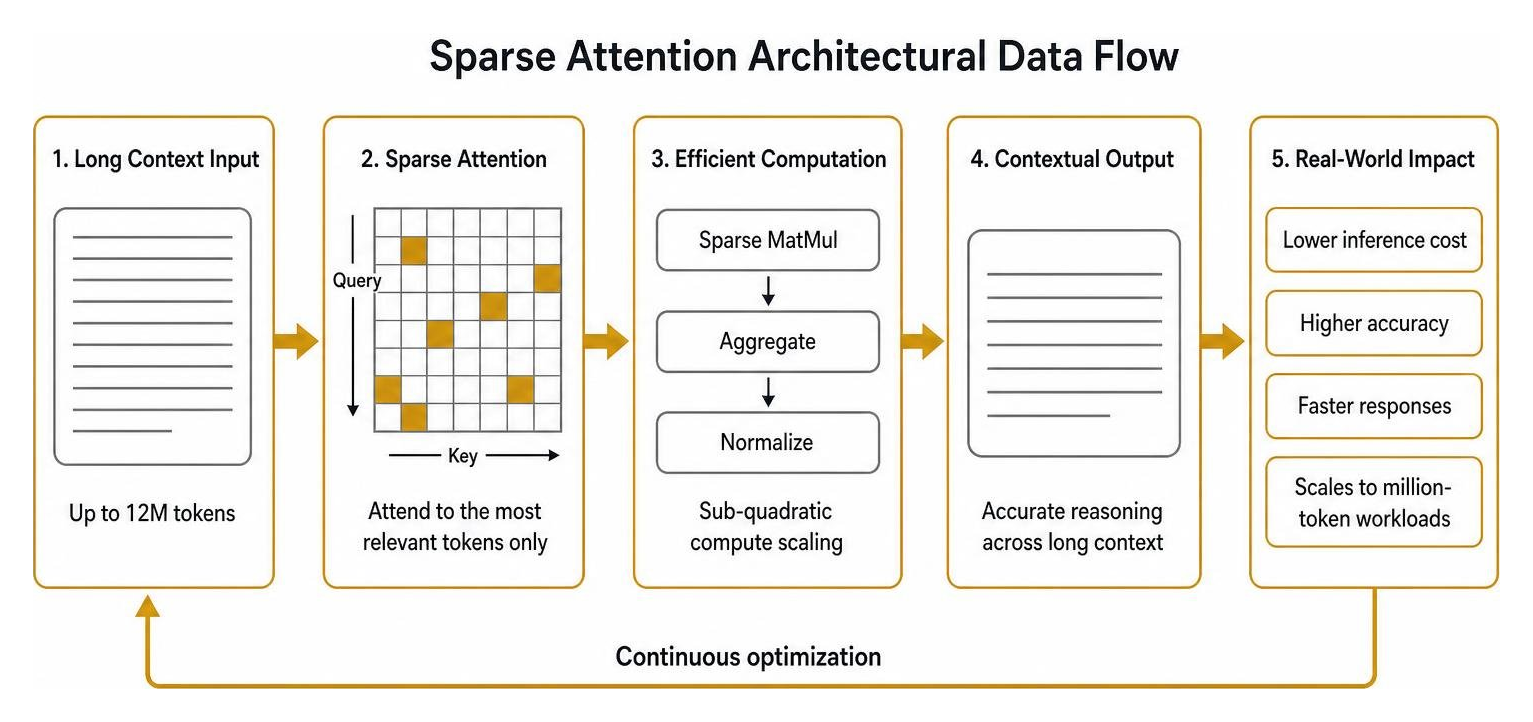
For years, standard Transformer architectures suffered from quadratic compute scaling: doubling the context window quadrupled the computational workload. That limitation made processing million-token codebases or multi-year legal archives commercially prohibitive.
Pioneering this architectural evolution is Subquadratic long-context reasoning, which utilizes sub-quadratic sparse-attention mechanisms. SubQ processes up to 12 million tokens in a single prompt at an impressive 150 tokens per second—slashing inference costs to just one-fifth of legacy frontier models. On complex retrieval benchmarks like MRCR v2 (8-needle, 1M context), SubQ achieves an 86.2% accuracy rate, substantially outperforming older benchmarks such as Gemini 3.1 Pro (26.3%) and Opus 4.6 (78.3%). It also posts an 81.8% success score on SWE-Bench, proving that efficient attention mechanics can analyze entire software repositories without loss of fidelity.
Simultaneously, the frontier of simulation has moved from static text generation to dynamic world modeling. Odyssey has introduced interactive world models through systems like Odyssey-2, generating minutes-long interactive simulations frame-by-frame with a latency of just 50 milliseconds per frame. Rather than stitching together short, disconnected video clips, these causal, multimodal models predict physical interactions across extended horizons.
Complementing this space is Decart, which built the Decart Optimization Stack (DOS) to power live AI world generation. Their Oasis engine creates physically accurate, real-time virtual environments for autonomous vehicle training and robotics testing, running up to 100 times more efficiently than unoptimized persistent compute frameworks.
Robotics, Automation, and Advanced Hard Tech
Physical automation has progressed beyond structured warehouse floors into harsh, unstructured environments. Companies like Bedrock Robotics (which experienced a +5400% surge in market search interest) and Civ Robotics are bringing high-precision autonomous navigation to heavy construction and land surveying. Rather than requiring human operators to manually map challenging topographies, these robotic platforms autonomously grade earth and lay out infrastructure coordinates, cutting labor requirements and project turnaround times dramatically.
In critical infrastructure protection, Gecko Robotics deploys climbing robots equipped with ultrasonic sensors to inspect industrial boilers, oil rigs, and naval hulls. These wall-crawling systems reach hazardous, confined spaces, collecting millions of structural data points while keeping human technicians out of harm’s way.
At the manufacturing foundation, hard-tech startup Ultrasonium is transforming how advanced mechanical components are built. Incumbent casting and subtractive CNC machining struggle to yield the intricate internal geometries demanded by data center liquid cooling and aerospace propulsion. Through ultrasonic metal-part additive manufacturing, Ultrasonium applies a physical AI control layer to solid metal feedstocks, producing near-net-shape components 15 times faster and 75% cheaper than traditional fabrication methods.
High-Growth Market Leaders: Funding Surges and Rapid Adoption
Venture investment in 2026 reflects clear maturity: capital is heavily concentrating in organizations that own proprietary infrastructure, vertical data assets, or deep enterprise workflows. When studying all about technology and entrepreneurship, the most compelling metric is how rapidly early-stage innovators translate proprietary technological moats into multi-billion-dollar enterprise valuations.
| Company | Sector | Notable Metric / Valuation | Core Breakthrough |
|---|---|---|---|
| Etched | AI Hardware / Silicon | $21B Valuation ($700M Round) | Specialized transformer-specific ASICs delivering frontier inference |
| Ramp | Enterprise Fintech | $22.5B Valuation (Series E) | Automated spend management and autonomous finance workflows |
| Anduril | Defense Tech / Hard Tech | $30.0B Valuation (Series G) | Autonomous defense operating systems and sensor-fused hardware |
| Recursion | AI TechBio | 50+ Petabytes Biological Data | Automated wet-lab robotics paired with supercomputing for drug discovery |
| Vanta | Automated Governance | $4.2B Valuation (Series D) | Continuous security monitoring and automated SOC 2/HIPAA compliance |
| Harvey | Enterprise Legal AI | $5.0B Valuation (Series E) | Domain-specific legal orchestration and contract analysis |
| Subquadratic | Foundational AI | 12M-Token Context Window | Sub-quadratic sparse attention cutting compute overhead by 80% |
| Ultrasonium | Advanced Manufacturing | 15x Faster / 75% Cost Reduction | Physical AI-driven solid metal near-net-shape fabrication |
Frontier AI and Hardware Innovators Leading the Best Emerging Tech Companies
Hardware acceleration has reached a strategic tipping point. While established semiconductor leaders like TSMC hold roughly 70% of the dedicated chip-foundry market, specialized hardware startups are capitalizing on purpose-built silicon.
Etched achieved a monumental funding milestone by securing $700 million at a $21 billion valuation—more than doubling its valuation in just 26 days. Rather than manufacturing generalized GPUs, Etched develops custom ASICs hardwired exclusively for transformer inference. High-frequency quantitative trading firms like Jane Street have integrated Etched’s frontier inference clusters into their live production systems. As observed in how technology innovations are changing by AI, hardwiring the mathematical operations of modern models into dedicated silicon unlocks unmatched latency and energy efficiency.
Biotech and Hard Tech Disruptors Ranked Among the Best Emerging Tech Companies
Traditional pharmaceutical development is notoriously inefficient, with candidate molecules suffering failure rates near 90%. Bridging the gap between computational models and molecular biology is Recursion. Through its Pioneering AI Drug Discovery platform, the company has compiled a proprietary biological and chemical library exceeding 50 petabytes across phenomics, transcriptomics, and proteomics.
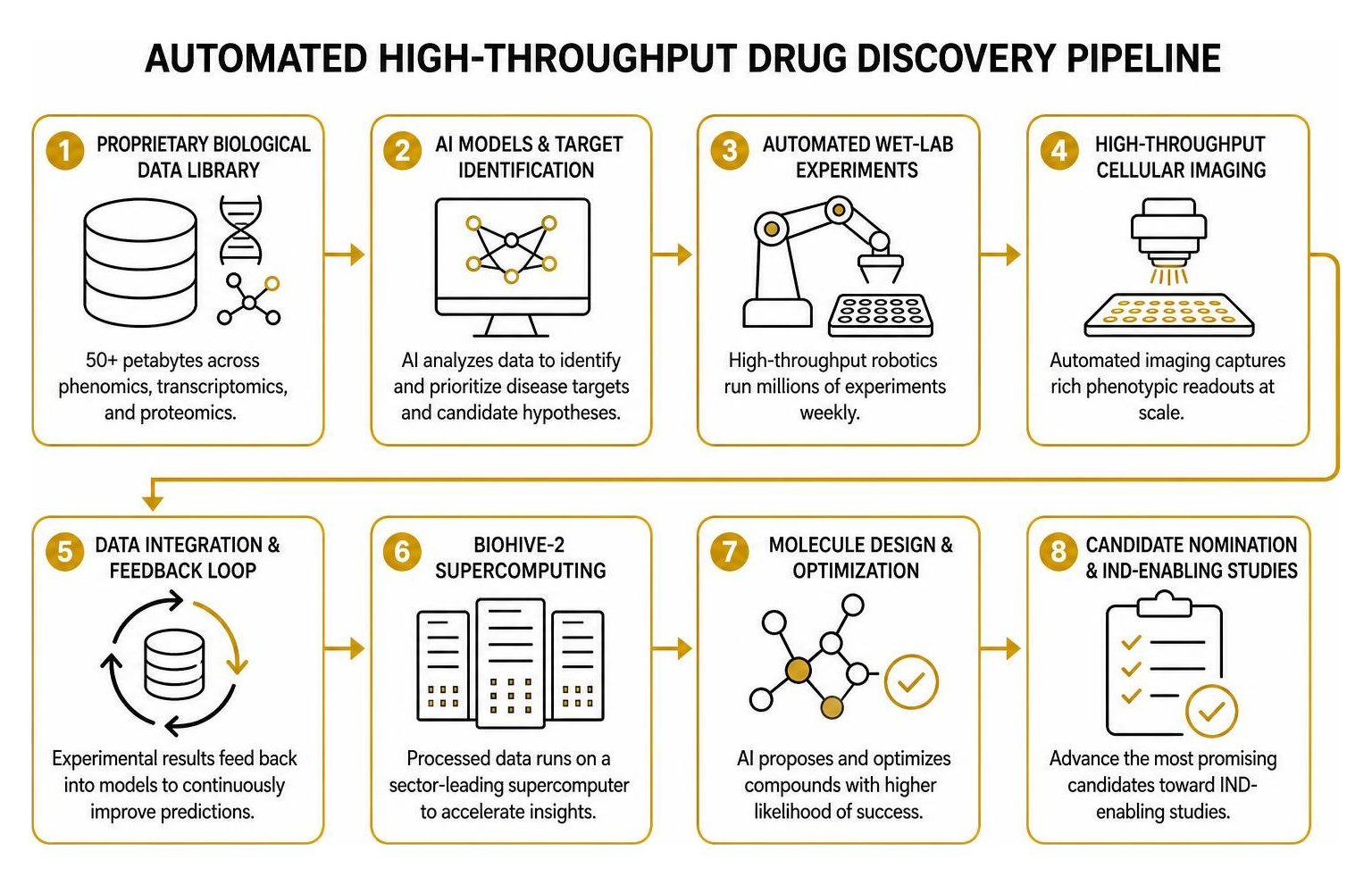
Recursion executes millions of automated wet-lab experiments weekly using high-throughput cellular imaging robotics. These empirical results feed directly back into BioHive-2, one of the biopharmaceutical sector’s most capable supercomputers built in collaboration with leading hardware manufacturers. This continuous feedback loop accelerates target identification and IND-enabling studies for rare diseases and oncology pipelines, compressing multi-year discovery timelines into months.
Enterprise Fintech and Automated Compliance Scaleups
Enterprise operational stacks are being overhauled by intelligent, automated platforms. Ramp secured a $500M Series E at a $22.5B valuation by demonstrating that corporate cards and spend management can evolve into full-scale autonomous financial orchestration. By analyzing transactional patterns in real time, Ramp automates procurement, identifies redundant software subscriptions, and enforces expense policies without manual audits.
In corporate risk and compliance, Vanta reached a $4.2B valuation following its $150M Series D. Vanta continuously monitors cloud security environments to automate evidence collection for SOC 2, ISO 27001, and HIPAA certifications. In legal operations, Harvey reached a $5.0B valuation by engineering specialized legal copilots that handle complex contract analysis and regulatory cross-examination.
Consumer fintech is also finding innovative models. Pogo has scaled past 3 million active users by empowering individuals to monetize and unlock insights from their personal purchase data, generating engagement metrics rivaling major social media networks. Meanwhile, discovery interest in specialized productivity platforms continues to explode, seen in Legora’s staggering +8900% search growth (reaching 165K monthly queries) and Instawork India’s +6300% surge for flexible workforce management.
Key Scaling Challenges, Regulation, and Ethical Considerations

Despite astronomical valuations, emerging technology leaders face formidable operational hurdles.
- Compute Scarcity and Escalating Infrastructure Costs: Training multi-modal models and running high-throughput inference requires vast compute clusters. With hyperscalers competing for limited electrical grid allocations, startups must prioritize algorithmic efficiency over brute-force compute scaling.
- Sustainability and Energy Consumption: The intense electricity and water consumption of modern data centers has sparked scrutiny. As highlighted in the green tech revolution, hardware and software companies alike must adopt green computing paradigms, novel liquid cooling, and optimized architectures to minimize their environmental footprints.
- Algorithmic Validation and Clinical Rigor: In high-stakes fields like AI-driven healthcare triage and automated structural inspection, false positives or hallucinations carry severe real-world liabilities. Companies must validate their outputs through rigorous empirical testing before deploying models into production environments.
- Regulatory Frameworks and Data Privacy: Navigating evolving international regulations such as the EU AI Act requires continuous algorithmic auditing, transparent data lineage, and strict user consent protocols.
- Leadership Diversity and Talent Retention: Scaling complex hard-tech and AI organizations demands multidisciplinary leadership across machine learning, hardware engineering, regulatory law, and commercial operations. Creating balanced, diverse technical leadership teams remains critical for navigating long-term strategic and societal risks.
Romanian F-16 Destroys Explosive Drone Threatening Major Black Sea Gas Infrastructure
Enterprise Integration Strategies and Long-Term Economic Impact
For modern enterprises, adopting emerging technologies requires moving past experimental pilots toward deep workflow integration. Legacy systems—such as municipal ERP architectures and traditional relational databases—are being systematically modernized through AI-driven developer platforms.
Software engineering teams, for instance, are utilizing tools like CodeRabbit (which grew search momentum by +1675% to 90.5K monthly queries) to automate complex code reviews, catch vulnerabilities before production, and accelerate pull-request cycles.
To capture maximum value, organizations should consult the strategic guide to using AI in your business to align tooling with measurable KPIs:
- Conduct a Workflow Bottleneck Audit: Pinpoint high-cost, repetitive tasks across legal, finance, developer operations, and logistics where automation directly shortens cycle times.
- Prioritize Open and Compatible Architecture: Implement models and APIs that support standardized endpoints (such as OpenAI-compatible interfaces) to avoid single-vendor lock-in.
- Establish Real-Time Continuous Compliance: Replace periodic manual audits with automated compliance engines like Vanta to monitor access control and security configurations dynamically.
- Deploy Domain-Specific Hardware Accelerators: Transition latency-critical, high-volume workloads to specialized inference architectures to keep infrastructure expenses sustainable.
Over the next decade, these emerging technologies will fundamentally redefine global economic productivity. By combining physical robotics with sub-quadratic reasoning and automated biotech platforms, industries can eliminate routine operational friction, safely manage physical infrastructure, and discover life-saving therapeutics at unprecedented speeds.
Frequently Asked Questions About Emerging Tech Leaders
Which emerging tech startups are recording the fastest valuation and user growth in 2026?
Etched has recorded remarkable valuation momentum, jumping to a $21B valuation in just 26 days after closing its $700M round. In enterprise fintech and software, Ramp ($22.5B) and Harvey ($5.0B) lead in multi-billion-dollar scale, while Subquadratic has established itself as the fastest-growing model architecture for ultra-long context windows. In user interest and search volume, Legora (+8900% growth; 165K searches/mo) and Instawork India (+6300% growth) have captured massive global attention.
How do emerging hardware startups compete against established semiconductor giants?
While established chip designers and foundries maintain massive general-purpose manufacturing scale, emerging hardware firms compete through architectural specialization. Companies like Etched bypass general-purpose GPU overhead by manufacturing ASICs hardwired exclusively for transformer matrix operations. This purpose-built approach delivers vastly superior inference latency and power efficiency for high-throughput institutional workloads.
What role does proprietary data play in defending emerging tech moats?
Proprietary data represents the single most defensible moat against model commoditization. Startups like Recursion differentiate themselves not merely through machine learning models, but by generating over 50 petabytes of proprietary biological data via automated robotics in wet labs. Because these unique multi-omics datasets cannot be scraped from the public web, they create insurmountable data flywheels that protect the company’s competitive advantage.
Conclusion
The emerging technology ecosystem of 2026 demonstrates that sustainable enterprise value is created when cutting-edge computational power meets clear, practical execution. From sub-quadratic models that make million-token reasoning affordable to autonomous robotic platforms protecting critical civil infrastructure, today’s leading startups are systematically modernizing the physical and digital foundations of our economy.
Navigating this fast-moving landscape requires constant market intelligence and actionable analysis. To follow the latest funding rounds, architectural breakthroughs, and real-time market developments across the global technology ecosystem, explore our dedicated Apex Observer News emerging technologies hub.
7 Wild Headlines in Current Tech News That Sound Straight Out of Sci-Fi
