


Technology Startup Funding News: Where Capital Is Going in October 2026
AI is drawing the largest checks in this funding snapshot. A decision-model startup raised $870 million in Series A funding, while an AI video company raised $10 million in Series A funding and an enterprise workflow startup secured a $6.5 million seed round. A health AI venture also launched with a $500 million funding commitment.
The pattern matters for venture strategy: investors are backing both costly AI foundations and smaller tools with clear business uses. But a funding commitment is not the same as a completed round, and a high valuation is not proof of lasting demand.
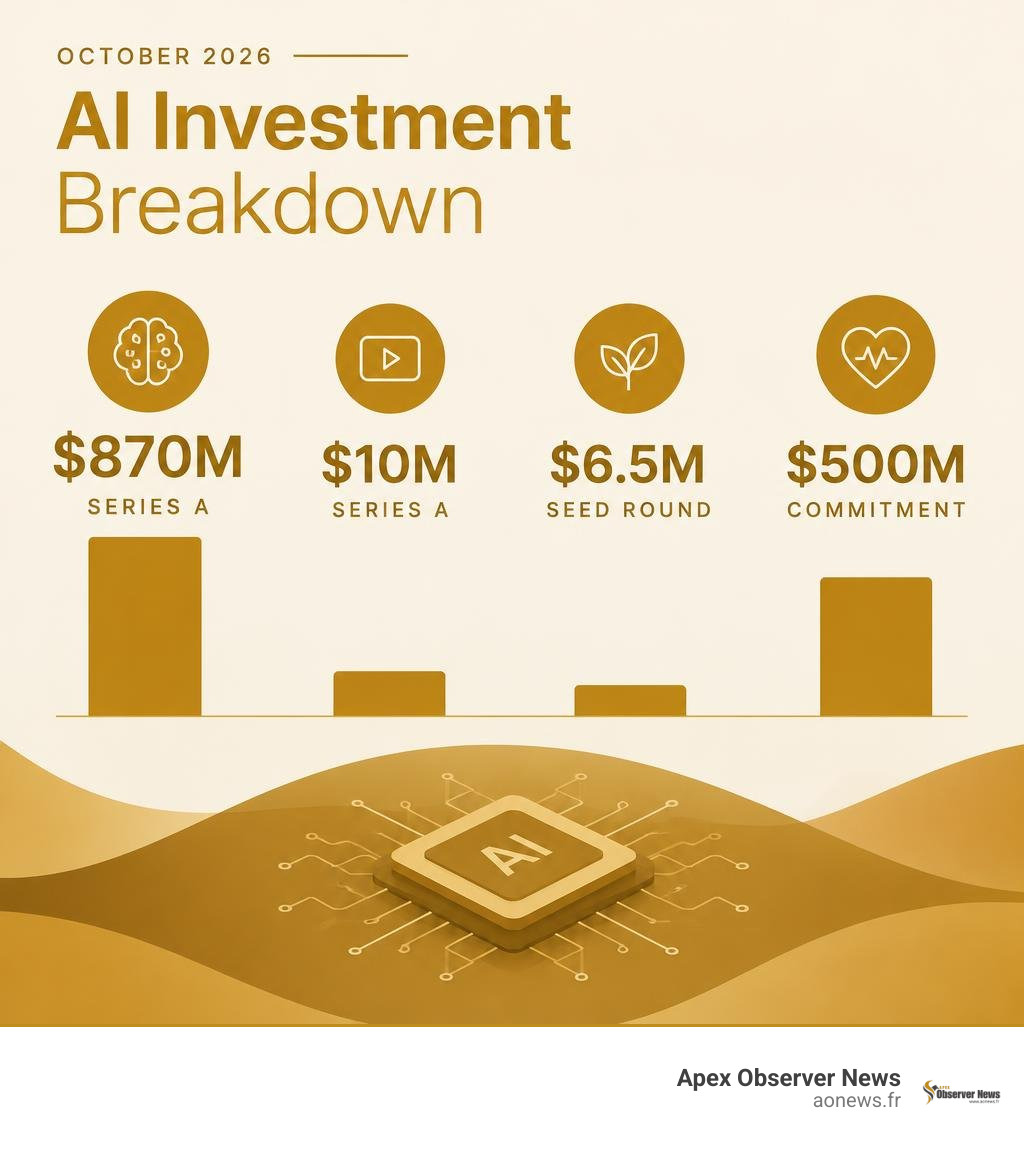
Top Technology Startup Funding News Driving Venture Capital in October 2026

The venture landscape in October 2026 exhibits extreme capital concentration alongside aggressive architectural specialization. Rather than funding broad, undifferentiated generative AI wrappers, tier-one venture funds are pouring historic sums into structural infrastructure, specialized decision-making architectures, and sovereign physical compute. We are seeing early-stage valuations climb to levels previously reserved for mature public tech enterprises, driven by an urgent push to outrun the steep compute expenses required to build frontier intelligence.
Investors are actively balancing massive bets on foundation-scale platforms against focused enterprise automation tools. As we analyze the latest technology startup funding news, clear bifurcation emerges: capital either clusters around massive infrastructure power plays or targets efficient, vertical software solving immediate enterprise bottlenecks.
Analyzing Technology Startup Funding News: Decision-Only Models vs Generative LLMs
In one of the most remarkable financing events of the year, TypeSafe AI raised $870 million for Jev, a decision model that never generates text, securing a $7.5 billion valuation in a Series A round led by Andreessen Horowitz, Sequoia Capital, and DCVC. Crucially, this mega-round closed just 24 days after the team concluded an initial $40 million seed financing.
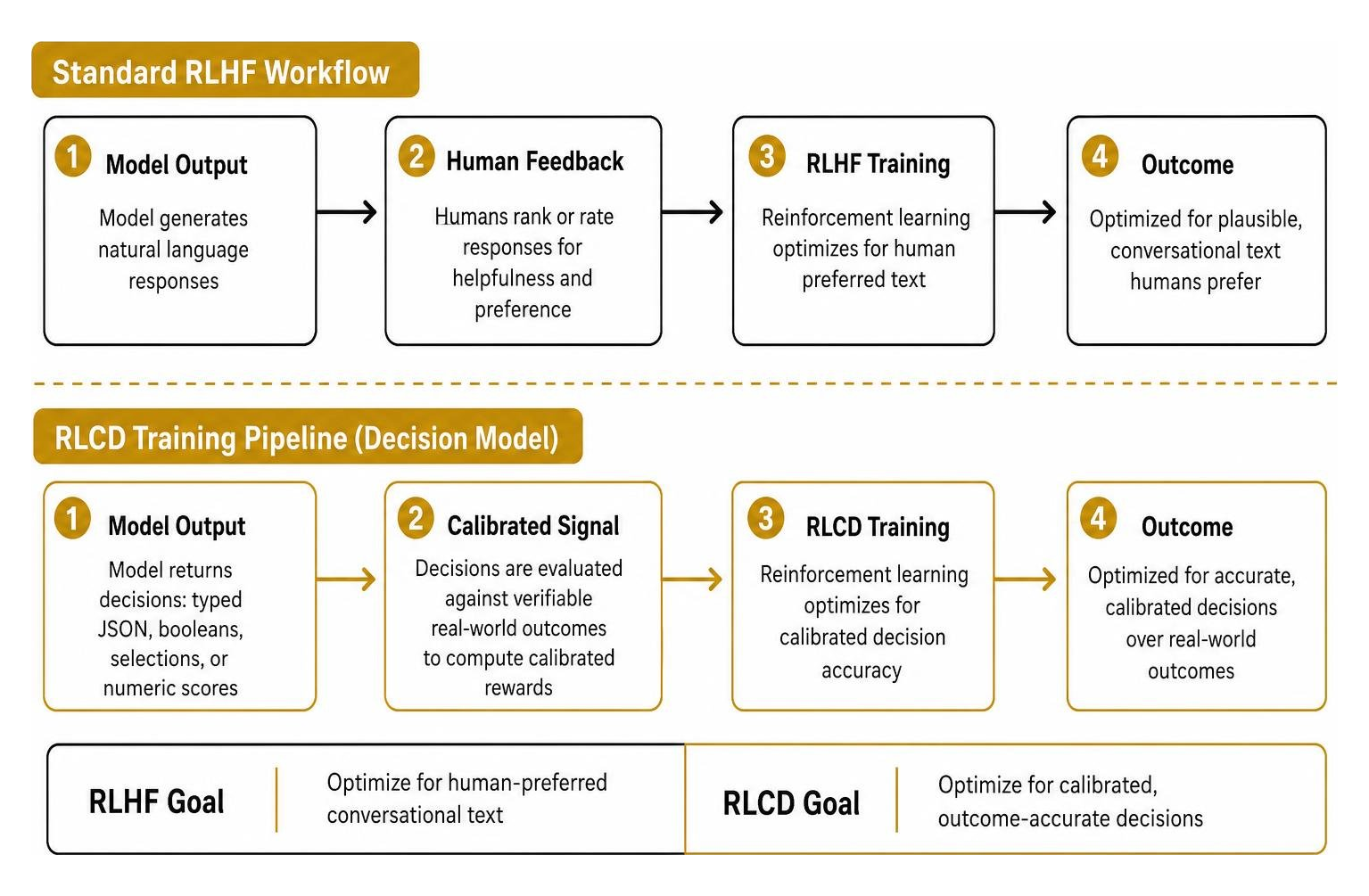
TypeSafe AI’s flagship model, Jev, deliberately discards natural language generation. Drawing inspiration from Daniel Kahneman’s “System One” cognitive framework for fast, instinctive processing, Jev is trained via Reinforcement Learning from Calibrated Decisions (RLCD) rather than human feedback (RLHF). While RLHF optimizes for plausible, conversational text that humans prefer, RLCD rewards mathematically calibrated probabilities against verifiable real-world outcomes.
Jev achieved roughly 13% adoption among Vercel’s paid teams within 24 hours of release—marking the fastest single-day adoption for any model in Vercel AI Gateway history. By returning strictly typed JSON booleans, multi-choice selections, and numeric scores in under 700 milliseconds, Jev delivers a 7x median speedup and cuts execution costs by approximately 30x when handling classification, routing, and tool-verification steps within complex agentic pipelines.
| Metric / Dimension | Traditional Generative LLMs (e.g., GPT-4, Claude) | TypeSafe AI’s Jev (Decision Model) |
|---|---|---|
| Primary Output | Free-form natural language strings | Typed decisions, scores, and discrete classifications |
| Primary Optimization | Conversational plausibility (RLHF) | Calibrated probability accuracy (RLCD) |
| Inference Latency | 1,200 ms – 4,500 ms | < 700 ms |
| Input Pricing (per M tokens) | $2.00 – $15.00+ | $0.042 (Free output tokens) |
| Structural Hallucinations | Frequent schema / formatting drift | Format-constrained (Zero schema errors) |
| Ideal Architectural Role | Complex synthesis & generative drafting | High-throughput agent routing & tool calling |
Open-Weight Frontier Models and Nvidia’s Acquisition Talks
The battle for foundation model supremacy is shifting rapidly toward open weights. Open-weight models represented 56% of total token volume processed on Vercel’s AI Gateway in August 2026, up sharply from just 7% in December 2025. Leading this movement is Reflection AI’s Beam, which sells governments on AI independence, as reporting confirms early-stage acquisition discussions with Nvidia.
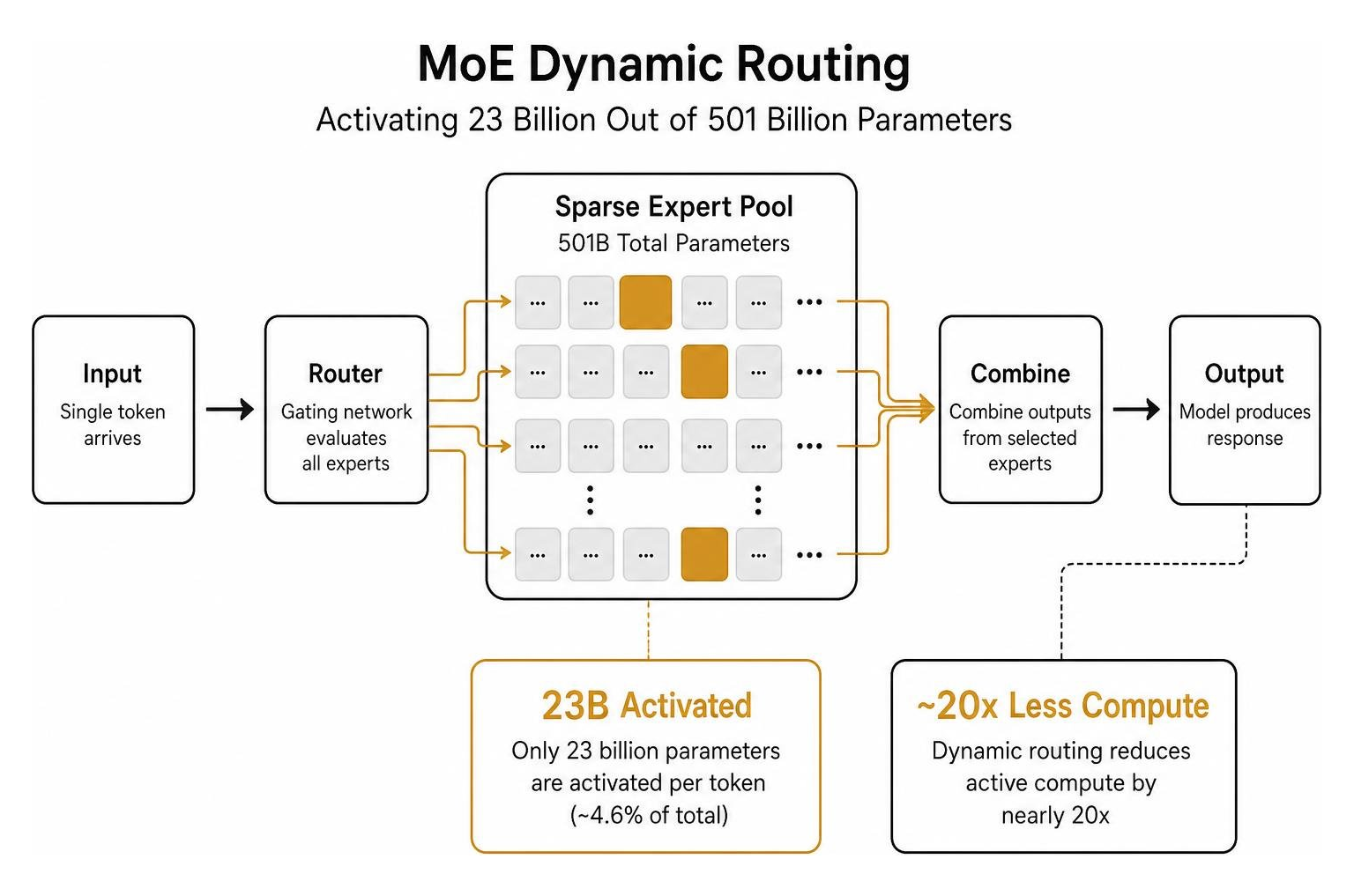
Reflection AI, valued at $25 billion after raising over $2 billion in cumulative capital, developed Beam—a 501-billion-parameter Sparse Mixture-of-Experts (MoE) model. Beam dynamically activates only 23 billion parameters per token (roughly 4.6% of its footprint), slashing active compute requirements by nearly 20x.
Nvidia’s strategic interest stems from its ambition to provide end-to-end sovereign “AI factories,” pairing proprietary silicon with market-leading open-weight models. However, an outright acquisition presents complex questions for AI startups and enterprise adopters. While Beam’s base weights are slated for release under an open Apache 2.0 license, developer communities remain watchful over whether future iterations will maintain permissive licensing under hardware-centric stewardship.
Cross-Domain Healthcare Foundations: Ortet’s $500M Launch
Foundation model architectures are also moving directly into life sciences. Ortet launched with a $500 million commitment from Thoreau to build a patient-centered health AI platform, establishing an ambitious system designed to unify disjointed healthcare data.
Founded by modern deep-learning pioneers Kyunghyun Cho, Jeff Hammerbacher, and former executives from Genentech and Meta, Ortet bypasses single-task health algorithms in favor of a shared foundation model. The platform aggregates clinical records, biological markers, operational pathways, and financial metrics into a single intelligence layer. With dedicated GPU clusters secured on day one, Ortet plans to train models that continuously learn across the full patient care lifecycle.
Sovereign Infrastructure and Enterprise Application Deals

As data sovereignty laws tighten under the EU AI Act and GDPR, reliance on centralized cloud providers based outside local jurisdictions has become a core corporate risk. Venture capitalists and sovereign funds are deploying billions to secure physically isolated, high-throughput compute infrastructure and specialized workflow layers that keep enterprise data strictly within sovereign borders. We see this dynamic powering massive infrastructure developments alongside targeted tech innovation across Europe.
European Infrastructure Autonomy: VOLT Rotterdam and Dubsof
In a watershed moment for sovereign European infrastructure, Nebius signed as the first customer for VOLT’s €7 billion Rotterdam AI Gigafactory. The €7 billion (~$8.1 billion) private-capital campus bypasses EU grant delays by securing Nebius as its creditworthy anchor tenant for 100,000 GPU slots and up to 200 MW of power in Phase 1, scaling toward an ultimate capacity of 250,000 chips and 800 MW.
By establishing direct access to high-voltage 380 kV utility lines and offshore wind generation in the Port of Rotterdam, VOLT sidesteps the grid congestion stalling conventional urban data centers. This ensures European enterprises and financial institutions can run compute-intensive AI operations on sovereign Dutch soil without routing private data across overseas cloud providers.
At the software layer, a Dublin AI start-up raised more than €5 million in a round led by BlueYard Capital. Dubsof raised $6.5 million (€5.8 million) in a round joined by Backed VC, Project Europe, and Cocoa Ventures. Dubsof embeds privacy-preserving coordination agents directly into internal enterprise workflows, reducing administrative friction without exposing sensitive proprietary data.
Enterprise Content Automation: Clueso’s Agentic Video Engine
Specialized agentic media platforms are simultaneously transforming enterprise communications. Indian-founded agentic video startup Clueso raised $10 million in a Series A funding round, securing backing from Dharana Capital, Founders Future, and Neotribe Ventures to bring its total funding to $12 million.
Founded by IIT Madras alumni, Clueso replaces static, expensive product video creation with an agentic video engine. Over 1,000 enterprises utilize the platform across marketing, customer onboarding, and employee training. Clueso treats corporate video as living, continuously updated software assets that automatically adapt as product interfaces and operational documentation change, delivering documented 5x productivity gains and an 80% reduction in production costs.
Global Venture Shifts: Emerging Markets and Sector Bottlenecks
While high-density digital infrastructure and software agents capture headlines in Western and European hubs, capital dynamics look markedly different across emerging markets. Venture capital flows into physical engineering and hardware require longer payback horizons and deep institutional coordination. Tracking developments across diverse regions—from enterprise hubs to the best innovative startups in emerging markets—reveals that long-term venture health depends heavily on sustainable scaling frameworks and supportive local regulation.
Technology Startup Funding News Across Emerging Markets: Climate-Tech Scaling Hurdles
In South Asia’s dynamic venture landscape, hardware commercialization presents unique capital challenges. India hosts more than 800 climate-tech startups developing essential sustainable innovation—from biological air filtration using aquatic plants to agricultural residue conversion. However, fewer than 3% of these startups successfully progress beyond early-stage seed funding.
Unlike purely digital software, deep-tech and climate-tech ventures face severe physical bottlenecks:
- Extended R&D Cycles: Hardware prototypes require multi-year lab validation before reaching pilot readiness.
- High Upfront Capital Intensity: Manufacturing specialized monitoring equipment or bio-filtration plants demands heavy capex that standard 10-year venture fund cycles struggle to support.
- Policy and Procurement Barriers: Commercial scale often requires formal municipal procurement integration, introducing long sales cycles and bureaucratic delays.
- A Shortage of Patient Growth Capital: Local venture ecosystems feature ample early grants and pre-seed accelerators, but face a stark shortage of Series A/B growth funds willing to back physical technology deployment.
Frequently Asked Questions about Technology Startup Funding News
How do decision models like Jev differ from traditional generative LLMs?
Decision models like TypeSafe AI’s Jev do not generate conversational natural language text. Instead, they output structured, typed classifications, boolean decisions, and calibrated probability scores. By focusing strictly on deterministic routing and classification using RLCD training, they operate at sub-700ms speeds and cost a fraction of generative LLMs, eliminating schema format hallucinations in multi-agent software pipelines.
Why is sovereign AI driving massive venture capital investments in Europe?
Strict data privacy laws, such as the EU AI Act and GDPR, require enterprises, healthcare systems, and government agencies to ensure sensitive data remains within local jurisdictions. Mega-projects like VOLT’s €7 billion Rotterdam AI Gigafactory provide private, high-capacity GPU infrastructure powered by local renewable energy, enabling organizations to deploy frontier models without relying on overseas cloud providers.
What are the main risks for investors backing high-valuation AI startups in 2026?
Investors face steep compute burn rates, rapid model commoditization, and potential multiple compression. Startups spending hundreds of millions on compute before establishing recurring enterprise contracts risk severe dilution. Additionally, regulatory reviews around tech consolidation and open-weight licensing shifts could alter underlying platform economics.
Conclusion
The venture landscape of late 2026 demonstrates that the AI market is rapidly maturing beyond generic chatbots into specialized, capital-intensive architectures and sovereign physical systems. From TypeSafe AI’s $870 million bet on text-free decision models to VOLT’s €7 billion Rotterdam compute campus, successful venture strategy now requires identifying teams that deliver measurable operational efficiency, verifiable speed advantages, and clear regulatory alignment.
At Apex Observer News, we track and verify these capital flows across global technology ecosystems. For deeper insights into our rigorous reporting standards, please review our fact-checking policy.
