

What Is Temporary Car Insurance (and Do You Actually Need It)?
Temporary car insurance is short-term cover that lets you legally drive a car for a limited period — without committing to a full annual policy.
Here’s a quick breakdown of what it means and who it’s for:
| Feature | Details |
|---|---|
| Coverage duration | 1 hour up to 28-30 days |
| Who it’s for | Borrowers, learners, new drivers, road-trippers |
| Coverage type | Typically fully comprehensive |
| Affects owner’s No Claims Discount? | No — it’s a separate standalone policy |
| Available in the UK? | Yes, widely available |
| Available in the US? | Not from major insurers — alternatives exist |
The idea is simple: you only pay for the cover you actually need. No year-long commitment, no cancellation headaches.
Short-term insurance has grown significantly in recent years. Millions of policies are now sold annually, with drivers rating these products highly — reflecting just how useful flexible cover has become for everyday situations.
Whether you’re borrowing a friend’s car for the weekend, sharing the driving on a long road trip, or picking up a new car and needing cover right now, temporary insurance fills the gap quickly and affordably.
I’m Faisal S. Chughtai, a digital strategist and founder of ActiveX with extensive experience researching and writing about temporary car insurance products, digital services, and the tech platforms that power them. In this guide, I’ll walk you through everything you need to know — from how policies work to what they cost and where to get them.
Essential temporary car insurance terms:
Understanding What Temporary Car Insurance Is
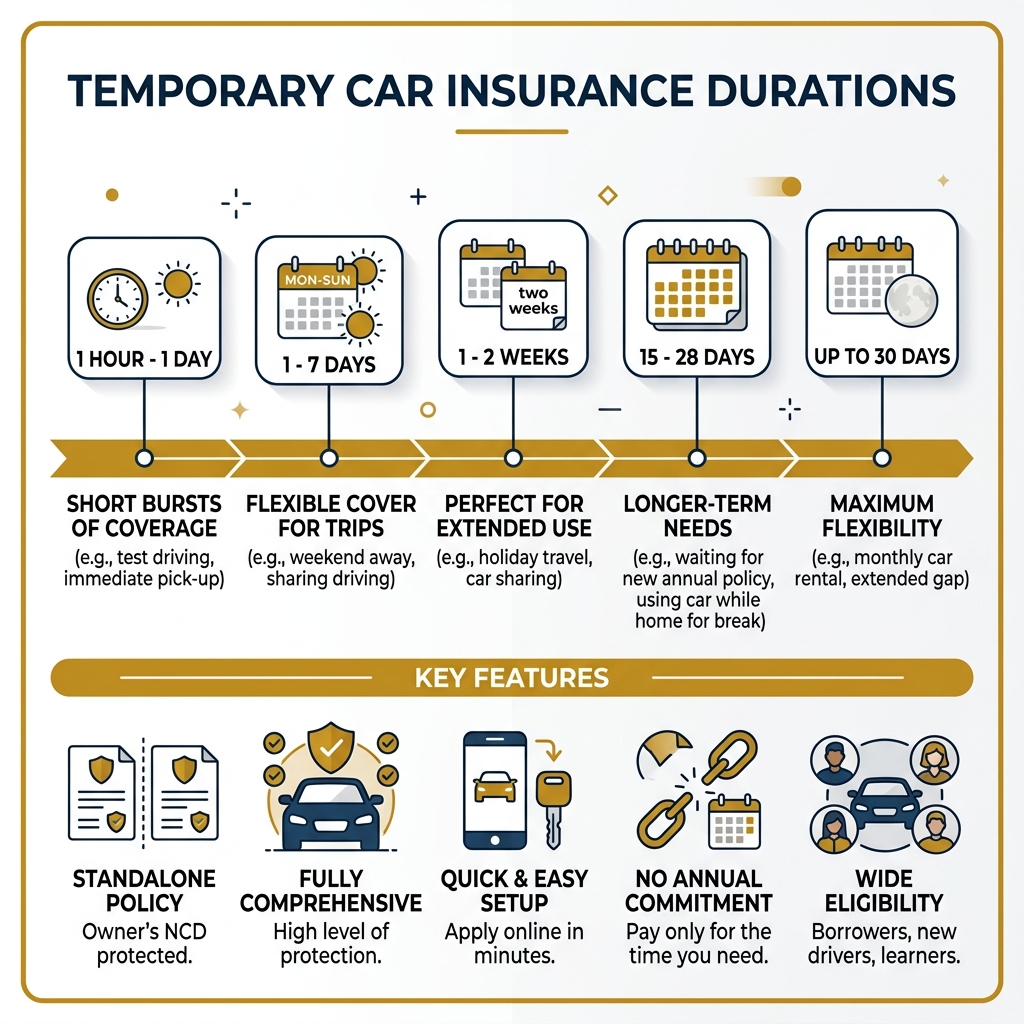
At its core, temporary car insurance is a standalone, short-term policy designed to provide the same level of protection as a standard annual policy, but with a much shorter lifespan. While traditional insurance locks you in for 12 months, these flexible options allow us to choose exactly how much time we need.
The flexibility is quite impressive. You can find:
- Hourly cover: Perfect for moving a piece of furniture across town or a quick test drive.
- Daily policies: Ideal for borrowing a friend’s car for a day trip.
- Weekly insurance: Great for visiting family or going on a short holiday.
- Monthly options: Useful for university students back for the holidays or those between long-term vehicles.
The application process has evolved to match our lives. In most cases, you don’t need to speak to an agent or wait for paperwork in the mail. By using a quick and easy form or a mobile app, we can get a quote in under two minutes. Once we pay, activation usually happens within 15 minutes, meaning we can be on the road almost instantly.

Extending or cancelling your policy
Life doesn’t always go according to plan. Sometimes that weekend trip turns into a week-long adventure. Most modern providers allow us to extend our cover directly through their app or website. For instance, some allow extensions up to three times or until you hit a 30-day limit.
If you find you no longer need the cover before it starts, many providers offer a full refund. However, if the policy has already begun, refunds are typically pro-rated, and some fees might apply. For the nitty-gritty details on what is and isn’t allowed, it is always a good idea to check the Policy booklet before you hit “buy.”
Regional Availability: US vs. UK Markets
It is important to note that temporary car insurance looks very different depending on which side of the Atlantic you are on.
In the UK, the market is highly developed. Companies are authorised and regulated by the Financial Conduct Authority, providing a safe environment for drivers to buy cover by the hour or day. It is a standard part of the UK insurance landscape, with over 14 million policies sold to date.
In the US, however, “true” temporary insurance (policies lasting only a few days) is virtually non-existent from major, reputable insurers. Most US carriers have a 6-month policy minimum. We must be wary of “fly-by-night” websites advertising one-day or one-week policies in the US; these are often misleading advertisements or outright scams. If a deal seems too good to be true and isn’t from a recognized name, proceed with extreme caution.
Alternatives to temporary car insurance in the US
Since we can’t easily buy a 24-hour policy in the States, we have to get a little creative. Here are the most common workarounds:
- Non-owner insurance: This is a liability-only policy for people who don’t own a car but drive frequently (rentals or borrowed cars). It’s often cheaper than standard insurance and helps maintain continuous coverage.
- Permissive driver status: If you are borrowing a friend’s car occasionally, you might already be covered under their policy as a “permissive driver.” However, you must verify this with their insurer first!
- Pay-per-mile: For those who only drive a few times a month, a pay-per-mile policy can be a cost-effective way to have permanent cover without the high price tag.
- Buy and Cancel: You can purchase a standard 6-month policy and cancel it after a few weeks. While you’ll get a pro-rated refund, be mindful of potential cancellation fees and the impact a “lapse” in coverage might have on your future rates.
For a deeper dive into how these systems compare, check out our article on understanding modern insurance industries.
The Benefits of Temporary Car Insurance
One of the biggest “wins” with temporary car insurance is that it is a standalone policy. This means it exists entirely separately from any annual policy already on the vehicle.
Why does this matter? Because it protects the owner’s No Claims Discount (NCD). If we borrow a friend’s car using temporary cover and have a bump, we claim on our temporary policy. The friend’s annual insurance remains untouched, and their hard-earned discount stays safe. This makes people much more willing to lend us their keys!
Since 2006, some providers have delivered short-term products for over 2.5 million drivers, proving that this isn’t just a niche product—it’s a mainstream solution for:
- Test drives: Ensuring you are fully covered when trying out a car from a private seller.
- New car collection: Getting “drive-away” insurance so you can bring your new purchase home immediately.
- Emergencies: If a friend or family member falls ill and you need to take over the driving.
Insurance for borrowed, rental, or non-owned cars
When we drive a car we don’t own, liability is our biggest risk. Temporary car insurance typically provides fully comprehensive protection, meaning it covers damage to the car we are driving, as well as third-party injuries or property damage.
While rental companies offer their own insurance at the counter, it is often incredibly expensive. Using a third-party temporary policy or a non-owner policy can sometimes be more affordable, provided the rental company accepts it. For those looking to understand the broader world of car insurance, our comprehensive guide to car insurance policies offers more context on these different tiers of protection.
Coverage, Costs, and Eligibility Requirements
Most people are surprised by how much is actually included in a short-term policy. Standard features often include:
- Fully Comprehensive Cover: Protection against accidental damage, fire, and theft.
- Business Use: Many policies include “Class 1” business use (driving to different work sites), though they usually exclude commercial deliveries or taxi work.
- European Cover: Some providers offer third-party cover for driving in the EU/EEA, provided the trip starts and ends in the UK.
How much does it cost?
Pricing varies based on your age, driving history, and the car’s value. However, we can look at some average starting points to get an idea of the “convenience premium” we pay for short-term flexibility.
Note: Prices are estimates based on standard UK market data for a driver over 25.
| Duration | Estimated Cost |
|---|---|
| 1 Hour | From £12.50 |
| 1 Day | From £19.00 |
| 1 Week | From £55.00 |
| 1 Month | From £120.00 |
While temporary car insurance is more expensive per day than an annual policy, it is significantly cheaper than buying a full year of cover and cancelling it, or worse, driving without proper insurance.
Eligibility for temporary car insurance
Not everyone can get temporary cover instantly. Providers have strict criteria to keep risks low. Common requirements include:
- Age: Usually between 17 and 78 (though some providers start at 21).
- Licence: You typically need a full UK, EU, or EEA licence held for at least 6 to 12 months.
- Vehicle Value: Most insurers won’t cover cars worth more than £60,000 to £75,000.
- Penalty Points: Generally, you must have fewer than 7-9 points on your licence from the last few years.
- Residency: You usually need to have been a resident in the UK for at least 12 months.
Before you apply, it’s a smart move to check vehicle registration status to ensure the car is currently taxed and registered correctly with the DVLA.
Frequently Asked Questions about Short-Term Cover
Does temporary insurance affect the car owner’s no-claims discount?
No. Because temporary car insurance is a separate, standalone policy, any claims made on it are handled by the temporary insurer. The vehicle owner’s main annual policy is not involved, so their No Claims Discount (NCD) remains protected.
Can I use temporary insurance for a business trip?
Yes, in many cases. Most policies include Class 1 business use as standard. This allows you to drive to a meeting, a training course, or a different office. However, it usually does not cover “carriage of goods for hire and reward,” such as food delivery or courier work.
Is it possible to get temporary insurance for a learner driver?
Absolutely. There are specific temporary learner driver insurance policies available. These allow learners to practice in a friend’s or family member’s car for periods ranging from one day up to five months. It’s a great way to get extra hours behind the wheel before taking your driving test.
Conclusion
At Apex Observer News, we strive to bring you the most relevant, real-time updates on how the insurance landscape is shifting to meet modern needs. Temporary car insurance is a perfect example of this evolution—moving away from rigid, year-long contracts toward “on-demand” protection that fits our lives.
Whether you’re a student heading home for the summer, a professional sharing the driving on a business trip, or someone just borrowing a van for an IKEA run, short-term cover offers a level of freedom that traditional policies simply can’t match. Just remember to check your eligibility, verify the market (especially if you’re in the US), and always read the fine print.
For more updates on the latest trends in the financial and insurance world, be sure to visit our latest insurance category news. Safe driving!
