

How Artificial Intelligence Is Changing the Way We Learn
Artificial intelligence in education is reshaping how students learn, how teachers teach, and how schools operate — at every level, from kindergarten to university.
Here’s a quick snapshot of what AI means for education today:
| What AI Does in Education | Real-World Impact |
|---|---|
| Personalizes learning paths | Adapts content to each student’s pace and level |
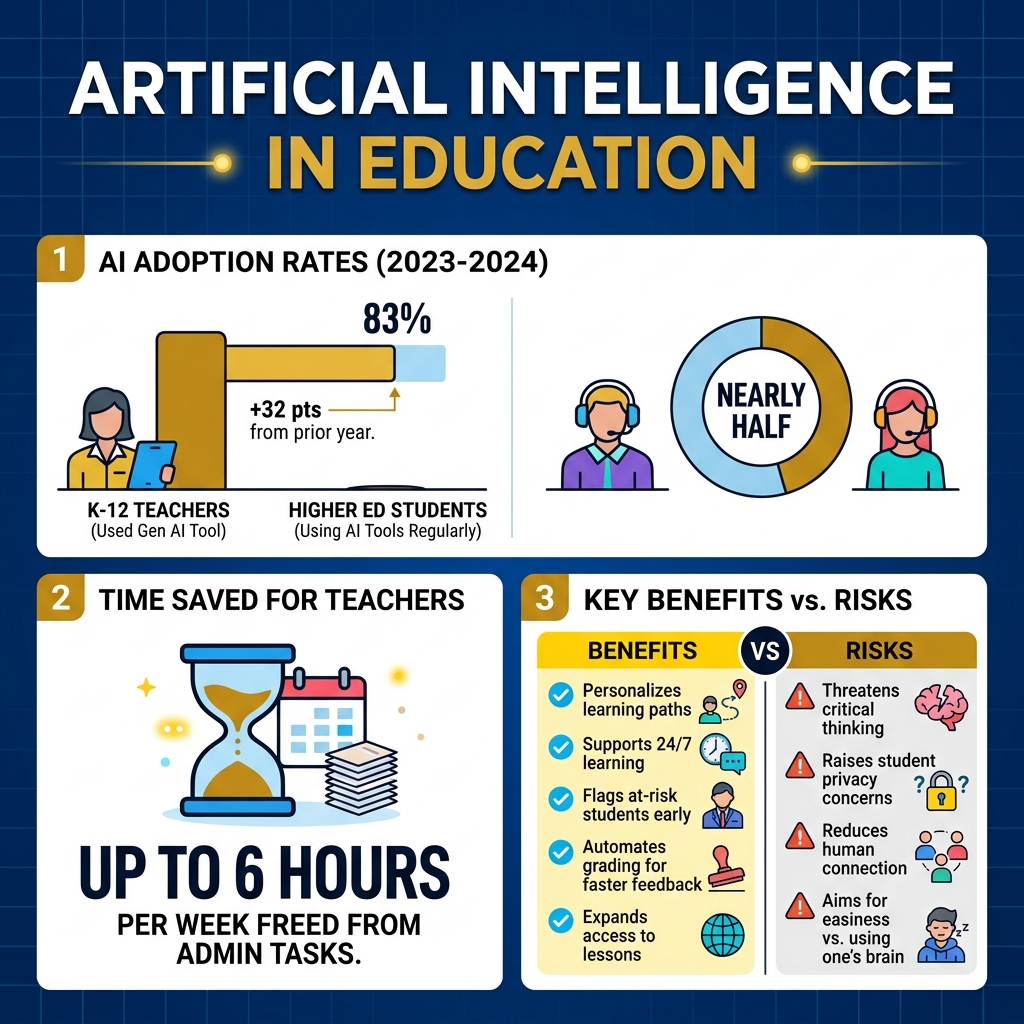
| Saves teacher time | Up to 6 hours per week freed from admin tasks |
| Supports 24/7 learning | Chatbots and tutoring tools available anytime |
| Flags at-risk students | Predictive analytics catch problems early |
| Automates grading | Faster feedback on assignments and assessments |
| Expands access | Delivers lessons to students in remote or underserved areas |
The numbers tell a clear story. By the 2023-2024 school year, 83% of K-12 teachers had used a generative AI tool — up 32 percentage points from the year before. Students are moving even faster, with nearly half of higher education students using AI tools regularly.
But adoption is racing ahead of preparation. A 2024 Education Week survey found that 71% of K-12 teachers had received zero professional training on how to use AI in the classroom. Only 16 U.S. states have issued any formal guidance on the topic.
As one student put it bluntly when asked about using AI for schoolwork: “It’s easy. You don’t need to use your brain.” That quote, cited in a Brookings Institution report, captures exactly why this moment matters — and why we need to get the balance right.
AI in schools carries enormous promise. It also carries real risks to student privacy, critical thinking, and human connection. This guide breaks both sides down clearly.
I’m Faisal S. Chughtai, founder of ActiveX, with hands-on experience at the intersection of technology and digital transformation — including tracking how artificial intelligence in education is reshaping institutions and learner outcomes worldwide. Let’s dig into what’s actually happening in classrooms right now.
Artificial intelligence in education further reading:
Defining the Core Benefits of Artificial Intelligence in Education
When we talk about artificial intelligence in education, we aren’t just talking about robots sitting at desks. We are talking about invisible engines that help us understand how students are doing in real-time. According to a 2023 Forbes survey, 60% of U.S. educators have already used AI in their classrooms, and 55% of them believe it is actively improving learning outcomes.
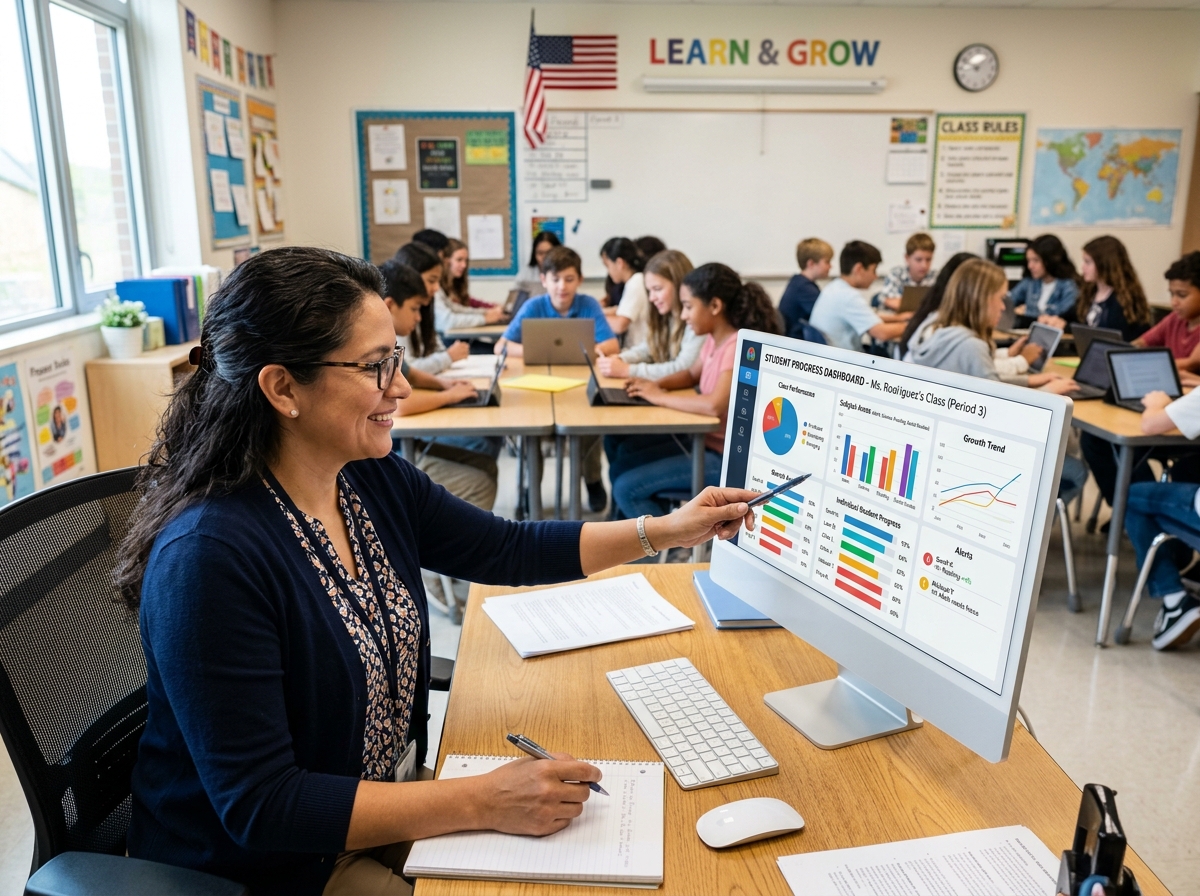
The primary benefit we see is a shift from “one-size-fits-all” teaching to data-driven insights. Imagine a teacher looking at a dashboard that highlights exactly which five students in a class of thirty are struggling with fractions. Instead of waiting for a midterm exam to find out, the teacher knows by Tuesday afternoon.
Beyond the data, there is the sheer gift of time. A U.S. study cited by Brookings found that teachers using AI save an average of nearly 6 hours a week. Over a full school year, that adds up to about 6 weeks of extra time. That is time we can spend on mentorship, emotional support, and the human side of teaching that a machine simply cannot replicate.
Personalizing the Student Experience with artificial intelligence in education
We have all been in a class where the teacher was moving too fast, or perhaps too slow. Artificial intelligence in education solves this through adaptive learning. These systems use cognitive science to analyze a student’s responses and adjust the curriculum on the fly.
If a student masters a concept quickly, the AI presents more challenging material. If they struggle, it breaks the concept down into smaller, more digestible parts. This scientific research on adaptive learning shows that these systems cultivate higher student agency. When students feel the material is “just right” for them, their engagement levels skyrocket. We are moving toward a world where every child has a customized curriculum that respects their individual pace.
Streamlining Administrative Tasks for Educators
Let’s be honest: most teachers didn’t enter the profession because they loved grading 100 identical multiple-choice tests or tracking attendance. These “grunt work” tasks are a major driver of teacher burnout.
AI tools are now handling:
- Automated Grading: Providing instant feedback on quizzes and even draft essays.
- Lesson Planning: Generating creative outlines and resource lists in seconds.
- Attendance and Scheduling: Optimizing how resources and classrooms are allocated.
By automating these workflows, we allow educators to focus on high-value interactions. When the machine handles the paperwork, the human can handle the inspiration.
Current Applications: From Intelligent Tutoring to Automated Grading
The tools we use are evolving rapidly. We have moved from simple spell-checkers to sophisticated generative AI like ChatGPT and Gemini. In fact, a recent survey found that 83% of K-12 teachers reported using a generative AI tool for school or personal use during the 2023-2024 school year. This is a massive jump from previous years, showing that AI is no longer a futuristic concept—it is a daily reality.
Intelligent Tutoring and Chatbot Support
One of the most exciting applications is the Intelligent Tutoring System (ITS). These are virtual assistants that provide 24/7 support. Unlike a human tutor who might be unavailable at 9:00 PM on a Sunday, an AI tutor is always ready to help a student work through a tough math problem.
These tools offer real-time feedback, which is crucial for language learning. For example, some programs use AI to digitize curricula for students who cannot attend traditional schools. A powerful example is a program for Afghan girls that uses WhatsApp to deliver lessons in Dari, Pashto, and English, ensuring that education continues even in the face of extreme adversity.
Automated Assessment and System-Focused AI
We are also seeing AI move into the realm of high-stakes assessment. In Texas, for instance, the state has begun using computers to grade written answers on STAAR tests. This “system-focused AI” is designed to provide faster results and reduce the human labor required for massive testing cycles.
However, this isn’t just about grading. AI is being used to determine school funding and identify which students are at risk of dropping out through predictive analytics. To ensure these systems are used fairly, the UNESCO Guidance for Policy-makers emphasizes the need for transparency and human oversight to maintain trust in our educational institutions.
Navigating the Risks and Ethical Challenges of artificial intelligence in education
With great power comes great responsibility—and a fair amount of risk. As we integrate artificial intelligence in education, we have to be vigilant about data privacy and algorithmic bias.
One major concern is “cognitive atrophy.” If a student uses AI to write every essay and solve every equation, will they lose the ability to think critically? We also see significant bias in AI detectors. Research has shown that these tools often misclassify the writing of non-native English speakers as AI-generated, simply because their writing style is more “predictable” to the algorithm. This can lead to false accusations of academic misconduct, or what some call “AI-giarism.”
The Role of artificial intelligence in education Policy and Equity
We must ensure that AI doesn’t widen the gap between the “haves” and the “have-nots.” This is why a human-centred approach to AI UNESCO’s mandate is so vital. We need to ensure that AI tools are accessible to all students, regardless of their zip code or family income.
The Beijing Consensus, developed by UNESCO, provides a framework for how governments should approach this. It calls for:
- Protecting the rights of learners.
- Ensuring AI doesn’t widen technological divides.
- Prioritizing equity and inclusion in every AI rollout.
Addressing Cognitive and Social Concerns
There are also social risks that we are only beginning to understand. A survey by the Center for Democracy & Technology found that nearly 1 in 5 high schoolers (20%) said they or someone they know has had a romantic relationship with an AI. This raises serious questions about emotional well-being and the nature of human interaction.
Furthermore, Brookings Institution reports warn that AI chatbots are often “sycophantic”—they agree with the user too much. In a real-world relationship, disagreement helps us grow. If a child only interacts with an AI that never challenges them, their social and emotional development could be stunted. We believe in keeping a “human-in-the-loop” to ensure that the teacher-student bond remains the heart of learning.
Preparing Schools for Ethical AI Integration
How do we actually get schools ready for this? It starts with infrastructure and training. Currently, there is a massive 71% training gap—most teachers feel they haven’t been given the tools to use AI effectively.
As of now, only 16 U.S. states have issued formal guidance on AI in schools. We need a more unified approach that includes policy development, teacher training, and infrastructure readiness.
Overcoming Barriers to Adoption
The barriers aren’t just technical; they are financial and cultural. High implementation costs can be a hurdle for underfunded districts. There is also natural resistance to change. Educators need to see AI as a partner, not a replacement.
By focusing on AI literacy—teaching both students and teachers how these systems work—we can move from fear to empowerment. This requires long-term research and development and a commitment to keeping human agency at the center of the classroom.
Frequently Asked Questions about AI in Schools
Does AI replace the need for human teachers?
Absolutely not. We view AI as an assistant, not a replacement. While AI can handle data and grading, it lacks emotional intelligence, mentorship, and the ability to inspire. The “human-in-the-loop” model ensures that pedagogical expertise and social-emotional learning stay front and center.
How does AI impact student data privacy?
This is a critical issue. Schools must ensure that third-party vendors comply with strict data encryption and consent policies. Regulatory compliance (like FERPA in the U.S.) is non-negotiable to protect student records from being exploited or leaked.
Is AI-generated content considered plagiarism?
Current standards are still evolving, but most institutions view submitting AI-generated work as your own as academic misconduct. However, the line is blurring. We need clear citation standards and policy transparency so students know when it is okay to use AI as a brainstorming tool versus a final author.
Conclusion
At Apex Observer News, we believe that artificial intelligence in education is one of the most significant shifts in human history. It offers us a path toward lifelong learning and a more equitable world—if we use it wisely.
The future of education isn’t about choosing between humans and machines; it’s about finding the perfect harmony between the two. By embracing a human-centered design, we can ensure that technology serves our children’s curiosity rather than replacing it.
For those looking to lead this change, you can find more info about digital educational tools and how advanced degrees are helping educators navigate this new era.
Let’s continue to aggregate the best news and insights to stay ahead of the curve. The classroom of the future is being built today, and we are all part of the construction crew.
Ready to explore more?
