

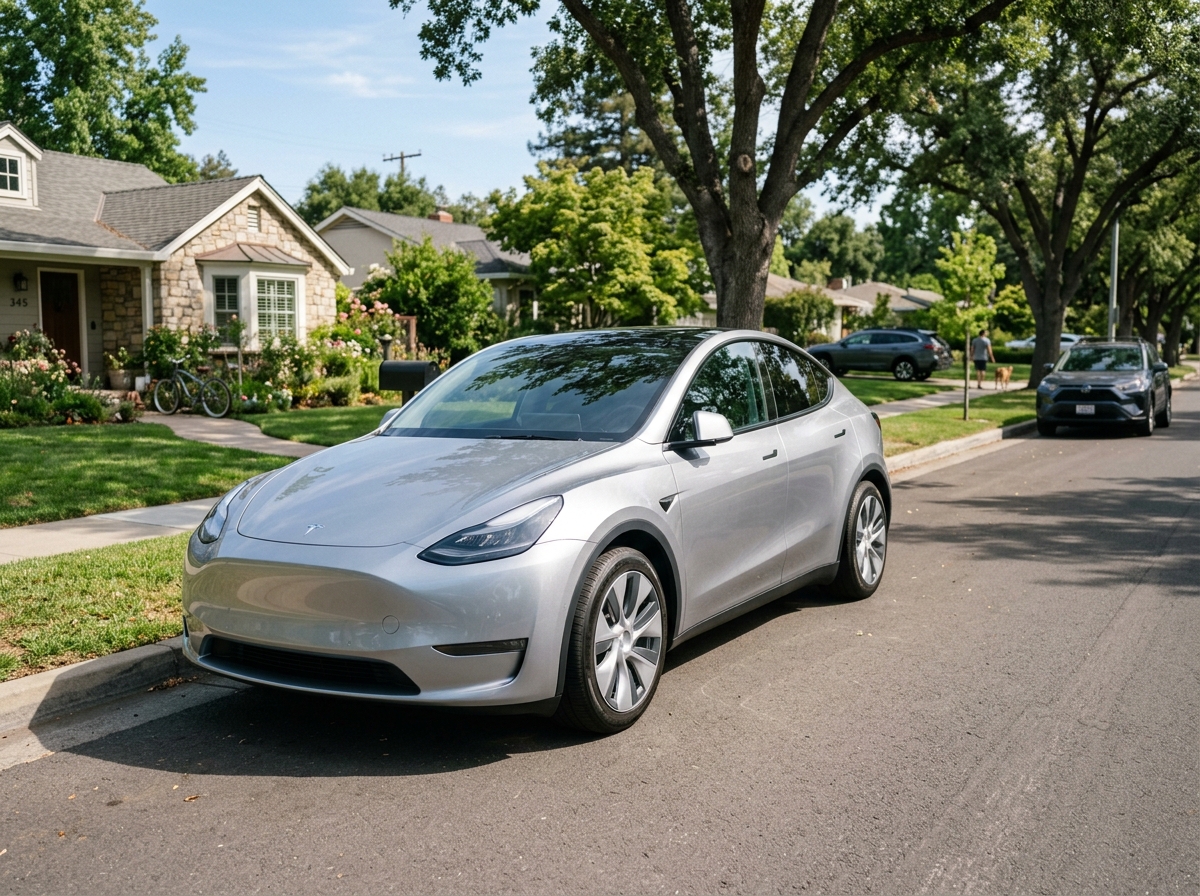
Why the Tesla Model Y Review Still Matters in 2026
The tesla model y review landscape has shifted significantly with the arrival of the refreshed 2026 “Juniper” model — and if you’re weighing whether to buy an electric vehicle, here’s the quick verdict:
2026 Tesla Model Y — At a Glance
| Category | Key Facts |
|---|---|
| Starting Price | $39,990 (Standard) to $61,630+ (Performance) |
| Best Range | Up to 357 miles EPA (Premium RWD) |
| Fastest 0-60 mph | 3.3 seconds (Performance) |
| Top Rating | 9/10 — Industry Leading |
| Biggest Updates | Quieter cabin, better materials, rear touchscreen |
| Main Criticisms | Stiff ride, screen-only controls, no Apple CarPlay |
Bottom line: The 2026 Model Y is still one of the best electric SUVs you can buy. It offers strong range, fast charging, and a genuinely improved interior. But it isn’t perfect — the ride stays firm, and the all-touchscreen interface divides opinion.
The Model Y has dominated EV sales globally, even becoming the world’s best-selling car overall in 2023. With the Juniper refresh, Tesla made real improvements — but also left some longtime frustrations in place. This guide breaks down everything you need to know before deciding.
I’m Faisal S. Chughtai, founder of ActiveX and a digital technology strategist with deep expertise in evaluating consumer tech — including crafting this tesla model y review through careful analysis of real-world data, owner experiences, and expert test results. Read on for the full breakdown across every trim, feature, and real-world scenario that matters to you.

Know your tesla model y review terms:
2026 Tesla Model Y Review: Trim Levels and Performance
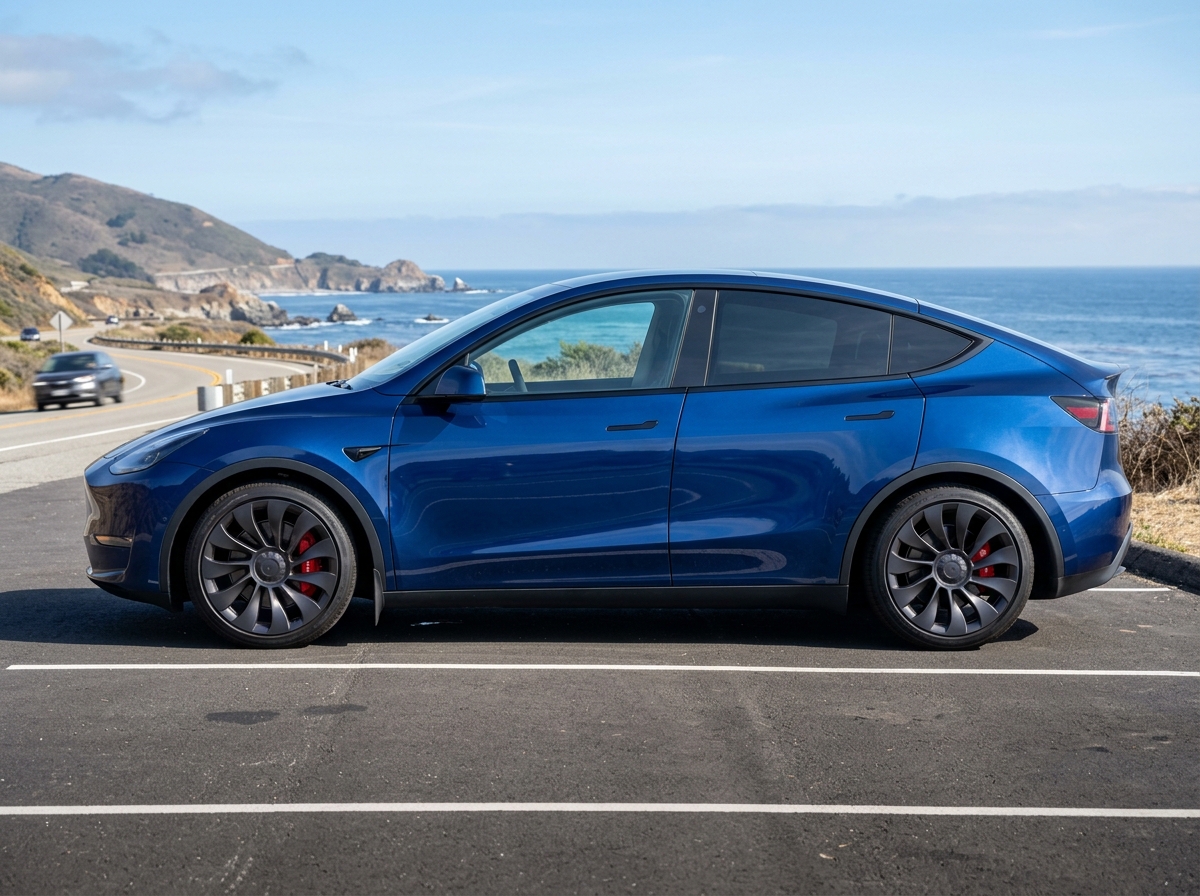
When we look at the 2026 lineup, Tesla has diversified the Model Y to capture different segments of the market. The most talked-about addition is the budget-friendly Standard trim, which starts at a tempting $39,990. However, our research into recent first-drive reports suggests this entry-level model comes with some notable compromises. It features cloth seats, lacks a front trunk (frunk) lining, and utilizes “balloon” tires with plastic hubcaps that give it a more downmarket appearance. Perhaps most importantly, Tesla currently does not offer leasing options for the Standard trim, making it a “cash or finance only” proposition.
Moving up to the Premium RWD and Long Range AWD variants, we see the sweet spot of the range. The Premium RWD offers the highest efficiency and maximum EPA range of 357 miles. The Long Range AWD, priced around $48,990, remains the crowd favorite for those needing all-weather traction. It delivers approximately 384 to 397 horsepower depending on the specific testing source, capable of hitting 0-60 mph in a brisk 3.9 to 4.4 seconds.
The crown jewel of the lineup is the Model Y Performance. For 2026, Tesla has pivoted the Performance model away from being a “track beast” toward a more livable, high-speed daily driver. It now features an adaptive-damping algorithm and new steering knuckles with accelerometers to better manage road imperfections. While its peak power is technically lower than previous generations at 338 kW (460 hp), it offers 16% more torque (741 Nm) and 32% more sustained power, resulting in a blistering 0-100 km/h time of just 3.5 seconds.
| Trim Level | Base Price | 0-60 mph | Est. HP | Key Feature |
|---|---|---|---|---|
| Standard | $39,990 | ~6.6s | N/A | Lowest Entry Price |
| Premium RWD | $44,990 | 5.1s | ~295 | Max Range (357 mi) |
| Long Range AWD | $48,990 | 3.9s | 384-397 | All-Weather Traction |
| Performance | $59,130+ | 3.3s | 510 (est) | Adaptive Dampers |
Real-World Range and Efficiency Standards
One of the most critical aspects of any tesla model y review is how the car performs when the rubber meets the actual road, not just the EPA’s laboratory rollers. For 2026, the EPA estimates range between 294 and 357 miles depending on the trim and wheel size (pro tip: smaller wheels almost always equal better range).
In real-world 75-mph highway testing, the Long Range RWD achieved roughly 270 miles, while the Long Range AWD managed 331 miles in a standardized 70-mph test by independent testing agencies, actually exceeding its EPA estimate. Long-term owners have reported an average efficiency of 14.9 kWh/100km over 60,000km of driving, which translates to a reliable 350km (approx. 217 miles) of range even during brisk freeway commutes.
Charging remains a Tesla stronghold. While some newer competitors from Asia are pushing higher peak speeds, the Model Y still holds its own with a peak DC fast-charging rate of 250 kW. In practical testing, we’ve seen it peak at 207 kW, allowing owners to add about 133 miles of range in just 15 minutes. The integration with the Supercharger network continues to be the “killer app” that makes the Model Y the easiest EV for road-tripping.
Interior Refresh and Technology Integration
The “Juniper” update has finally brought the Model Y’s interior up to the standards set by the refreshed Model 3. We are seeing a much-needed injection of quality:
- Acoustic Glass: Now standard on all windows, significantly reducing wind and road noise (measured at 66 dB at 70 mph).
- Soft-Touch Materials: The dashboard has been redesigned with upscale fabrics and better-integrated storage.
- Rear Passenger Screen: An 8-inch touchscreen is now nestled at the back of the center console, allowing rear passengers to control climate and entertainment.
- Ventilated Seats: A godsend for those in warmer climates, these are now available on higher trims.
However, the “minimalism” remains a point of contention. The removal of the center console lid in the Standard trim feels like a step too far for some, and the reliance on the 15.4-inch central touchscreen for almost every function—including shifting gears and adjusting mirrors—continues to frustrate traditionalists. The lack of Apple CarPlay and Android Auto remains a glaring omission in an otherwise tech-forward cabin. For those interested in how these updates compare to Tesla’s other projects, you can read more about Tesla developments to see the broader brand trajectory.
Evaluating the Tesla Model Y Review: Driver Assistance and FSD
Tesla’s driver assistance suite remains the most scrutinized part of any tesla model y review. The 2026 model relies entirely on “Tesla Vision” (cameras only), having ditched radar sensors entirely.
Full Self-Driving (Supervised) has seen incremental improvements. Testers note that it handles lane changes and traffic lights with increasing confidence on well-marked roads. However, it still struggles with “unmarked” or curvy back roads and occasionally makes errors during highway merging. A particularly sobering report during an urban test drive noted the system missed a child crossing in a school zone, requiring immediate driver intervention.
Autopilot, the standard suite, is excellent for highway cruising but has been criticized for “phantom braking”—where the car abruptly slows down for perceived obstacles that aren’t there. While software updates have made this less frequent, it remains a known quirk of the vision-only system.
Performance Dynamics in the Tesla Model Y Review
Driving the 2026 Model Y is a tale of two sensations: thrilling speed and a firm ride. The acceleration across all trims is “instant,” providing that signature EV “kick-in-the-kidneys” feeling that makes merging onto highways effortless.
The handling is nimble with very little body lean, thanks to the heavy battery pack located low in the chassis. However, the ride quality—while improved—remains stiff. Tesla has updated the suspension to be more compliant, but it still lacks the plushness found in rivals like the Hyundai Ioniq 5. On the Performance trim, the new adaptive dampers do a much better job of smoothing out “head toss” and vibration on uneven surfaces like cobblestones.
Regenerative braking is another highlight. It is linear and strong enough to allow for true “one-pedal driving,” where you rarely need to touch the physical brake pedal in daily traffic.
Long-Term Ownership and Maintenance Costs
What happens after the honeymoon phase? We looked at data from owners who have surpassed the 60,000km (approx. 37,000 miles) mark. The news is generally positive regarding reliability; most report zero mechanical issues.
Tire Wear: This is the most significant ongoing expense. Because of the car’s weight and high torque, tires wear faster than on a petrol car. Owners suggest rotating tires every 10,000km to extend their life. A full set of original matching tires can cost upwards of $2,000. Maintenance: Beyond tires and cabin air filters, there is very little to do. There are no oil changes, spark plugs, or timing belts to worry about. Sentry Mode: This feature remains a favorite, using the car’s cameras to record surroundings while parked. However, be warned: it can cause significant “vampire drain” on the battery if left on for long periods in airport parking lots. Charging Costs: Owners with home solar panels report running costs that are almost negligible, sometimes as low as $1.50 a day to power both their home and their commute.
Frequently Asked Questions about the Model Y
What is the real-world range of the 2026 Model Y?
While the EPA says up to 357 miles, real-world highway driving at 70-75 mph typically yields between 250 and 330 miles depending on the trim, weather conditions, and wheel size.
How does the Standard trim differ from the Premium trim?
The Standard trim is about $5,000 cheaper but sacrifices several luxuries. It has cloth seats, no frunk lining, simpler bumpers, and “balloon” tires. It also lacks the option for leasing, which may make it less attractive for some buyers.
Has the ride quality improved in the Juniper refresh?
Yes. Tesla has introduced a stiffer structure and updated suspension components. While it is noticeably quieter and more composed than the 2023 model, it is still on the “firm” side compared to luxury SUVs from Audi or BMW.
Conclusion
The 2026 Tesla Model Y remains the benchmark for the electric compact SUV segment. Its combination of class-leading cargo space (up to 71.4 cu-ft with seats folded), the peerless Supercharger network, and a refreshed, quieter interior makes it a formidable package.
At Apex Observer News, we believe the value proposition of the Long Range AWD or Premium RWD models remains high, even as competitors catch up in build quality. While the Standard trim offers a lower barrier to entry, the cost-cutting measures might be a bit too noticeable for those used to Tesla’s usual “tech-luxury” feel. For more insights into the automotive world, be sure to check out our detailed car reviews and news.
Whether you are drawn by the 3.3-second sprint of the Performance model or the family-friendly utility of the seven-seat configuration, the Model Y continues to prove why it sits at the top of the sales charts. It isn’t just a car; for many, it’s the definitive argument for going electric.
