

What Does a Serpentine Belt Replacement Actually Cost?
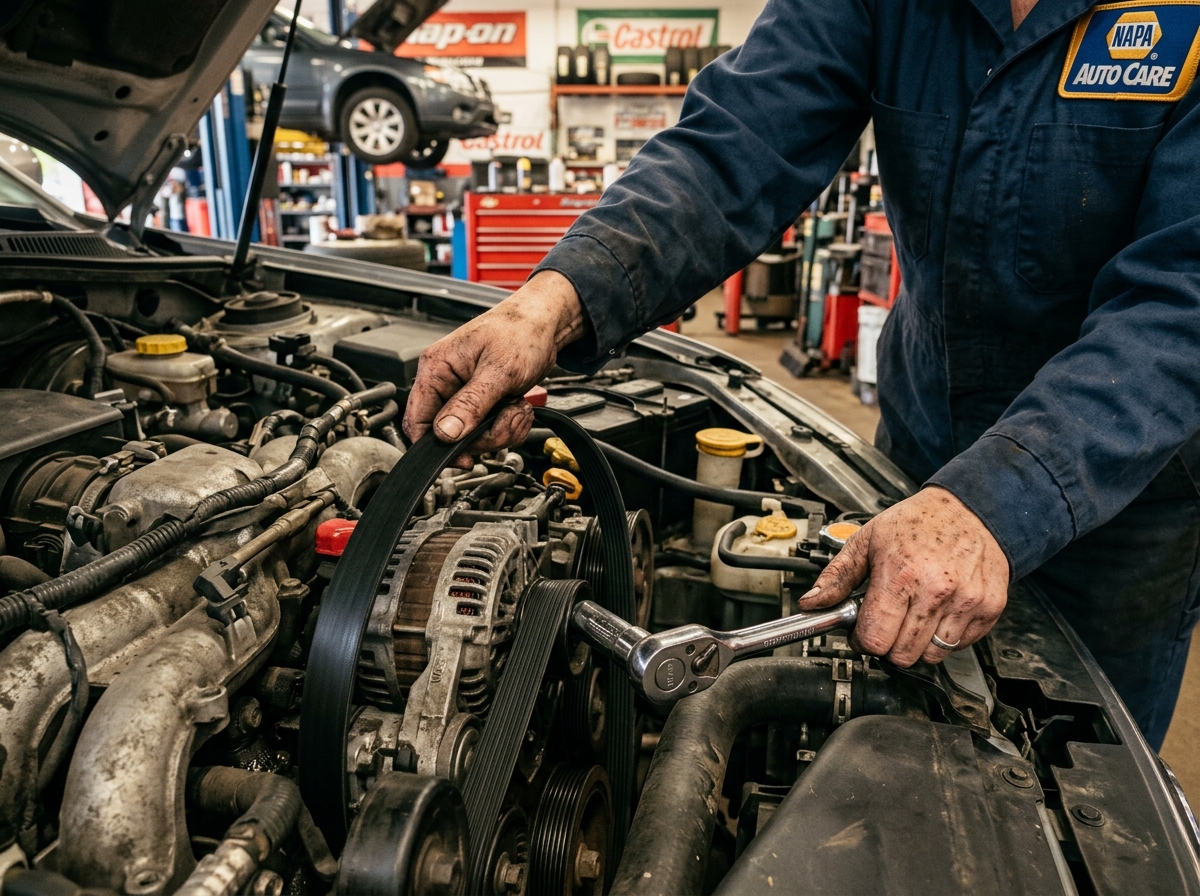
Serpentine belt replacement cost typically falls between $90 and $250 for most vehicles, depending on your car type, location, and whether additional parts like the tensioner need replacing.
Here’s a quick breakdown:
| Cost Component | Typical Range |
|---|---|
| Belt (part only) | $25 – $75 |
| Labor | $60 – $120 |
| Total (belt only) | $90 – $200 |
| With tensioner replacement | Up to $350 |
Popular vehicle estimates:
- Toyota Corolla: $101 – $145
- Ford F-150: $103 – $141
- Honda Accord: $120 – $158
- Toyota Camry: $141 – $195
- Chevrolet Silverado 1500: $207 – $274
That squealing noise coming from under your hood? It could be costing you less than you think — or more than you expect if you ignore it too long.
A failing serpentine belt doesn’t just affect one system. It connects your power steering, alternator, A/C compressor, and sometimes your water pump to your engine. When it goes, everything goes at once. That’s what makes understanding the cost — and the urgency — so important.
In this guide, we break down exactly what drives the price up or down, which vehicles cost more to service, when to DIY vs. call a pro, and how to avoid overpaying.
I’m Faisal S. Chughtai, founder of ActiveX and a digital solutions strategist with hands-on experience researching and analyzing automotive maintenance costs, including serpentine belt replacement cost, to help everyday drivers make informed, budget-smart decisions. Let’s get into everything you need to know.
Basic serpentine belt replacement cost vocab:
What is a Serpentine Belt and Why Does It Matter?
Imagine a single, long, winding rubber band that keeps your entire car’s “life support” systems running. That is your serpentine belt. Invented in 1974 to replace the inefficient multi-belt systems of the past, this component is driven by the engine’s crankshaft. As the engine turns, the belt spins, transferring that mechanical energy to several critical accessories.
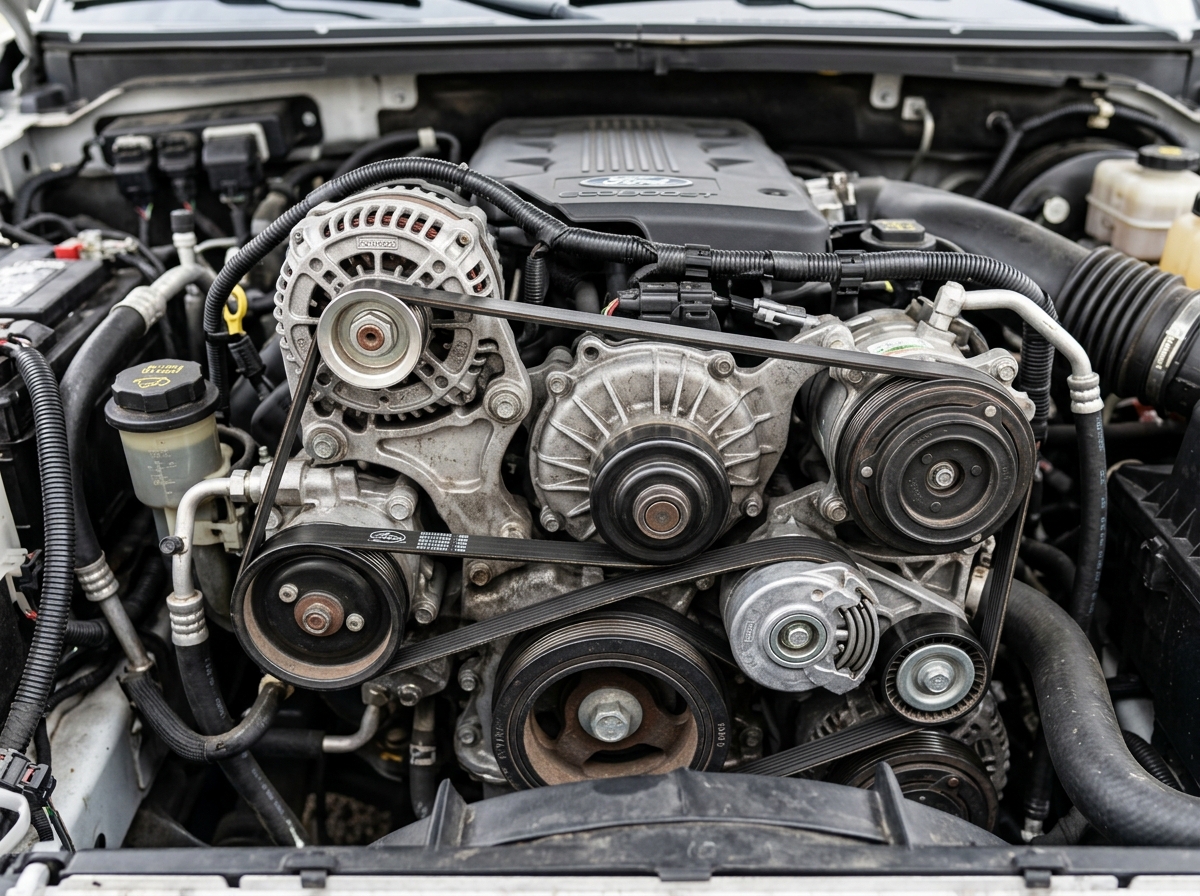
Without a functional serpentine belt, the following systems will likely stop working:
- The Alternator: Your battery won’t charge, and your electrical systems (lights, radio, dashboard) will eventually die.
- Power Steering Pump: Steering your vehicle will suddenly become a heavy, physical workout.
- A/C Compressor: Say goodbye to cool air on a hot summer day.
- Water Pump: In many vehicles, the belt drives the pump that circulates coolant. If this stops, your engine can overheat in minutes, leading to catastrophic engine damage.
Most modern belts are made of EPDM (Ethylene Propylene Diene Monomer). This synthetic rubber is incredibly durable and flexible, designed to withstand the high-heat environment of your engine bay. However, while EPDM is high quality, it isn’t invincible. Heat, age, and exposure to petroleum products like engine oil can cause it to degrade over time. Understanding these automotive basics and how parts function is the first step in being a savvy car owner.
Average Serpentine Belt Replacement Cost in 2025
When we look at the national landscape for 2025, the serpentine belt replacement cost remains one of the more affordable maintenance tasks, provided you catch it early. On average, most drivers will spend between $140 and $191 at a professional shop.
If you are looking for real-time price insights, you’ll find that the price is highly dependent on your specific zip code and the complexity of your engine. For a more tailored figure, you can use a fair price estimator to see what shops in your local area are currently charging.
Breaking Down Parts and Labor for Serpentine Belt Replacement Cost
To understand where your money is going, we have to look at the two main ingredients of the bill:
- Parts ($25 – $75): A standard high-quality belt usually costs between $35 and $60. Premium belts for high-performance or heavy-duty vehicles can reach $150.
- Labor ($60 – $120): This covers the technician’s time. In a simple engine layout, a pro can swap a belt in 15 to 20 minutes. However, most shops have a minimum labor charge (often one hour).
Labor rates vary significantly by region. You might pay $80 an hour in a rural town, while a dealership in a major metropolitan city might charge $150 or more per hour.
How Vehicle Type Impacts Your Serpentine Belt Replacement Cost
Not all engine bays are created equal. The “real estate” under your hood dictates how hard the mechanic has to work to reach the belt.
- Economy Cars ($70 – $150): Vehicles like the Toyota Corolla or Honda Civic usually have plenty of room to work, keeping labor costs on the lower end.
- SUVs and Trucks ($100 – $250): Larger engines often have more complex belt routings or require the removal of plastic shrouds to gain access.
- Luxury and European Vehicles ($150 – $350+): Brands like BMW, Audi, or Mercedes often use specialized tensioners and have very tight engine compartments. This requires more time and specialized tools, which pushes the serpentine belt replacement cost higher.
If you’re already at the shop, you might wonder how much a full tune-up should cost to bundle your maintenance and save on future visits.
Signs and Symptoms of a Failing Serpentine Belt
You don’t want to wait until the belt snaps to realize there’s a problem. A snapped belt means an immediate breakdown. Instead, keep an eye (and ear) out for these warning signs:
- Squealing or Chirping: This is the most common “cry for help.” It usually happens when you first start the car or when you turn the steering wheel sharply. It indicates the belt is slipping.
- Visible Wear: Pop the hood and look at the belt. If you see deep cracks, fraying edges, or missing “chunks” from the grooves, it’s time for a change.
- Glazing: If the underside of the belt looks shiny or “smooth,” it has been overheated and lost its grip.
- Loss of Function: If your A/C suddenly stops blowing cold or your power steering feels “heavy,” the belt might be slipping significantly.
- Battery Light: A slipping belt won’t spin the alternator fast enough, causing the battery light to flicker on your dashboard.
Ignoring these signs can lead to serious engine repair issues. While you’re checking things under the hood, it’s a great time to learn how to replace your cabin air filter to keep the air inside your car just as fresh as the engine is running.
Maintenance Intervals and Lifespan Factors
How long does a belt actually last? Most manufacturers recommend a serpentine belt replacement every 60,000 to 100,000 miles. However, mileage isn’t the only factor.
Several things can shorten a belt’s life:
- Extreme Temperatures: Intense summer heat and freezing winter nights cause the rubber to expand and contract, leading to cracks.
- Fluid Leaks: This is a big one. If you have an oil leak or a coolant leak that drips onto the belt, the chemicals will degrade the rubber rapidly. Oil makes the belt swell and soften, while coolant can make it slip.
- Tensioner Health: If the automatic tensioner is weak, the belt will vibrate and wear out prematurely.
We recommend a visual inspection every 6 months or with every oil change. It takes 30 seconds and can save you a $200 towing bill.
DIY vs. Professional Serpentine Belt Replacement
Can you do this yourself? Absolutely! For many vehicles, this is a “Level 1” DIY task.
What you’ll need:
- A replacement belt (ensure it matches your vehicle’s specs).
- A serpentine belt tool or a long-handled wrench.
- The belt routing diagram (usually found on a sticker under the hood).
The DIY Process:
- Find the automatic tensioner and use your tool to rotate it, releasing the pressure.
- Slide the old belt off the pulleys.
- Route the new belt exactly as shown in the diagram.
- Release the tensioner to lock the new belt in place.
The Catch: On some cars, especially those with “transverse” engines (engines mounted sideways), the space between the engine and the car’s frame is tiny. You might need to remove a tire or use specialized “thin” tools. If you aren’t comfortable working in tight spaces, it’s better to hire a pro. Plus, professionals often provide a warranty on both parts and labor.
While you’re becoming a DIY expert, check out our guide on choosing the right car battery to ensure your electrical system is as healthy as your new belt.
Frequently Asked Questions about Belt Maintenance
Is $400 a reasonable quote for serpentine belt and tensioner replacement?
At first glance, $400 might seem high for a “simple belt,” but it usually includes the belt tensioner assembly. A tensioner alone can cost $100–$200 for the part, plus additional labor. If the mechanic is replacing both, $300 to $400 is a standard market rate. However, if they are quoting $400 for just the belt, you should definitely get a second opinion.
Should I replace the belt tensioner or idler pulleys at the same time?
We often recommend it. The tensioner has a spring and a bearing that wear out at roughly the same rate as the belt. If the bearing in the tensioner or an idler pulley fails, it can shred your brand-new belt in seconds. Replacing them together saves you from paying the labor cost twice.
How long does a serpentine belt replacement take?
A professional mechanic can usually finish the job in 30 to 60 minutes. For a DIYer, expect it to take about an hour the first time you try it, mainly because you’ll spend some time double-checking the routing diagram to make sure the belt is sitting perfectly in the pulley grooves.
Conclusion
At Apex Observer News, we believe that staying informed is the best way to keep your car—and your wallet—in top shape. While the serpentine belt replacement cost is relatively low, the cost of ignoring it is incredibly high. By performing regular visual inspections and listening for those telltale squeals, you can handle this maintenance on your own terms rather than on the side of a highway.
Whether you choose to grab a wrench and do it yourself or visit a trusted local mechanic, staying proactive is the key to automotive longevity. For more tips on keeping your vehicle running smoothly, stay tuned to our latest automotive industry news. Safe driving!
