


Why Cabin Air Filter Replacement Matters for Your Car and Health
Cabin air filter replacement is one of the simplest, most affordable maintenance tasks you can do for your vehicle. Here’s the short version:
Quick Answer: Cabin Air Filter Replacement at a Glance
| Topic | Key Info |
|---|---|
| How often | Every 15,000–30,000 miles, or every 12 months |
| DIY cost | $15–$45 (parts only) |
| Shop cost | $80–$160 (parts + labor) |
| Time to complete | 20–30 minutes |
| Tools needed | Flashlight, gloves, sometimes a trim tool |
| Main signs you need it | Weak airflow, musty smell, more dust inside |
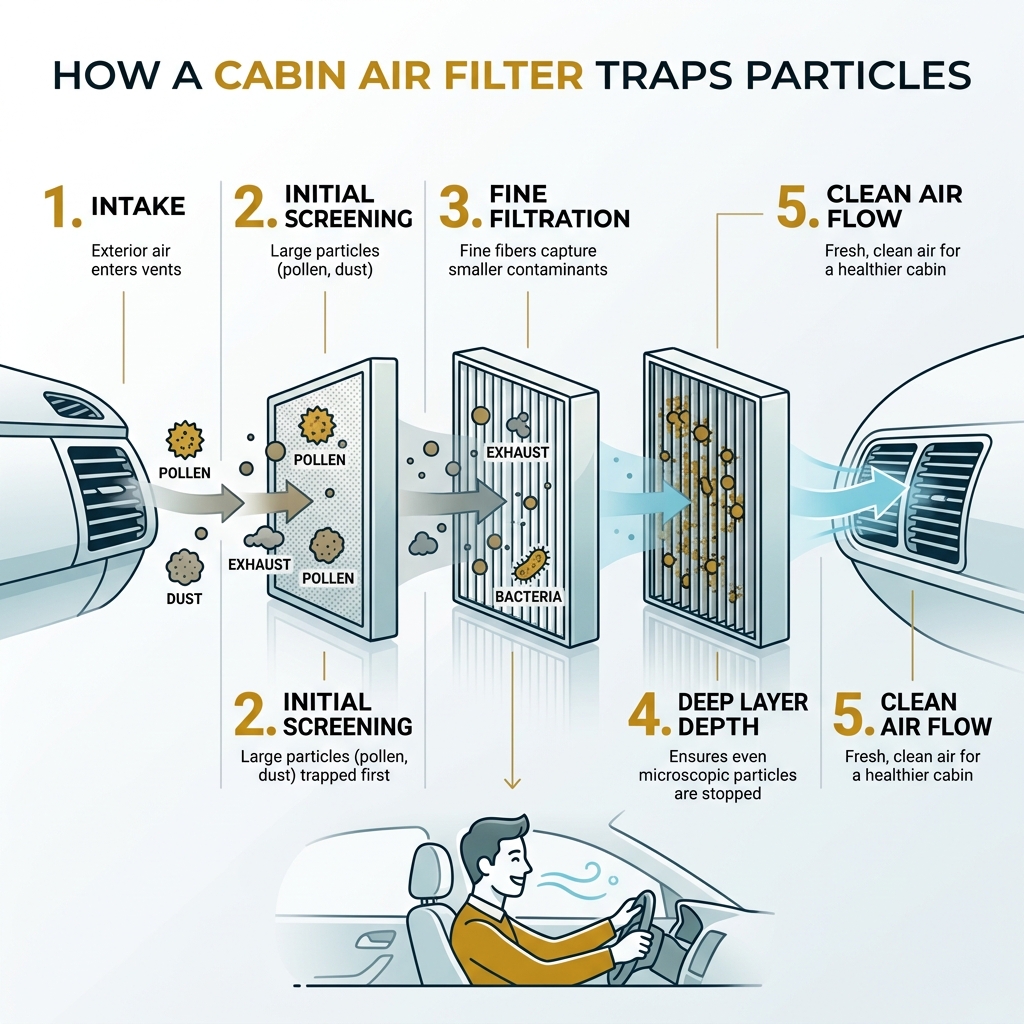
Your car’s cabin air filter quietly cleans every breath you take while driving. It traps pollen, dust, bacteria, exhaust particles, and other airborne contaminants before they reach you and your passengers through the HVAC vents. When it gets clogged, airflow drops, odors build up, and your heating and cooling system has to work harder.
Most drivers don’t think about it — until something smells off or the vents feel weak. The good news? This is a beginner-level DIY fix that takes less than 30 minutes and can save you up to $115 compared to a shop visit.
I’m Faisal S. Chughtai, a digital strategist and tech expert with hands-on experience breaking down complex automotive maintenance topics — including cabin air filter replacement — into clear, actionable guides anyone can follow. Let’s walk through exactly how to get it done.
What is a Cabin Air Filter and Why Does It Matter?
Think of the cabin air filter as the lungs of your vehicle’s interior. While the engine air filter keeps your motor running clean, the cabin air filter is dedicated entirely to the people inside. Its primary job is filtration—stripping the air of pollen, dust, bacteria, and road exhaust before it enters your breathing space.
According to official guidance on Interior Air Quality – Replacing the Cabin Air Filter, maintaining this filter is vital for HVAC protection. Without a functional filter, foreign objects and debris can enter the heater and air conditioning system, leading to potential degradation or even mechanical damage.
When we look at the market, we generally see two main types of filters. Choosing the right one depends on your driving environment and how much you value “that new car smell.”
Standard vs. Activated Carbon Filters
| Feature | Standard (Particulate) Filter | Activated Carbon Filter |
|---|---|---|
| Primary Material | Paper or engineered cotton | Paper + a layer of charcoal/carbon |
| Traps Dust/Pollen | Yes | Yes |
| Eliminates Odors | No | Yes (neutralizes smells) |
| Blocks Fumes | Limited | High (absorbs exhaust and smog) |
| Price Point | Budget-friendly ($10-$20) | Mid-range ($20-$45) |
For those of us living in high-traffic urban areas or near industrial zones, the activated carbon option is a game-changer. It doesn’t just block the dust; it chemically absorbs the smell of the diesel truck idling in front of you.
When to Perform a Cabin Air Filter Replacement
Timing is everything in car maintenance. Most manufacturers, including Toyota experts, recommend a cabin air filter replacement every 15,000 to 30,000 miles. However, some brands like PUREFLOW suggest a more aggressive schedule of every 12,000 to 15,000 miles or every 6 months to ensure peak air quality.
Driving conditions play a massive role in how fast that filter clogs up. If you frequently drive through construction zones, on desert roads, or in heavy city smog, you’ll likely need to swap it out sooner. It’s much like how a tune-up cost can vary based on how hard you push your vehicle; your air filters are the front line of defense against the environment.
Signs You Need a Cabin Air Filter Replacement
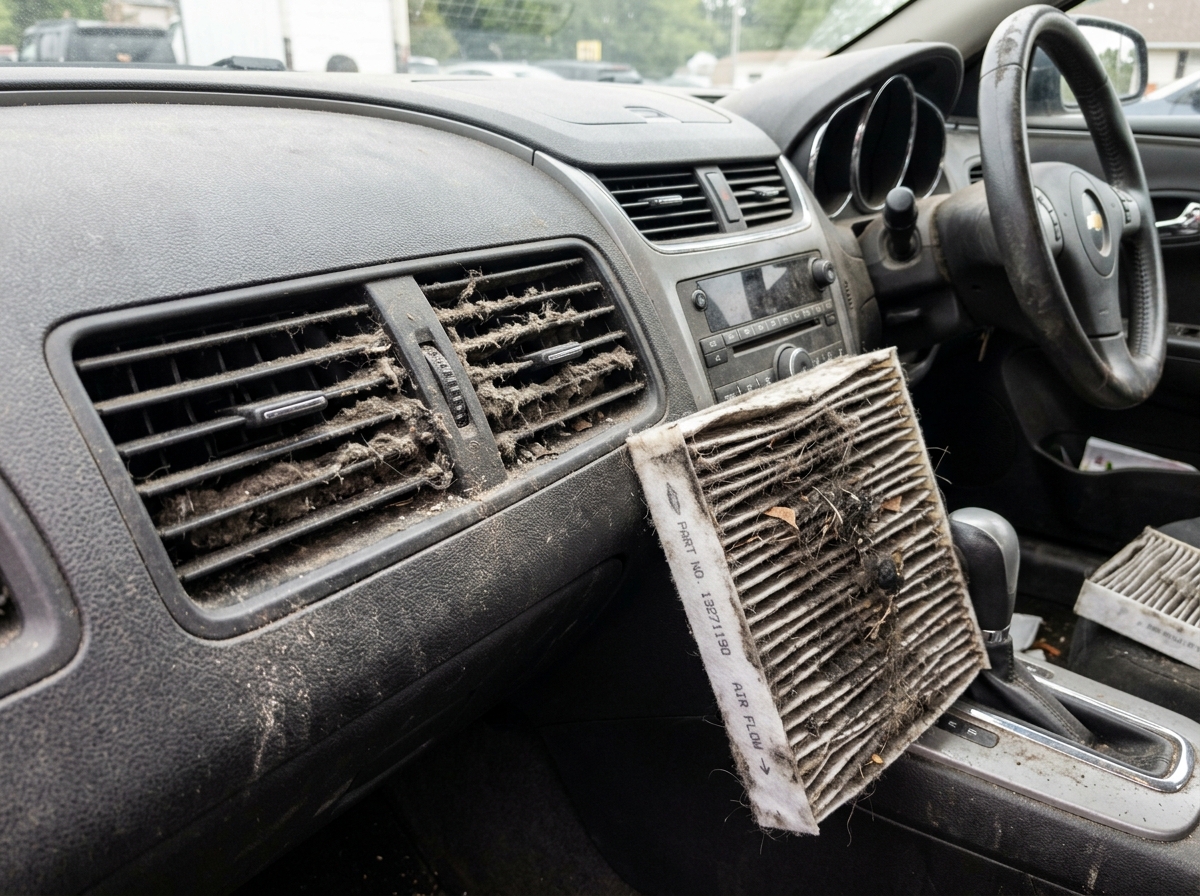
If you aren’t tracking your mileage, your car will eventually start dropping hints that it’s time for a change. Watch (and smell) for these common red flags:
- Weak Airflow: If you have to crank the fan to the highest setting just to feel a breeze, the filter is likely choked with debris.
- Musty Odors: A lingering “dirty gym sock” smell when you turn on the A/C is a classic sign of mold or bacteria trapped in the filter media.
- Excessive Fan Noise: When the filter is restricted, the blower motor has to work harder, often resulting in a whistling or humming sound.
- Increased Allergy Symptoms: If you find yourself sneezing more often inside the car, the filter is no longer trapping pollen effectively.
Ignoring these signs won’t just make you uncomfortable—it can lead to more expensive repairs down the road. While not as pricey as a catalytic converter replacement cost, a burnt-out blower motor caused by a clogged filter is a headache we’d all rather avoid.
How to Replace Cabin Air Filter in 5 Easy Steps
Ready to take matters into your own hands? Before we dive in, let’s gather our supplies. Most modern cars make this a tool-free job, but having a few basics on hand will make it smoother.
The DIY Toolkit:
- Flashlight: Essential for seeing into the dark recesses behind your dashboard.
- Nitrile Gloves: Filters can be incredibly dirty (think dead bugs and soot).
- Safety Glasses: To prevent dust from falling into your eyes when you pull the filter down.
- Trim Removal Tool: Useful for popping plastic clips without scratching the interior.
Just as we might research how to choose the right Duralast car battery to ensure a perfect fit, make sure you’ve purchased the specific filter part number for your vehicle’s year, make, and model before you start.
Step 1: Locate and Access the Filter Housing
In about 80% of vehicles on the road today, the cabin air filter is located directly behind the glove box. However, some cars hide it under the dashboard on the driver’s side or even under the hood near the windshield wipers.
For a popular model like the 2024 Mazda CX-30 Cabin Air Filter Replacement, the process involves opening the glove compartment and squeezing the sides to let it drop down. In other models, like the Mazda CX-50, you might need to unhook a small “damper arm” on the right side of the glove box to allow it to swing fully out of the way.
Pro Tip: Clear out your glove box first. There is nothing more frustrating than having your registration, spare napkins, and old ketchup packets dump onto the floorboards mid-repair!
Step 2: Remove the Old Filter
Once the glove box is lowered, you’ll see a plastic rectangular cover. This is the housing door. It usually snaps off with two plastic tabs on the sides.
Carefully pull the old filter out. We recommend pulling it out slowly and keeping it level; if you yank it, all the trapped leaves, pine needles, and dust will fall into your blower motor. If there is a mess inside the housing, use a vacuum attachment to clean it out before proceeding.
Think of this as preventative care—just as you’d monitor a wheel bearing replacement cost to prevent total axle failure, cleaning the HVAC housing prevents debris from rattling around and damaging the fan.
Step 3: Verify Airflow Direction
This is the most critical step. Look at the side of the old filter before you throw it away. You should see an arrow labeled “AIR FLOW.” Note which way it is pointing (usually downward toward the floor).
When you unbox your new filter, find the matching arrow. For a Tesla Model 3, for instance, the arrows must face toward the rear of the vehicle. If you install the filter upside down, the electrostatic media won’t work as efficiently, and the air resistance could actually whistle as it passes through the pleats.
Step 4: Install the New Filter
Slide the new filter into the slot. It should fit snugly but shouldn’t require force. If it’s buckling or won’t go in, check to see if there’s a stray leaf blocking the track. Ensure the edges are seated properly against the housing walls to create a perfect seal. This ensures that 100% of the air is forced through the filter media rather than leaking around the sides.
Step 5: Reassemble and Test
Snap the housing cover back on until you hear a distinct “click.” If your car uses a screw to secure the cover (like the T20 screw found in some Tesla models), tighten it firmly but don’t over-torque it—plastic threads strip easily!
Reattach the glove box damper arm if your car has one, and snap the glove box back into its tracks. Now, the moment of truth: start the car and turn the A/C on high. You should notice an immediate improvement in airflow and a lack of any “old car” smells.
Finally, if your vehicle has a maintenance computer (common in newer Honda, Toyota, and Tesla models), navigate through the settings on your touchscreen to reset the cabin filter life or maintenance reminder.
Frequently Asked Questions about Cabin Air Filter Replacement
How much does a cabin air filter replacement cost?
The cost difference between DIY and a professional shop is significant.
- DIY: You’ll pay between $15 and $45 for the filter itself.
- Shop/Dealership: You can expect to pay between $80 and $160. Shops typically charge for 0.3 to 0.5 hours of labor, and with labor rates often hitting $100–$150 per hour, you’re essentially paying $50+ just for the convenience of someone else opening your glove box. Doing it yourself can save you upwards of $115.
Can I run my car without a cabin air filter?
Technically, yes, the air will still blow. However, we strongly advise against it. Without a filter, dust, leaves, and even small twigs can enter the HVAC system. This can lead to a clogged evaporator core (which is a multi-thousand dollar repair) or a burnt-out blower motor. Furthermore, your interior will get dusty much faster, and you’ll be breathing in raw road pollutants.
Where is the cabin air filter located in most vehicles?
As mentioned, the most common spot is behind the glove box. To check your specific car, consult your owner’s manual under the “Maintenance” or “Interior” section. If it isn’t behind the glove box, check the passenger-side footwell (near the center console) or under the hood, usually near the base of the windshield on the passenger side.
Conclusion
Taking the time for a cabin air filter replacement is a small investment that pays off in every breath you take. It protects your expensive HVAC system, keeps your interior cleaner, and ensures that you and your passengers aren’t inhaling the worst of what the road has to offer.
Whether you’re driving a rugged Mazda CX-50 or a high-tech Tesla, the steps remain largely the same: locate, remove, verify direction, and replace. By following this guide, you’ve joined the ranks of savvy car owners who know that a little DIY goes a long way.
For more tips on keeping your vehicle in top shape and staying updated on the latest industry trends, check out More automotive industry news at Apex Observer News. We’re here to help you navigate car ownership with ease and confidence. Happy driving!
