

Why Mass Airflow Sensor Cleaning Can Save Your Engine (and Your Wallet)
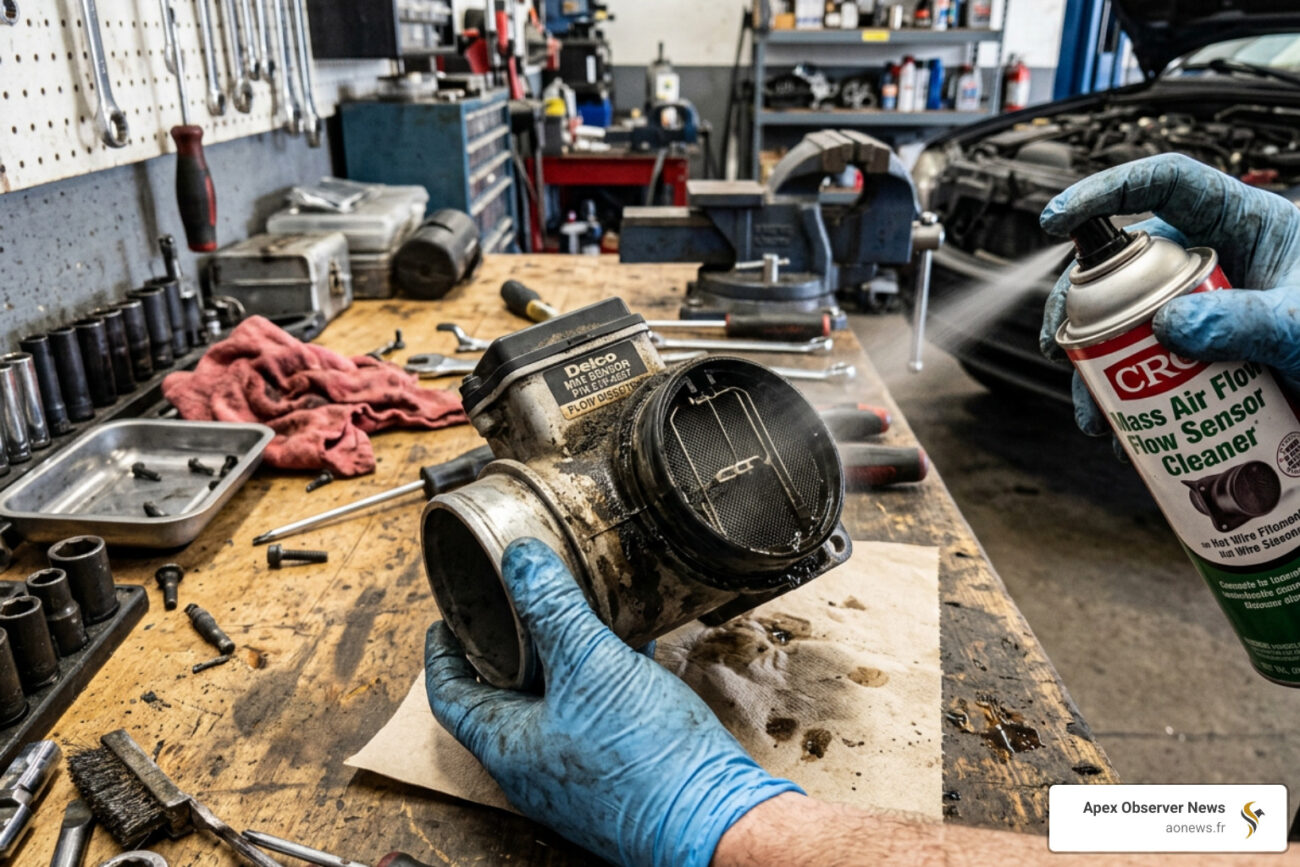
Mass airflow sensor cleaning is one of the easiest and cheapest car maintenance tasks you can do at home. Here’s the quick version:
Quick Answer: How to Clean a MAF Sensor
- Turn off the engine and let it cool
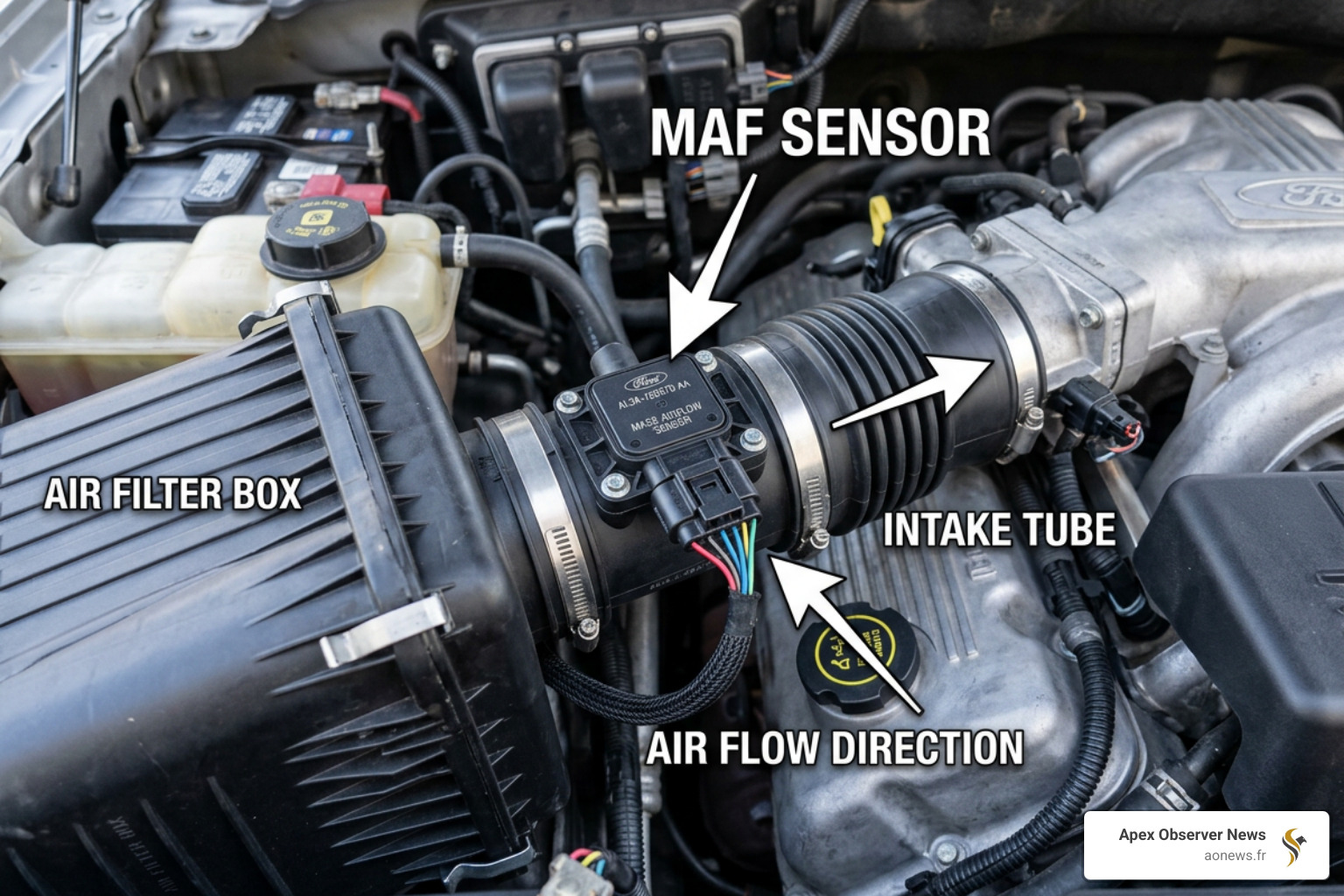
- Locate the MAF sensor between the air filter box and throttle body
- Disconnect the electrical connector
- Remove the sensor carefully
- Spray 10-15 bursts of dedicated MAF sensor cleaner from 4-6 inches away
- Air-dry for at least 30-60 minutes
- Reinstall and reconnect
Cost: Under $20 | Time: 15-30 minutes | Difficulty: Beginner
A small, often-overlooked sensor sitting in your car’s air intake can quietly wreck your fuel economy, cause rough idling, and even trigger that dreaded Check Engine light. That sensor is the Mass Air Flow (MAF) sensor — and when it gets dirty, your engine stops getting accurate air readings. The result? Poor performance, wasted fuel, and sometimes an expensive misdiagnosis.
The good news: a $4 can of MAF cleaner and 30 minutes of your time can often fix all of it — compared to a replacement cost of $317 to $330 at a mechanic.
I’m Faisal S. Chughtai, founder of ActiveX and a longtime automotive tech enthusiast who has researched and written extensively on practical DIY car maintenance topics, including mass airflow sensor cleaning. In this guide, I’ll walk you through everything you need to know to do this job safely and correctly.
Understanding the MAF Sensor and Symptoms of Failure
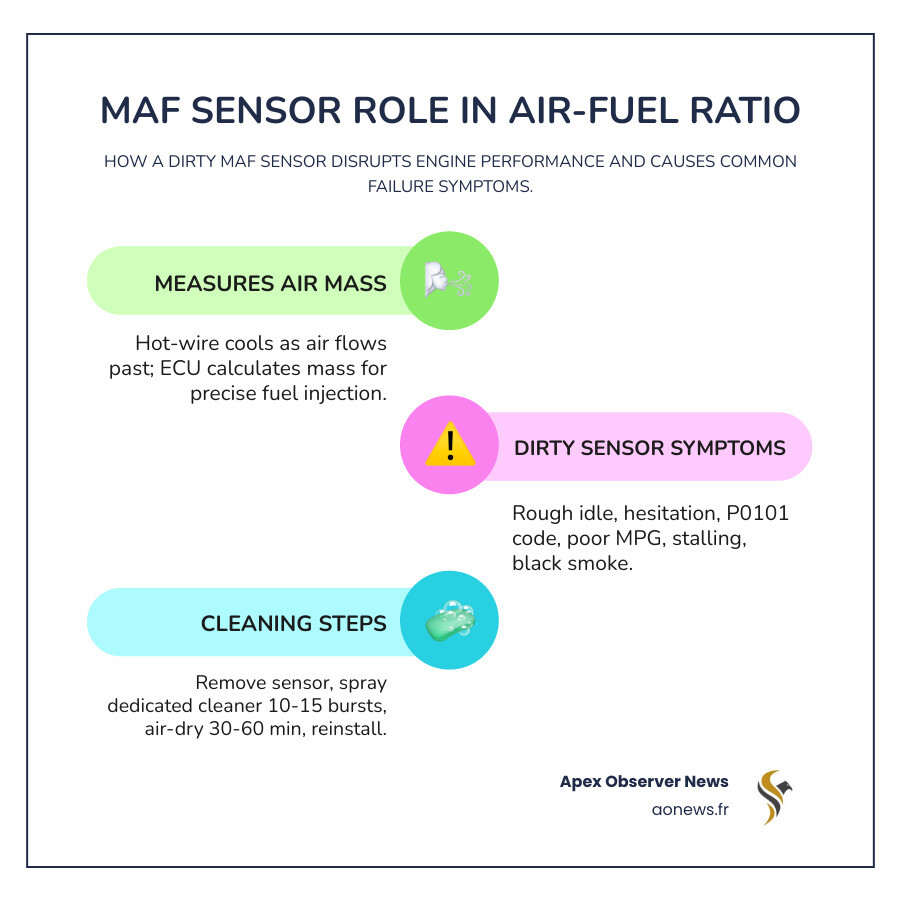
To understand why mass airflow sensor cleaning is so vital, we first need to look at what this little component actually does. Think of the MAF sensor as the “nose” of your engine. It sits in the intake tract and breathes in the air coming through your filter. Its job is to measure the mass of that air and report it to the Engine Control Unit (ECU).
Most modern vehicles use a “hot-wire” sensor. The ECU heats a tiny platinum wire to a specific temperature. As air flows past, it cools the wire. The ECU then calculates how much electrical current is needed to keep that wire hot—more air means more cooling, which means more current. This data allows the ECU to inject the perfect amount of fuel for a clean explosion. You can learn more about how different parts work together in our guide on automotive-basics-car-parts-and-their-functions.
However, not all sensors are the same. While most use the hot-wire or hot-film method, some older Toyota, Lexus, and Mitsubishi vehicles use a Karman-Vortex sensor. These measure air via light waves and turbulence. A huge word of caution here: Karman-Vortex sensors generally cannot be cleaned with traditional sprays, as the chemicals can damage the internal mirrors and phototransistors. Always check your owner’s manual first!
If you suspect your sensor is acting up, you don’t have to guess. You can use a tool like the FIXD scanner and app to check for diagnostic trouble codes (DTCs) or view live data. At idle, the MAF reading should be low and steady; if you rev the engine, that number should climb sharply.
| Factor | DIY Cleaning | Professional Replacement |
|---|---|---|
| Average Cost | ~$4 – $20 | $317 – $330 |
| Time Required | 15 – 30 Minutes | 1 – 2 Hours |
| Tools Needed | Screwdriver, Cleaner | Full Mechanic Set |
| Difficulty | Beginner | Intermediate |
Recognizing a Dirty Sensor
When dust, oil vapors from the PCV system, or fibers from a cheap air filter coat that delicate hot wire, it acts like a blanket. The wire doesn’t cool down as fast as it should, so the sensor “under-reports” the amount of air entering the engine. This leads to a “lean” mixture (too much air, not enough fuel).
Common symptoms we see include:
- Rough Idle: Your car feels like it wants to stumble or die while sitting at a red light.
- Engine Hesitation: You step on the gas, and there’s a split-second delay before the car moves.
- P0101 Code: This is the classic “MAF Sensor Circuit Range/Performance” error code that triggers the Check Engine light.
- Poor MPG: Because the air-fuel ratio is off, your engine becomes significantly less efficient.
- Stalling: In extreme cases, the engine may stall shortly after starting or when coming to a stop.
- Black Smoke: Occasionally, a failing sensor causes a “rich” condition, resulting in unburnt fuel exiting the tailpipe.
Step-by-Step Guide to Mass Airflow Sensor Cleaning
Before you start, make sure the vehicle is parked on a level surface and the engine is completely cool to the touch. Working on a hot engine is not only uncomfortable but can also cause the cleaning chemicals to evaporate too quickly or cause thermal shock to the sensor’s delicate internals. While you’re under the hood, it’s a great time to consider if your car is due for other maintenance; you can check out how-much-should-a-tune-up-cost to see how this DIY task fits into your overall budget.
Essential Tools for Mass Airflow Sensor Cleaning
You don’t need a professional garage to do this, but you do need the right supplies. Using the wrong “household” cleaner is the #1 way people accidentally kill their sensors.
We recommend gathering:
- Nitrile Gloves: To protect your hands from chemicals and keep skin oils off the sensor.
- Safety Glasses: Spraying aerosol cleaners in a confined space can lead to splash-back.
- Specialized MAF Cleaner: Products like CRC Mass Air Flow Sensor Cleaner are the industry standard. They are designed to evaporate instantly and leave zero residue.
- Tools for Removal: Usually a Phillips-head screwdriver or a small socket set. Some modern cars use “security” Torx bits (the ones with a hole in the middle), so check your hardware before you start.
Safe Removal and Application
Follow these steps for a safe mass airflow sensor cleaning experience:
- Unplug the Sensor: Locate the electrical connector on the intake duct. Press the locking tab and gently wiggle the plug off. Do not pull on the wires themselves!
- Remove the Housing: Unscrew the bolts or loosen the clamps holding the sensor in place. Carefully lift it out.
- The No-Contact Rule: This is the most important part. Never touch the sensing wire or plate with your fingers, a cotton swab, or a rag. These elements are thinner than a human hair and incredibly fragile.
- The Spraying Technique: Hold the sensor 4 to 6 inches away. Apply 10-15 short bursts of the cleaner onto the wire or plate. Rotate the sensor to ensure you hit all angles.
- Drying Time Is Not Optional: You must let the sensor air-dry completely. While some sources say 10 minutes, we recommend waiting 60 minutes to be absolutely sure no liquid remains inside the housing. Reinstalling a wet sensor can cause a short circuit when you turn the key.
- Check Airflow Direction: Most sensors have a small arrow on the plastic housing. Ensure this arrow points toward the engine and away from the air filter when you put it back.
Maintenance and Prevention Strategies
Cleaning the sensor is a great “cure,” but prevention is even better. The most common cause of a dirty MAF sensor is a neglected air filter. When the filter gets clogged or develops holes, debris flies straight onto the sensor. Additionally, if you use an “oiled” performance air filter, be extremely careful. Over-oiling these filters is a leading cause of MAF failure, as the excess oil gets sucked into the intake and “bakes” onto the hot sensor wire.
Keeping your intake clean also helps protect other expensive components. For instance, a long-term air-fuel imbalance can eventually lead to how-much-catalytic-converter-replacement-cost becoming a very real concern for your wallet.
Frequency of Mass Airflow Sensor Cleaning
We suggest making mass airflow sensor cleaning a part of your routine maintenance. A good rule of thumb is to clean the sensor every time you replace your engine air filter, which is typically once a year or every 12,000 to 15,000 miles.
If you live in particularly dusty conditions or frequently drive on gravel roads, you might want to perform a check every six months. Regular cleaning prevents the “baked-on” grime that eventually becomes impossible to remove, extending the life of the sensor indefinitely. While you’re performing this annual check, it’s wise to inspect other wear items; for comparison on other maintenance tasks, see how-much-does-a-wheel-bearing-replacement-cost.
Frequently Asked Questions
Can I clean a MAF sensor without removing it?
While some people spray cleaner through the intake with the engine running, we don’t recommend it. Spraying the sensor while it’s installed often just pushes the dirt deeper into the housing or fails to reach the back side of the sensing element. Removing the sensor takes only a few minutes and ensures a thorough, safe clean.
Is it safe to use brake or carburetor cleaner?
Absolutely not. This is the most common mistake DIYers make. Brake and carburetor cleaners are far too aggressive; they can degrade the plastic housing or leave behind a chemical residue that actually attracts more dirt. Only use a product specifically labeled as “Mass Air Flow Sensor Cleaner.” If you are in a pinch, some high-quality electronic contact cleaners are safe, but “dedicated” MAF cleaner is always the best bet.
Will cleaning the sensor turn off my Check Engine light?
If the light was triggered by a P0101 or similar “lean condition” code caused by dirt, then yes, cleaning should fix it. However, the light might not turn off immediately. It usually takes a few “drive cycles” for the ECU to realize the readings are back to normal. Alternatively, you can clear the code manually using an OBD2 scanner. If the light comes back on after cleaning, the sensor may be physically damaged and require replacement.
Conclusion
At Apex Observer News, we believe in empowering car owners to take control of their vehicle’s health. Mass airflow sensor cleaning is the perfect example of a high-reward DIY task. For the price of a cup of coffee and a little bit of your Saturday morning, you can restore lost horsepower, smooth out a shaky idle, and keep your fuel costs down.
If you’ve followed these steps and your car is still acting up, it might be time to look into more significant repairs or consult a professional technician. However, in the vast majority of cases, a quick spray is all it takes to get your engine breathing easy again. For more tips on keeping your vehicle in peak condition, check out our More info about automotive services section. Safe driving!
