

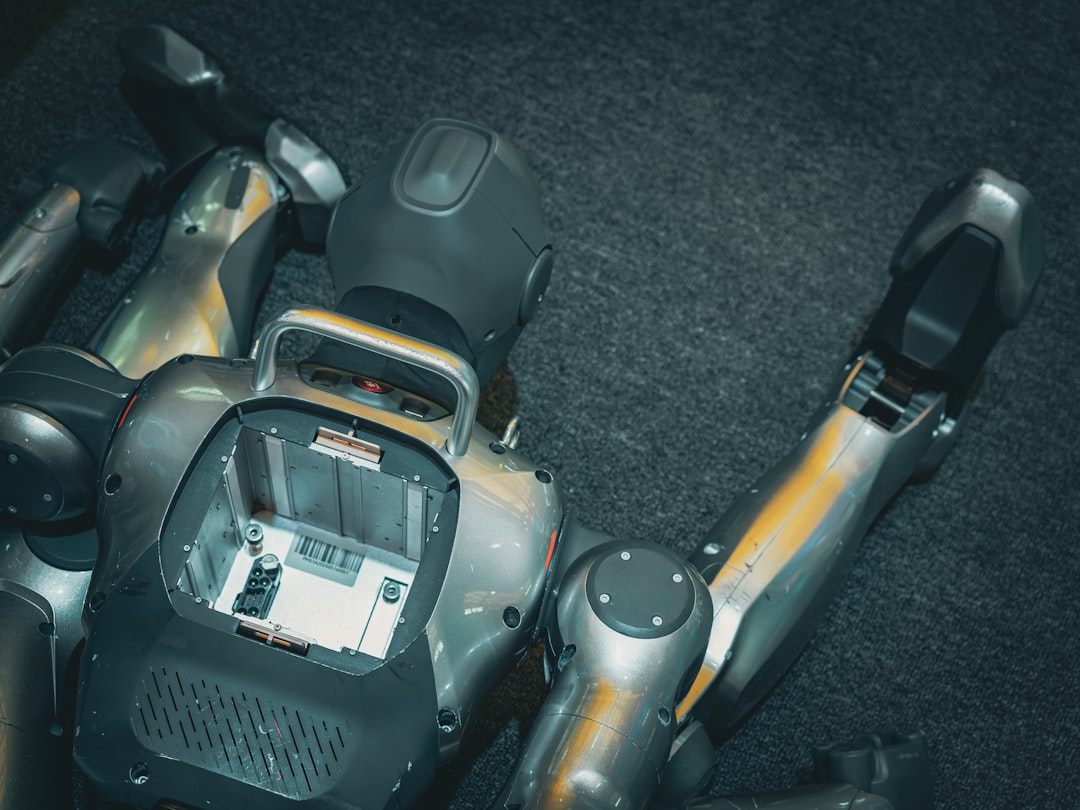
Why Artificial Intelligence and Robotics Are Changing Everything
Artificial intelligence and robotics are two fields that are powerful on their own — but transformative when combined.
Here’s the quick answer if you need it fast:
| Concept | What It Is | Example |
|---|---|---|
| Artificial Intelligence (AI) | The “brain” — software that learns, reasons, and decides | Image recognition, language models |
| Robotics | The “body” — physical machines that sense and act | Robotic arms, autonomous vehicles |
| AI + Robotics | Machines that think and move together | Surgical robots, warehouse AMRs |
The core difference: Robotics without AI follows fixed instructions. AI without robotics lives in software. Together, they create machines that can adapt, learn, and act in the real world.
What was once pure science fiction is now running factory floors, assisting surgeons, and driving cars. Robots have evolved from rigid, pre-programmed industrial arms into flexible systems that perceive their environment, make decisions in real time, and even collaborate safely with humans.
This shift didn’t happen overnight. It took decades of progress — from early probabilistic methods like Kalman filters in the 1980s and 90s, to today’s deep reinforcement learning breakthroughs — to get here. And the pace is only accelerating.
As the International Federation of Robotics notes, a new generation of AI-powered robots is moving out of research labs and into the real world, with analysts forecasting a multitrillion-dollar market ahead.
I’m Faisal S. Chughtai, founder of ActiveX, with hands-on experience across app development, digital strategy, and emerging tech — including the fast-moving world of artificial intelligence and robotics. This guide breaks down everything you need to know, from how these technologies work together to where they’re headed next.

Artificial intelligence and robotics word roundup:
Defining the Synergy: Artificial Intelligence and Robotics
To truly understand the future, we have to look at how these two distinct disciplines have merged. Historically, robotics was about mechanical engineering—building arms that could repeat the same weld a thousand times. AI was about computer science—writing code that could play chess. Today, the synergy between artificial intelligence and robotics means the “body” now has a “mind” capable of sensor fusion, which allows a robot to take data from cameras, LiDAR, and touch sensors to understand its surroundings.

When we talk about AI in this context, we usually categorize it into three levels:
- Weak AI (Narrow AI): This is what we use today. It’s specialized for one task, like a robot vacuum navigating a living room or an industrial arm painting a car door.
- Strong AI: This is the “holy grail”—a machine with the ability to apply intelligence to any problem, much like a human. While we aren’t there yet, Artificial General Intelligence Complete Guide explores this frontier in depth.
- Specialized AI: These are models trained for very specific industrial niches, ensuring high precision in controlled environments.
In the 1980s and 90s, we relied on “probabilistic robotics.” This involved using math like Kalman filters to help robots guess their location. Now, we use deep reinforcement learning, where robots learn through trial and error, much like a child learning to walk.
The Role of Artificial Intelligence and Robotics in Modern Industry
Why is every major corporation suddenly obsessed with this integration? It comes down to the bottom line. By combining these techs, businesses see a massive jump in productivity and efficiency. Unlike humans, AI robots don’t get tired, and unlike traditional robots, they don’t get “stuck” if a box is slightly out of place.
We are seeing a significant shift in worker safety as well. Robots are now taking over “the three Ds”: tasks that are Dull, Dirty, or Dangerous. In the oil and gas industry, for instance, AI-powered crawlers inspect high-pressure pipes, keeping humans out of harm’s way. Furthermore, predictive maintenance allows AI to analyze sensor data from a robotic fleet to predict a mechanical failure before it happens, saving millions in downtime. For those just starting to explore these advantages, our Beginner’s Guide to AI in Business is a great resource.
Categorizing AI-Powered Robotic Systems
Not all robots are built the same. Depending on the task, they take different forms:
- Autonomous Mobile Robots (AMRs): These are the roamers. Using onboard sensors, they navigate warehouses without needing floor wires or magnets.
- Cobots (Collaborative Robots): These are designed to work with us. They have sensors that detect human presence and slow down or stop to prevent injury.
- Articulated Robots: These are the classic factory arms, now enhanced with vision to “see” what they are picking up.
- Humanoids: Robots that mimic human form, often used in research or customer service roles to provide a familiar interface.
| Capability | AMRs | Articulated Robots |
|---|---|---|
| Mobility | High (Wheels/Legs) | Low (Fixed Base) |
| Navigation | Self-mapping (SLAM) | Pre-defined paths |
| Primary Use | Logistics/Delivery | Assembly/Welding |
| AI Focus | Pathfinding/Obstacles | Precision/Grasping |
Core Technologies Powering Intelligent Machines
The magic happens when we feed data into advanced algorithms. Machine learning is the engine here; it allows a robot to improve its performance over time without being explicitly reprogrammed. If a robot fails to pick up a slippery object, the machine learning model adjusts the grip for the next attempt.
Key technologies include:
- Computer Vision: This allows robots to identify objects, navigate obstacles, and even read human facial expressions.
- Natural Language Processing (NLP): This enables us to talk to robots. Instead of coding, a warehouse worker might simply say, “Move that pallet to Zone B.”
- Reinforcement Learning: Using techniques like DeepMind’s DQN, robots learn complex behaviors through a system of digital “rewards.”
- SLAM (Simultaneous Localization and Mapping): This is how a robot builds a map of an unknown environment while keeping track of its own location within it.
Research published in A roadmap for AI in robotics suggests that the next big leap will involve robots that can perform “lifelong learning,” meaning they never stop updating their internal models based on new experiences. To see how these technologies are being applied commercially, check out The Strategic Guide to Using AI in Your Business Today.
Advanced Perception and Decision Making
Modern robots don’t just “see”; they perceive. They use LiDAR (Light Detection and Ranging) to create 3D clouds of their environment and accelerometers to maintain balance. Because these machines need to make split-second decisions—like a self-driving car braking for a pedestrian—we use edge computing. This means the AI processing happens on the robot itself rather than in a distant cloud server, ensuring near-zero latency.
Engineers also use PID controls for smooth movement and path smoothing algorithms to ensure a robot doesn’t move in jerky, robotic zig-zags, but rather in fluid, human-like motions. For a deeper dive into the “narrow” side of these applications, read our A Beginner Guide to Artificial Narrow Intelligence and Beyond.
Real-World Applications Across Industries
We are no longer talking about the future; we are talking about the present. In manufacturing, companies like Audi are using AI to perform real-time quality inspections on assembly lines. In logistics, autonomous guided vehicles (AGVs) and AMRs are the backbone of modern fulfillment centers, optimizing routes to save time and energy.
Agriculture is another surprising leader. Autonomous tractors can now plow, plant, and harvest with minimal human intervention. Robotic weeders use computer vision to identify and zap weeds without using harmful chemicals, a massive win for sustainability. The International Federation of Robotics highlighted these shifts in their AI In Robotics – New Position Paper.
For a broader look at how these systems are deployed, see our guide on the Application of Artificial Intelligence.
Transforming Healthcare and Service Sectors
In the healthcare sector, the stakes are at their highest. Surgical robotics allow doctors to perform minimally invasive procedures with a level of precision that the human hand simply cannot match. Beyond the operating room, we see disinfection robots using UV light to sanitize hospital wings and remote monitoring systems that alert staff if a patient’s vitals drop.
In the service sector, robots are greeting customers in retail stores or delivering “made-to-order” lattes in coffee shops. While these applications are exciting, they bring up vital questions about privacy and bias, which we cover in AI and Ethics: Navigating the Complex Landscape of Artificial Intelligence.
Educational Pathways and Research Hubs
If you’re looking to enter this field, the educational landscape is booming. Programs like the Bachelor of Applied Technology in AI & Robotics at Houston City College (HCC) offer hands-on experience in world-class AI laboratories. These courses are often developed in partnership with industry giants like Nvidia, AWS, Intel, Apple, and IBM, ensuring students learn on the same hardware used in the real world.
Other notable hubs include:
- Oregon State’s CoRIS Institute: Home to 180 graduate students focusing on the intersection of ethics, policy, and robotics.
- Georgia Tech’s OMSCS: Their “Robotics: AI Techniques” course, created by Sebastian Thrun (the mind behind Google’s self-driving car), teaches students how to build autonomous vehicles from scratch.
Education is changing fast, and AI is even helping with the grading! Learn more at How AI is Grading the Future of Education.
Specialized Training for Future Engineers
To succeed in artificial intelligence and robotics, a strong foundation in Python programming is essential. You’ll also need to master linear algebra and probabilistic inference to understand how robots “think” about uncertainty.
Aspiring engineers should look into:
Navigating the Challenges and Future of AI in Robotics
Despite the hype, we face significant hurdles. Robustness is a major one—an AI that works in a clean lab might fail in a rainy, chaotic construction site. There are also massive data requirements; training a robot to “grasp” a new object can take thousands of hours of simulation.
We also have to address ethical concerns. As robots become more autonomous, who is responsible if one makes a mistake? This is why Explainable AI (XAI) is so important—it’s not enough for a robot to make a decision; we need to know why it made it. And of course, there is the looming question: Will Your Job be Next with AI Taking Over?
Future Trends in Artificial Intelligence and Robotics
Looking ahead, we see several exciting trends:
- Edge AI: More processing power on the robot for faster, safer actions.
- Sustainable Computation: Reducing the massive energy footprint of training AI models.
- Zero-shot Learning: Teaching a robot to perform a task it has never seen before by using general knowledge.
- Neuromorphic Hardware: Chips that mimic the human brain’s structure for ultra-efficient processing.
The market is reacting to these breakthroughs in real-time. For instance, DeepSeek’s $6 Million AI Breakthrough Sparks $2 Trillion Market Shock in USA Tech shows just how much value is tied to efficiency in this space.
Frequently Asked Questions about AI and Robotics
What is the main difference between AI and robotics?
AI is the “brain” (software/algorithms), while robotics is the “body” (hardware/actuators). Robotics deals with physical movement and sensing, whereas AI deals with data processing, learning, and decision-making. You can have a robot without AI (a simple arm) and AI without a robot (a chatbot).
Can robots learn new tasks without being programmed?
Yes, through machine learning and reinforcement learning. Instead of a human writing every line of code for a movement, the robot “practices” in a simulation millions of times until it finds the most efficient way to complete a task.
Are AI-powered robots safe to work alongside humans?
Modern cobots are designed with safety as a priority. They use specialized sensors to detect human proximity and force-limiting tech to ensure that if a collision does happen, it is harmless. However, safety standards like ISO 10218 are constantly evolving to keep up with smarter machines.
Conclusion
At Apex Observer News, we believe the convergence of artificial intelligence and robotics is more than just a tech trend—it’s a fundamental shift in how we interact with the physical world. From the precision of a surgical arm to the efficiency of a self-driving tractor, this technological convergence is solving some of our most complex global challenges.
The focus will shift from “can we build it?” to “how do we deploy it responsibly?” Innovation is moving at breakneck speed, and staying informed is the only way to navigate this new landscape.
