


What Is Hood Stock and Why Investors Are Watching HOOD Right Now
Hood stock refers to shares of Robinhood Markets, Inc., traded on the Nasdaq under the ticker symbol HOOD. Here’s a quick snapshot for anyone who wants the fast facts:
| Metric | Value |
|---|---|
| Current Price | $74.80 (+1.92%) |
| Market Cap | ~$67.3B |
| 52-Week Range | $29.66 – $153.86 |
| P/E Ratio (TTM) | ~36.49 |
| EPS (TTM) | $2.05 |
| Revenue (TTM) | $4.47B |
| Analyst Consensus | 82% Buy |
| Average Price Target | $124.62 |
| YTD Performance | -35.11% |
| 1-Year Performance | +103.75% |
HOOD is down sharply from its 52-week high of $153.86, but analysts still see roughly 67% upside from current levels. The stock is volatile — with a beta of 2.45 — but the company is profitable, with a 42% net profit margin and $1.88B in net income over the past year.
Robinhood started as a commission-free trading app. Now it’s pushing into AI tools, private market investing, premium credit cards, and banking. That transformation is what’s driving investor interest — and debate.
I’m Faisal S. Chughtai, founder of ActiveX and a digital strategy expert who has tracked hood stock closely as part of broader fintech and investment trends. I’ll break down everything you need to know to make sense of where HOOD stands today.
Current Market Snapshot: Analyzing the Hood Stock Price
When we look at the current state of hood stock, we see a company that has matured significantly since its 2021 IPO. As of our latest data, the stock is trading around $74.80. While the year-to-date performance shows a dip of approximately 35%, it is important to look at the broader picture: the stock has surged over 103% in the last year. This tells us that while there is short-term pressure, the long-term recovery story remains intact for many.

The 52-week range for hood stock is quite wide, stretching from a low of $29.66 to a high of $153.86. This high level of volatility is reflected in its Beta, which sits between 2.45 and 2.55. For beginners, this means the stock tends to move much more aggressively than the overall market. If the S&P 500 moves 1%, HOOD might move 2.5%. It’s a bit of a roller coaster, but for those with a stomach for it, the potential rewards have been substantial.
Financially, the company is on much firmer ground than it was a few years ago. With a market capitalization hovering between $66B and $68B, Robinhood is no longer just a “startup app.” It is a financial heavyweight.
HOOD Key Financial Metrics (TTM)
| Metric | Performance Data |
|---|---|
| Revenue | $4.47B – $4.50B |
| Net Income | $1.88B |
| Profit Margin | 42.10% |
| Earnings Per Share (EPS) | $2.05 |
| Trailing P/E Ratio | 35.64 – 36.49 |
| Average Daily Volume | 28.75M – 40.2M shares |
These numbers suggest that the company is effectively monetizing its user base. A profit margin of over 42% is impressive for any financial services firm, indicating that for every dollar of revenue, a significant portion is dropping straight to the bottom line. For more info about hood stock, we can see that the market is currently pricing the company at a premium P/E ratio, reflecting high expectations for future growth.
Key Growth Drivers and Recent Product Innovations
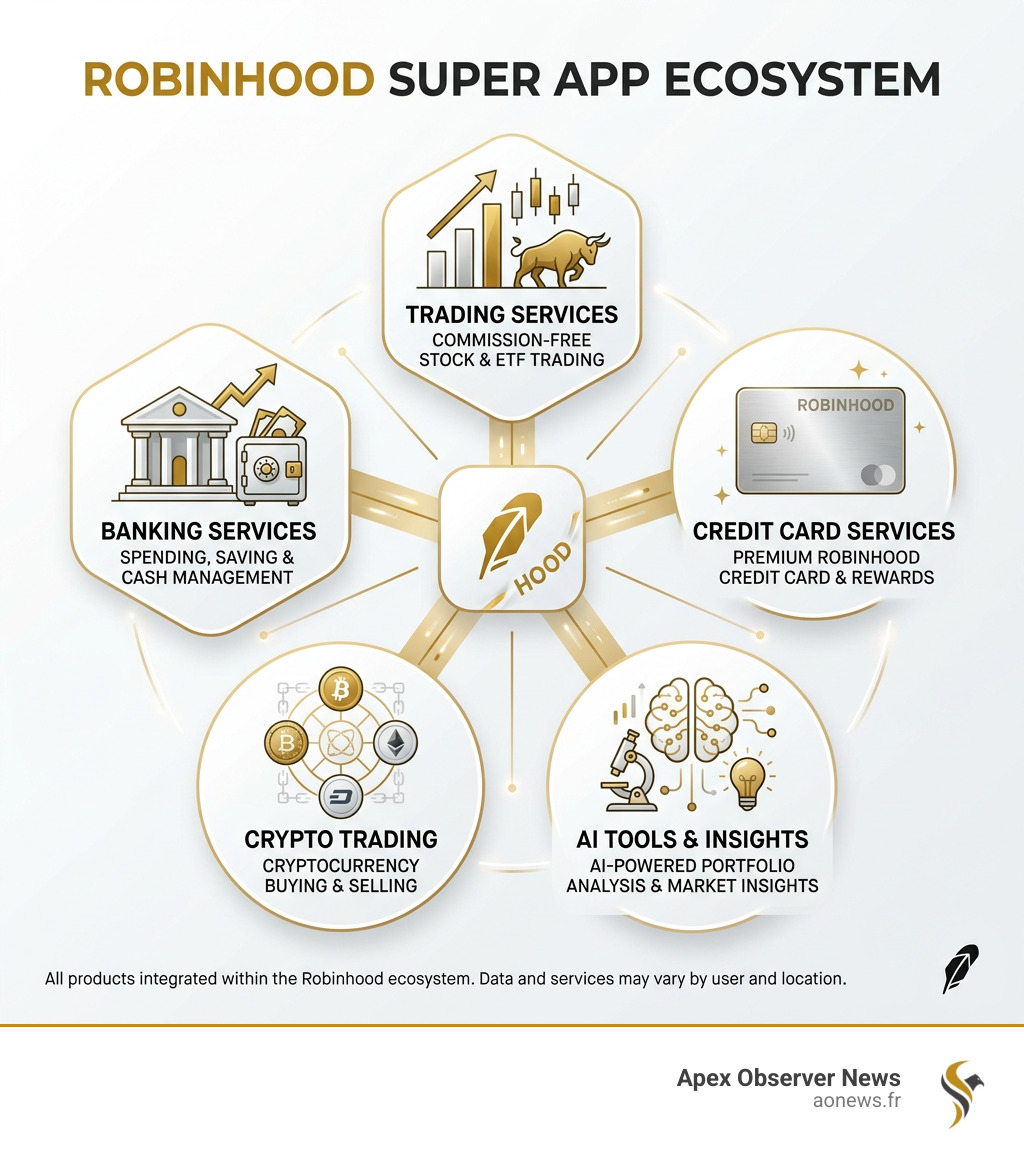
We’ve noticed that Robinhood is no longer content being just a place to trade stocks. They are aggressively moving toward becoming a “financial super app.” This strategic shift is designed to capture more of the “wallet share” of their 25 million+ investors.
One of the boldest moves is the launch of the Robinhood Platinum Card. Priced at a $695 annual fee, it is a direct shot at established premium cards. The card offers over $3,000 in annual perks, including autonomous ride credits and TSA PreCheck access. By targeting affluent clients, Robinhood is diversifying away from just the “retail trader” demographic and moving into high-net-worth territory.
In addition to physical products, we are seeing a heavy lean into Artificial Intelligence. The company recently introduced Cortex Digests, an AI-driven tool for its Gold tier subscribers. This tool provides personalized insights, helping users navigate complex market data without needing a finance degree. Furthermore, the introduction of family trust and custodial accounts signals that Robinhood wants to grow with its users as they move through different life stages—from their first $100 trade to managing family wealth.
Another exciting development is the Venture Fund I. This initiative allows retail investors to gain access to the private markets—an area usually reserved for institutional “big wigs.” Through this fund, everyday investors can get a piece of private companies like Databricks or SpaceX before they even hit the public exchange. According to Robinhood’s AI Tools And Family Accounts Signal Super App Ambitions, these moves are all part of a larger plan to make the platform indispensable for all things money.
Strategic Evolution and Revenue Streams
Our analysis shows that Robinhood’s revenue is becoming increasingly diversified. While “Payment for Order Flow” (PFOF) was once the main story, the company has built several other powerful engines.
1. Cryptocurrency Trading: Crypto remains a massive driver for hood stock. With the recent surges in Bitcoin and other digital assets, trading volumes on the platform often spike. Robinhood has also launched its own “chain” testnet and offers educational “Learn and Earn” modules to keep users engaged with the crypto ecosystem.
2. The Gold Subscription Tier: The “Gold” membership is becoming a cornerstone of their business model. For a monthly fee, users get higher interest on uninvested cash (currently around 4% APY), lower margin rates, and now the AI Cortex tools. This provides a steady, predictable stream of recurring revenue.
3. Banking and Deposits: The banking unit is growing at a staggering pace. Robinhood banking unit crosses $1 bln in deposits with over 65,000 customers. By offering features like cash home delivery and high-yield savings, they are successfully competing with traditional banks.
4. 24/5 Trading and Advanced Tools: Robinhood was a pioneer in 24-hour trading for select stocks and ETFs. They continue to push the envelope with “Robinhood Legend,” a desktop platform designed for active traders who need advanced charting and technical indicators. This helps them retain “power users” who might otherwise move to more complex brokerages.
Analyst Outlook and Future Catalysts
What does Wall Street think about the future of hood stock? The consensus is surprisingly bullish, though not without some notes of caution.
Expert Ratings for Hood Stock
Currently, about 82% of analysts covering the stock have a “Buy” rating. The average price target sits at $124.62, which represents a massive upside from the current $74 level. However, some firms have recently re-evaluated their positions. For instance, Robinhood price target lowered to $110 from $135 at Mizuho following a February update that showed mixed trading activity. Despite the lower target, Mizuho maintained an “Outperform” rating, suggesting they still believe in the company’s long-term trajectory.
Upcoming Earnings and Hood Stock Performance
The next major catalyst for the stock will be the earnings report scheduled for April 29, 2026. Analysts are expecting an EPS of approximately $0.53. In previous quarters, Robinhood has shown a knack for beating expectations—their Q4 2025 earnings beat estimates by nearly 5%.
Investors should keep a close eye on monthly trading data. The stock recently took a hit because Robinhood Stock Drops after Reporting Mixed Trading Activity for February. While crypto trading was a “bright spot,” equity trading volumes showed some cooling. This sensitivity to monthly data is why the stock remains a favorite for active traders but requires patience from long-term holders.
Frequently Asked Questions about HOOD
Is hood stock a buy, hold, or sell?
Based on the current analyst consensus of 82% “Buy” and an average price target that suggests over 60% upside, many experts view HOOD as a “Buy” for those with a long-term horizon. However, due to its high beta (volatility), conservative investors might prefer to “Hold” or wait for a significant pullback.
What are the main risks for Robinhood investors?
The primary risks include:
- Market Volatility: Since a large portion of revenue comes from trading volumes, a boring or “flat” market can hurt earnings.
- Regulatory Scrutiny: The SEC and state regulators frequently look into PFOF and crypto practices.
- Competition: Rivals like Coinbase and traditional brokers are constantly launching competing features like 24/5 trading.
Does Robinhood stock pay a dividend?
No, Robinhood does not currently pay a dividend. The company is focused on reinvesting its profits into new product launches, AI development, and expanding its “super app” ecosystem.
Conclusion
At Apex Observer News, we believe that hood stock represents more than just a trading app; it’s a bellwether for the “democratization of finance.” While the road has been bumpy—and the 52-week high of $153 seems a long way off—the company’s pivot toward becoming a comprehensive financial hub is a powerful narrative.
With high profit margins, a growing banking sector, and a foot firmly planted in the future of crypto and AI, Robinhood is positioning itself as a long-term compounder. Whether you are a beginner looking at your first stock photo or a seasoned pro, HOOD is a ticker that demands your attention. For those looking to diversify their portfolio further, explore more info about business stocks on our platform.
