


Why Health Insurance Plans Matter More Than Ever
Health insurance plans are structured agreements that help cover your medical costs — from routine checkups to emergency hospital stays.
Here’s a quick breakdown of the main types available in the U.S.:
| Plan Type | Who It’s For |
|---|---|
| Individual & Family | People buying their own coverage |
| Employer-Sponsored | Workers covered through their job |
| Medicare | Adults 65+ or those with disabilities |
| Medicaid | Low-income individuals and families |
| ACA Marketplace | Anyone shopping for subsidized coverage |
Metal tiers — Bronze, Silver, Gold, and Platinum — determine how costs are split between you and your insurer. Bronze means lower monthly premiums but higher out-of-pocket costs. Platinum flips that equation.
All ACA Marketplace plans must cover 10 essential health benefits, including:
- Hospitalization
- Prescription drugs
- Mental health services
- Preventive care (often at $0 cost)
- Maternity and newborn care
Choosing the right plan affects your budget and your health. A wrong pick can mean skipped care or surprise bills.
I’m Faisal S. Chughtai, founder of ActiveX, with deep expertise in researching and simplifying complex topics — including health insurance plans — for everyday readers. This guide will walk you through everything you need to make a confident, informed choice.
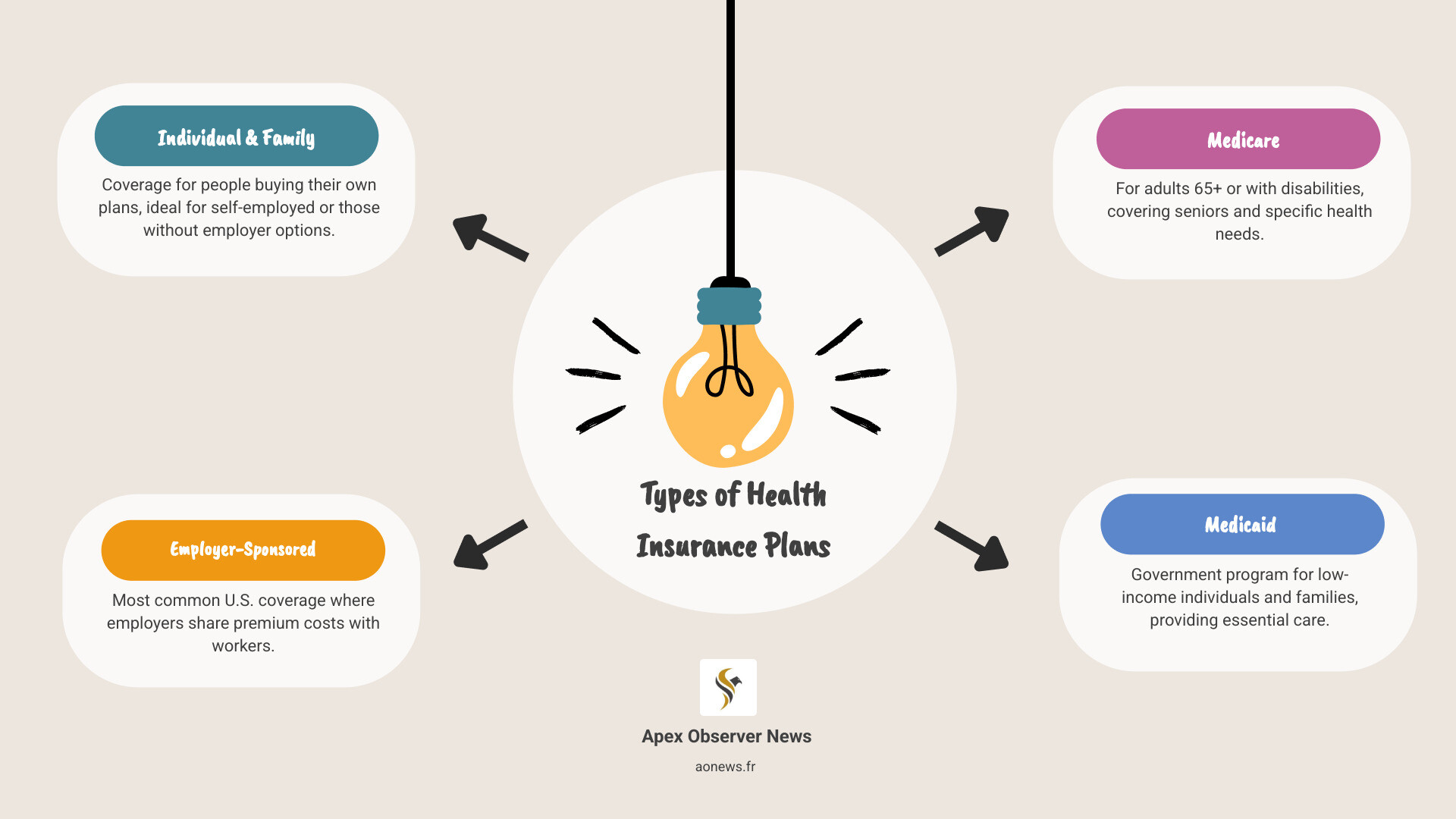
Understanding the Different Types of Health Insurance Plans

Navigating health insurance plans can feel like trying to read a map in a different language. However, most coverage fits into a few primary buckets. For many of us, the journey starts at the office. Employer-sponsored insurance is the most common way Americans get covered, where the company often picks up a significant portion of the monthly premium.
If you are self-employed, a freelancer, or work for a small business that doesn’t offer benefits, you’ll likely look into individual and family plans. These are policies you buy yourself, either directly from an insurance company or through a government exchange.
For specific populations, government programs provide a vital safety net:
- Medicare: Primarily for those aged 65 and older, or younger people with certain disabilities. You can see CMS Medicare coverage details to understand how this federal program supports millions.
- Medicaid: A joint federal and state program that provides health coverage to some low-income people, families and children, pregnant women, the elderly, and people with disabilities.
To get a broader perspective on how these systems fit into the global financial landscape, you can read more info on modern insurance industries. When you’re ready to dive into the specifics of what’s available to you, the official Marketplace access point is the best place to start.
On-Exchange vs. Off-Exchange Options
When shopping for health insurance plans, you’ll hear the terms “on-exchange” and “off-exchange.” It sounds like stock market jargon, but it’s actually quite simple.
On-exchange plans are those sold through the ACA Marketplace. The biggest perk here is financial help; you can only receive premium tax credits and cost-sharing reductions if you buy a plan “on” the exchange. All these plans are guaranteed to cover essential health benefits and cannot deny you for pre-existing conditions.
Off-exchange plans are purchased directly from private insurers. While they still must meet many ACA requirements, you won’t get any federal subsidies to help pay for them. People often choose these if they don’t qualify for subsidies and want access to a specific provider network not available on the public exchange. Navigating the insurance landscape requires knowing which door to walk through to find the best value for your specific income level.
Supplemental and Specialized Coverage
Sometimes, a standard medical plan isn’t enough. Many people choose to add “riders” or separate policies for specific needs. Dental and vision insurance are the most common additions, as many adult medical plans do not include them.
If you’re a digital nomad or frequent traveler, you might need more than what a local plan offers. You can shop for international insurance to ensure you’re protected no matter where your passport takes you. Additionally, supplemental “gap” insurance can provide a cash payout if you’re hospitalized or diagnosed with a critical illness, helping cover that high deductible.
Comparing Metal Tiers and Cost-Sharing Structures
The “Metal Tiers” are designed to help us compare health insurance plans “apples-to-apples.” They don’t reflect the quality of care you receive, but rather how you and the insurance company share the costs.
| Metal Tier | Monthly Premium | Out-of-Pocket Cost | Insurer Pays | You Pay |
|---|---|---|---|---|
| Bronze | Lowest | Highest | 60% | 40% |
| Silver | Moderate | Moderate | 70% | 30% |
| Gold | High | Low | 80% | 20% |
| Platinum | Highest | Lowest | 90% | 10% |
Bronze and Silver Plan Specifics
Bronze plans are the budget-friendly choice for the healthy and the brave. They feature the lowest monthly payments, making them ideal if you rarely see a doctor and just want “catastrophic” protection against major accidents. However, the deductibles can be quite high, meaning you’ll pay more out of your own pocket before the insurance kicks in.
Silver plans are the “Goldilocks” of the insurance world. They offer moderate premiums and deductibles. Most importantly, if you qualify for “cost-sharing reductions” based on your income, you must choose a Silver plan to get those extra savings. These reductions can lower your deductible from thousands of dollars down to near zero. For a deeper look, you can find details on Silver plan benefits that explain how these mid-level plans balance cost and care.
Gold and Platinum Premium Coverage
If you have a chronic condition, take expensive medications, or are planning to start a family, Gold and Platinum plans are often the smarter financial move. While the monthly bill is higher, the “hit” you take when you actually visit the doctor is much smaller.
These plans usually have very low deductibles, meaning the insurance company starts paying its share almost immediately. If you’re trying to budget for a year with high medical usage, you should find your specific plan details to see if the higher premium saves you more in the long run on copays and coinsurance.
Essential Benefits and Preventive Care Coverage
Under the Affordable Care Act (ACA), all Marketplace health insurance plans are required to cover a set of 10 “Essential Health Benefits.” This ensures that no matter which plan you choose, you won’t be left high and dry for basic needs. These include:
- Ambulatory patient services (outpatient care)
- Emergency services
- Hospitalization
- Pregnancy, maternity, and newborn care
- Mental health and substance use disorder services
- Prescription drugs
- Rehabilitative and habilitative services and devices
- Laboratory services
- Preventive and wellness services and chronic disease management
- Pediatric services, including oral and vision care
The Value of $0 Preventive Care
We’ve all heard that “an ounce of prevention is worth a pound of cure,” and the insurance industry finally agrees. Most health insurance plans cover nationally recommended preventive services at $0 cost to you, provided you stay in-network.
This means you can get your annual wellness exam, flu shots, and screenings for things like high blood pressure or diabetes without paying a dime—no copay, no deductible. It’s a win-win: you stay healthy, and the insurance company avoids paying for expensive treatments later. For seniors, it’s also helpful to see CMS Medicare coverage details to see which screenings are included for those over 65.
Managing Prescription Costs
Medicine can be expensive, but your plan has tools to help. Most insurers use a “formulary,” which is a list of covered drugs divided into tiers. Tier 1 usually consists of generic drugs, which can be as low as $0 to $10 for a month’s supply.
Many plans also offer mail-order pharmacy services that give you a 90-day supply for a lower price than three 30-day refills at a retail store. To keep track of your medications and see what you’ll owe, you should sign in to manage prescriptions through your member portal. Some modern plans even include caps on life-saving medicine, like a $25 maximum for insulin.
How to Enroll and Manage Your Coverage
Timing is everything when it comes to health insurance plans. For most people, the window to sign up is Open Enrollment, which typically runs from November 1 to January 15. If you miss this window, you might have to wait an entire year to get covered.
However, life happens. If you experience a “Qualifying Life Event,” you may be eligible for a Special Enrollment Period. These events include:
- Getting married or divorced
- Having a baby or adopting
- Losing other health coverage (like leaving a job)
- Moving to a new ZIP code
- Changes in your income that affect your subsidy eligibility
Steps to Shop and Enroll
Ready to dive in? Here is a simple checklist to get you through the process:
- Gather your info: You’ll need your ZIP code, household size, and an estimate of your total income for the coming year.
- Use the preview tools: Don’t wait until the deadline. You can check eligibility to change plans or preview prices early.
- Compare the “Total Cost”: Don’t just look at the premium. Consider the deductible and out-of-pocket maximum.
- Check your doctors: Make sure your preferred physicians and hospitals are “in-network” for the plan you’re considering.
Handling Tax Forms and Reporting
Once you’re enrolled, the paperwork doesn’t quite end. If you received a subsidy to help pay for your plan, you will receive Form 1095-A in the mail (or online) early the following year. You need this form to file your taxes and “reconcile” the credit you received with your actual income.
It is vital to report any income changes to the Marketplace immediately. If you make more money than you estimated, you might have to pay back some of the subsidy at tax time. Conversely, if you make less, you could get a bigger refund! You can easily access your tax documents through your insurer’s secure portal to stay ahead of the game.
Maximizing Your Benefits with Virtual Care and Rewards
Modern health insurance plans are about more than just hospital bills; they are becoming digital health partners. Telehealth has exploded in popularity, offering 24/7 access to doctors via your smartphone. Many plans now offer $0 virtual urgent care for minor issues like pink eye, rashes, or the flu.
Apps like Sydney Health or myCigna allow you to chat with a nurse, find a nearby doctor, or even pull up your digital ID card at the pharmacy. We highly recommend you download the Sydney Health app if you’re an Anthem member to take advantage of these integrated features.
Member Discounts and Wellness Rewards
Who doesn’t love getting paid to be healthy? Many insurers now offer rewards programs where you can earn gift cards or premium discounts for completing simple tasks like:
- Getting your annual flu shot
- Completing a health risk assessment
- Hitting a certain number of steps on your fitness tracker
- Attending health coaching sessions
Beyond rewards, being a member often grants you access to “hidden” discounts on gym memberships, hearing aids, and even healthy meal delivery services. You can learn about health plan recognition to see which providers are currently leading the way in member experience and wellness innovation.
Frequently Asked Questions about Health Insurance
What are the best health insurance plans for families?
The “best” plan depends on your family’s health. For families with young children who visit the pediatrician often, a Gold or Silver plan with lower copays is usually better. Look for plans with large provider networks to ensure you have a choice of specialists. Also, check if pediatric dental and vision are bundled into the medical plan.
How do I find affordable health insurance plans near me?
Start by visiting the ACA Marketplace and entering your ZIP code. Most people qualify for premium tax credits that significantly lower the monthly cost. If your income is very low, you may be eligible for Medicaid, which provides comprehensive care with little to no monthly cost.
What is the difference between a deductible and a copay?
A deductible is the “entry fee” you pay for your healthcare each year before the insurance company starts paying its share (usually 70-90%). A copay is a fixed, flat fee you pay for a specific service (like $20 for a doctor visit), often even before you’ve met your deductible.
Conclusion
Choosing between various health insurance plans is one of the most important financial decisions you’ll make this year. Whether you’re looking for the bare-minimum protection of a Bronze plan or the comprehensive security of a Platinum tier, understanding the “how” and “when” of enrollment is key to avoiding gaps in coverage.
Remember to look beyond the monthly premium and consider the total cost of care, including your deductible and out-of-pocket maximum. By utilizing tools like telehealth and wellness rewards, you can make your insurance work for you every day, not just when you’re sick.
At Apex Observer News, we are committed to keeping you informed with real-time updates on the industries that affect your wallet and your well-being. To stay ahead of the curve, explore more insurance resources on our platform. Your health is your greatest asset—make sure it’s protected.
