

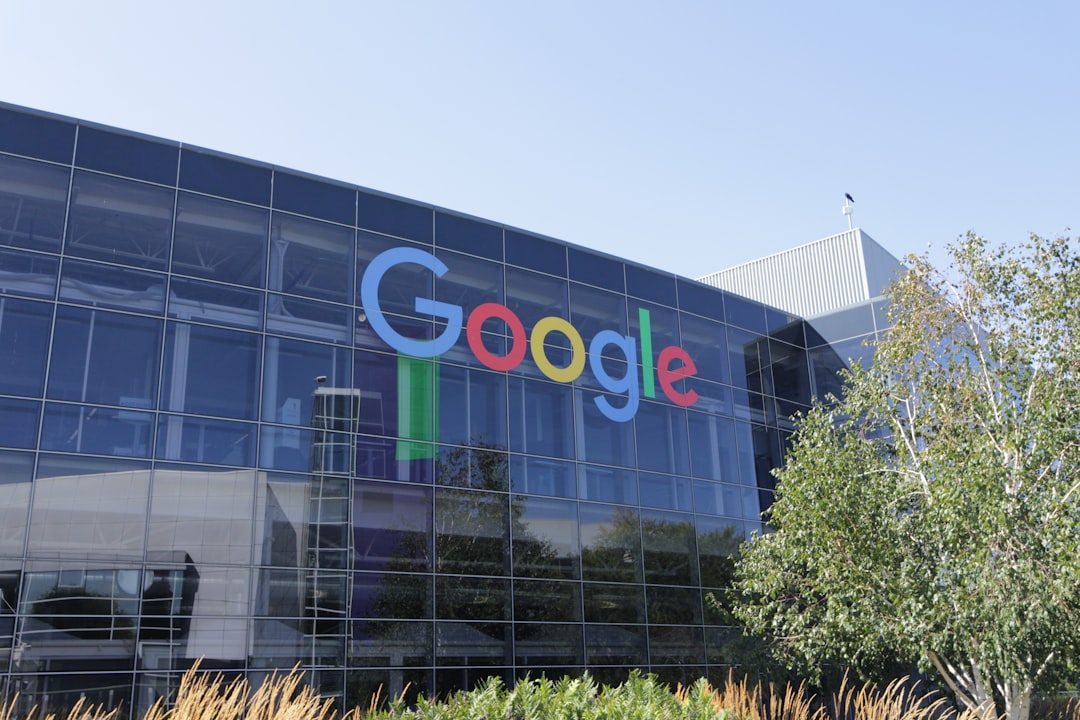
What Is Google and Why Does It Matter?
Google is the world’s most-used search engine and one of the most influential technology companies ever built.
Here are the fast facts:
| Detail | Info |
|---|---|
| Founded | September 4, 1998 |
| Founders | Larry Page and Sergey Brin |
| Parent Company | Alphabet Inc. (since 2015) |
| CEO | Sundar Pichai |
| Employees | 187,000+ (as of 2022) |
| Headquarters | Mountain View, California |
| Main Revenue Source | Online advertising |
| Global Offices | 78+ offices in 50+ countries |
Google started as a simple search tool. Today it runs everything from email and maps to AI assistants and self-driving cars.
Its reach is hard to overstate. Google Search and YouTube are the two most-visited websites on the planet. By 2011, Google was already handling 3 billion searches every single day.
As Sundar Pichai once said at Google’s AI Impact Summit: “No technology has me dreaming bigger than AI.” That quote captures where Google is heading right now.
I’m Faisal S. Chughtai, founder of ActiveX, where I’ve spent years working in digital marketing, SEO, and web development — with Google‘s tools and platforms at the center of nearly every project. In this guide, I’ll walk you through everything you need to know about Google, from its origins to its latest AI breakthroughs.
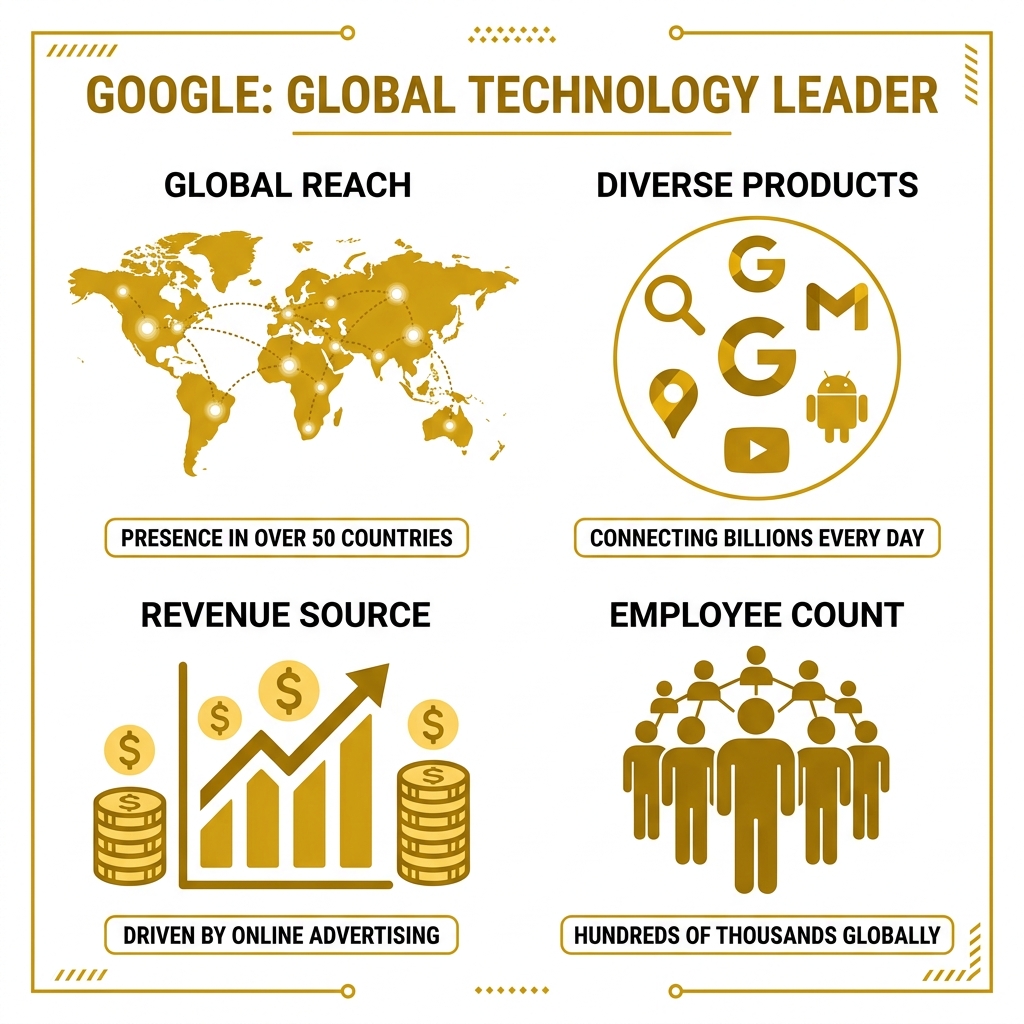
Google basics:
The Evolution of Google: From Garage Startup to Global Powerhouse
The story of google is the quintessential Silicon Valley legend. It didn’t start in a high-tech lab, but rather in a dorm room at Stanford University. In 1996, Larry Page and Sergey Brin began collaborating on a search engine they initially called “BackRub.” The name was a nod to the way the system checked backlinks to estimate the importance of a site.
By 1998, the duo had renamed their project google—a play on the mathematical term “googol,” which represents the number 1 followed by 100 zeros. This name reflected their mission to organize the seemingly infinite amount of information on the web. We find it fascinating that the company was officially incorporated on September 4, 1998, in a garage owned by Susan Wojcicki (who later became the CEO of YouTube).

What made google different from the search engines of the late 90s? It was the PageRank algorithm. While other engines ranked pages by how many times a keyword appeared, PageRank analyzed the relationship between websites. It treated a link from one page to another as a “vote” of confidence. This revolutionized how we find information online, making search results significantly more relevant.
As noted in the Google – Wikipedia entry, the company’s growth was explosive. Despite the dot-com bubble burst, google thrived. They famously rejected a $1 million buyout offer from Yahoo in 1998, and later a $3 billion offer in 2002. By the time they went public in 2004, they raised $1.67 billion at $85 per share.
Beyond just search, we’ve seen google celebrate cultural moments through their famous “Doodles.” Whether it’s a holiday or a sporting event, like Celebrating the Fall Classic with a new Google Doodle, these interactive graphics have become a staple of the user experience.
Understanding the Global Reach of Google
Today, google is no longer just a search engine; it is a massive conglomerate operating under its parent company, Alphabet Inc. This restructuring, which took place in 2015, allowed google to focus on its core internet products while “Other Bets” (like Waymo for self-driving cars or Verily for life sciences) could operate independently.
At the helm of this empire is Sundar Pichai, who became the CEO of google in 2015 and later took over as CEO of Alphabet Inc. in 2019. Under his leadership, the company has reached staggering heights. As of 2022, the company employed approximately 187,000 people globally.
To understand how google fits into the bigger picture, let’s look at the relationship between the core company and its parent.
| Feature | Google LLC | Alphabet Inc. |
|---|---|---|
| Role | Subsidiary / Core Business | Parent Holding Company |
| Key Focus | Search, Ads, YouTube, Android, Cloud | Oversight of Google + “Other Bets” |
| Primary Revenue | Advertising (Google Search, YouTube) | Consolidates all subsidiary earnings |
| Key Executive | Sundar Pichai (CEO) | Sundar Pichai (CEO) |
While the company is a titan of industry, it isn’t immune to technical hiccups. We’ve covered instances where even the giants stumble, such as when Google Drive, Docs, and Sheets down for thousands of users in US; engineering team investigating. These moments remind us just how much the global economy relies on google’s infrastructure.
Generating revenue is the engine that keeps this machine running. In 2011, about 96% of the company’s revenue came from advertising. While they have diversified into hardware and cloud services, the vast majority of their income still stems from Google Ads. By providing a platform where businesses can target users based on their search intent, google created the most effective advertising model in history.
Entertainment and Connectivity through Google TV
In our homes, google has moved from the computer screen to the living room via Google TV. This platform isn’t just a smart TV interface; it’s a unified streaming solution powered by Android TV OS.
According to official data from About Google: Our products, technology and company information …, Google TV provides access to more than 10,000 apps and a staggering 400,000+ movies and TV episodes. The goal is to eliminate “app-switching fatigue” by bringing all your content into one personalized screen.
Key features of Google TV include:
- Personalized Profiles: Every member of the household gets their own recommendations.
- Kids Profiles: Parents can manage watch limits and content via Family Link.
- Voice Search: Using Google Assistant to find shows by saying “Show me dramas.”
- Sustainability: We love that the Google TV Streamer housings are made of 75% recycled polycarbonate, and the packaging is 100% plastic-free.
Interestingly, google‘s influence even extends to how we view the world—sometimes sparking controversy. For example, there were reports about Google Maps to rename Gulf of Mexico to Gulf of America following Trump’s executive order, highlighting the political weight that digital mapping can carry.
Expanding Hardware with the Google Pixel and Chromebook
While software remains king, google has made significant strides in hardware. The Pixel smartphone line is designed to be the “cleanest” version of the Android OS, offering AI-enhanced photography that often beats out traditional camera hardware.
Then there are Chromebooks—affordable, cloud-centric laptops that have dominated the education sector. We recently saw a major milestone in this area with the Chromebook assembly line Pakistan: Google’s historic tech leap, marking a significant expansion of the company’s manufacturing footprint into South Asia.
The AI Revolution: Gemini and the Future of Search
If the 2000s were about Search and the 2010s were about Mobile, the 2020s are undeniably about Artificial Intelligence. Google has pivoted its entire strategy to be an “AI-first” company.
The centerpiece of this effort is Gemini (formerly known as Bard). Gemini is a generative AI that can write code, create poems, and help you plan a vacation. We saw the initial spark of this race when Google launches ChatGPT rival Bard to compete in the rapidly evolving AI landscape.
One of the most exciting recent developments is Search Live. This feature allows for real-time interaction with AI using your voice or camera. Imagine pointing your phone at a broken bike chain and asking google, “How do I fix this?” and getting a step-by-step interactive guide. This moves search from a list of links to a truly conversational assistant.
Advancing Innovation with Google AI Models
Google isn’t just building one AI; they are building an entire ecosystem of models.
- Gemini 3.1 Flash Live: This improves the naturalness and reliability of audio-based AI interactions.
- Lyria 3 Pro: A specialized model for music generation, now capable of creating tracks up to three minutes long.
- AI Overviews: Now integrated into the main google app, these provide quick summaries at the top of search results for queries like “how to cut onions without crying.”
For those making the switch from other AI tools, google now allows you to import your chat history and “memories” into the Gemini app, ensuring you don’t have to start from scratch. This focus on user retention and seamless integration is a hallmark of their strategy.
Frequently Asked Questions about Google
Who founded Google and when?
Google was founded on September 4, 1998, by Larry Page and Sergey Brin. The two were PhD students at Stanford University when they developed the search algorithm that would eventually change the world.
How does Google generate its revenue?
The vast majority of google‘s revenue comes from online advertising. Through platforms like Google Search, YouTube, and the Google Display Network, businesses pay to show ads to users. Other revenue streams include Google Cloud fees, hardware sales (Pixel, Nest, Fitbit), and app store purchases on Google Play.
What is the relationship between Google and Alphabet Inc.?
Alphabet Inc. is the parent holding company created in 2015. Google LLC is its largest subsidiary. This structure allows the core internet business to remain stable while the parent company invests in more experimental “moonshot” projects like life extension and delivery drones.
Conclusion
From its humble beginnings in a Menlo Park garage to its current status as a global AI leader, google has fundamentally changed how we live, work, and connect. At Apex Observer News, we continue to monitor how this tech giant shapes the global landscape—from new hardware assembly lines to the latest breakthroughs in generative AI.
As the company continues to push the boundaries of quantum computing and machine learning, its market position remains incredibly strong. However, with great power comes great scrutiny, and the company’s future will likely be defined by how it navigates antitrust cases and the ethical challenges of AI.
Stay tuned for the Latest global news updates to see what google does next. Whether it’s a new Doodle or a world-changing AI model, we’ll be here to cover it all.
