

Why Ford F-150 Lightning Updates Are Changing the EV Game Right Now
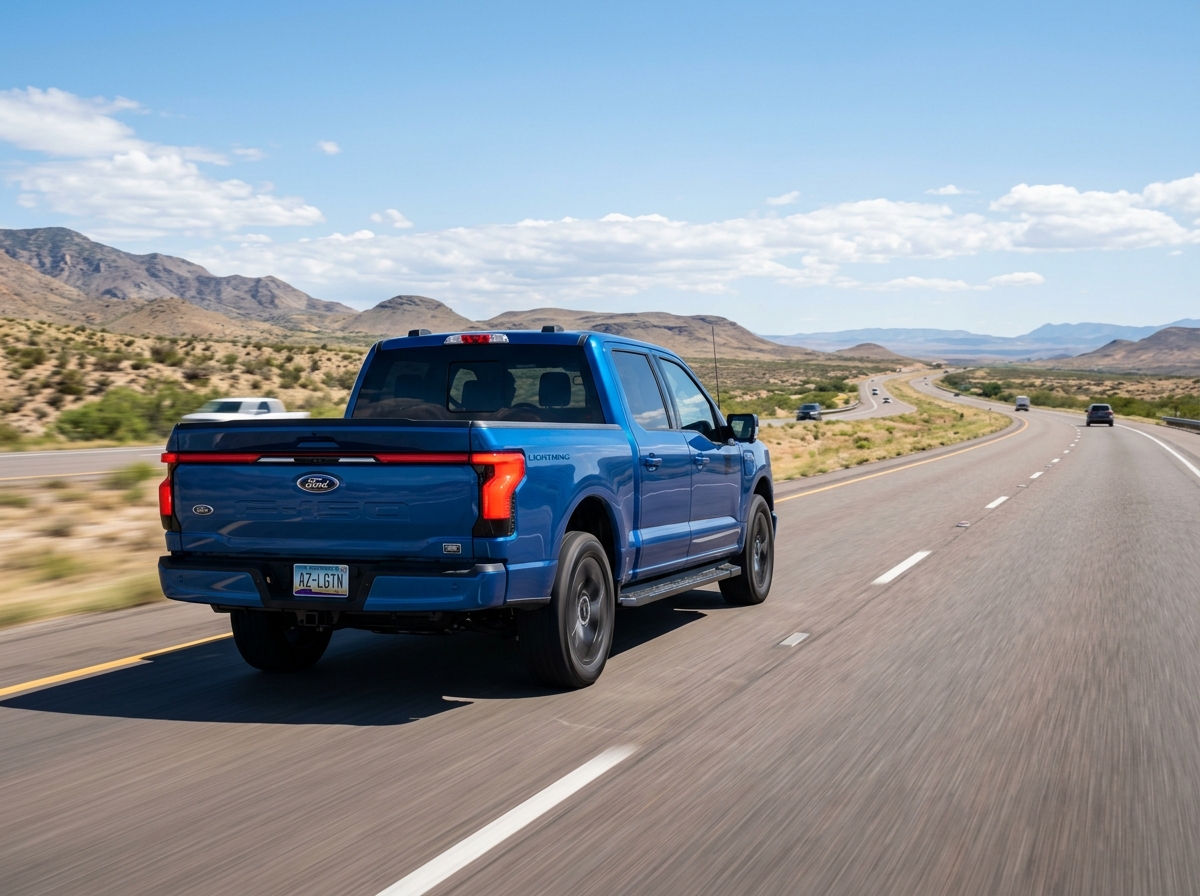
Ford F-150 Lightning updates are rolling out fast — and they’re making a real difference for owners of 2022 through 2025 models. Here’s a quick snapshot of what’s new:
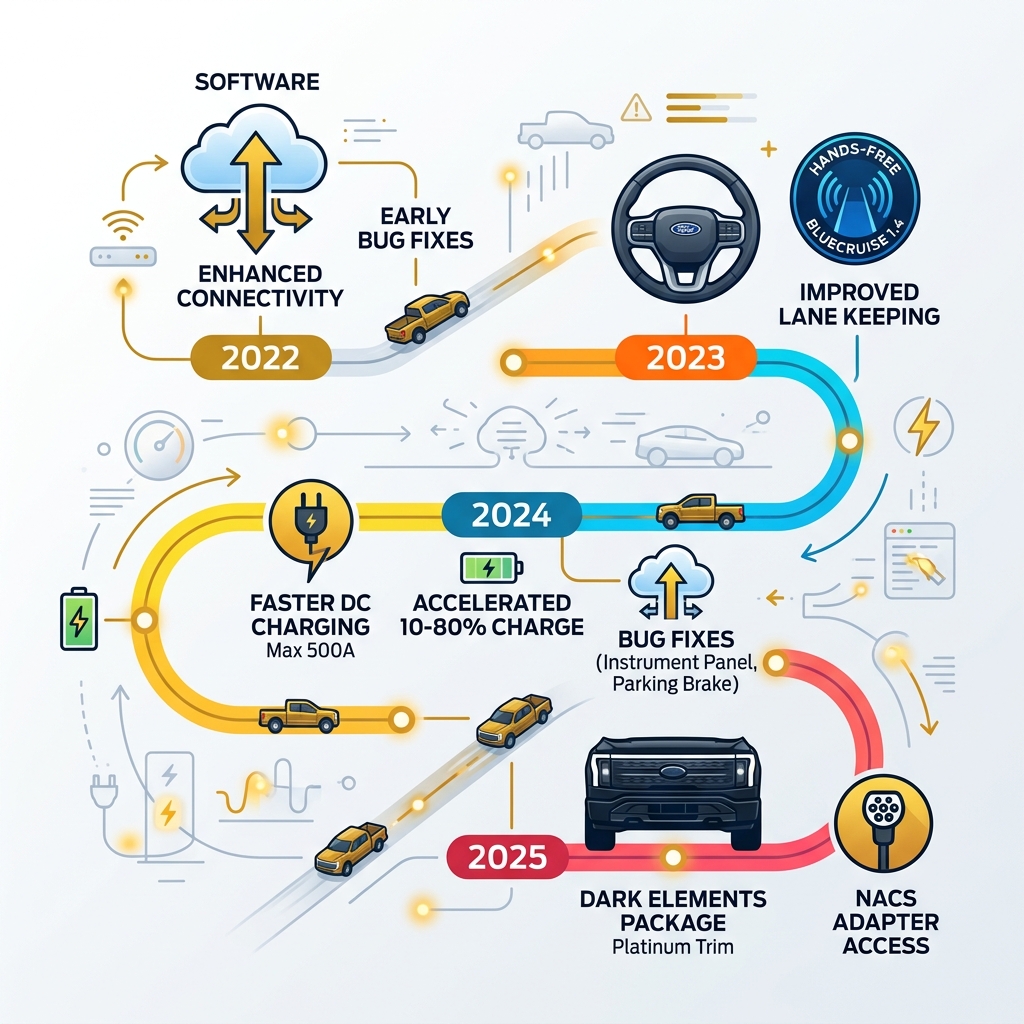
Key Ford F-150 Lightning Updates at a Glance:
| Update | What Changed | Who Gets It |
|---|---|---|
| BlueCruise 1.4 | Hands-free driving up to 8x longer, 80% fewer lane deviations | All 2022-2025 models with BlueCruise |
| DC Fast Charging | Max current raised from 450A to 500A; 10-80% now ~40 min | 2022-2023 via OTA; standard on 2024+ |
| 2025 Dark Elements Package | 22-inch black wheels, black badging, black interior | Platinum trim only |
| NACS Adapter | Access to North American Charging Standard network | 2025 models standard |
| Bug Fixes | False instrument panel warnings fixed; parking brake improved | 2022-2024 via OTA |
These aren’t small tweaks. Ford is using over-the-air (OTA) software updates to make older Lightnings genuinely better — sometimes years after purchase. That’s a big deal in the truck world.
The buzz is real. Early adopters who waited two years for faster charging speeds finally got their update — and real-world tests confirm the 2022 Lariat now pulls 500 amps right out of the gate, shaving roughly 5-6 minutes off a 10-80% charge session.
And the future? Ford’s next-gen F-150 Lightning EREV is promising 700+ miles of range with a generator-backed electric drivetrain — a leap that could redefine what a work truck can do.
I’m Faisal S. Chughtai, a technology and digital strategy specialist who has tracked the evolution of Ford F-150 Lightning updates across software, hardware, and EV infrastructure developments. I’ll break down everything you need to know — from OTA installs to what’s coming next — so you can stay ahead of the curve.
Explore more about ford f150 lightning updates:
Major Software Breakthroughs: BlueCruise 1.4 and Charging Enhancements
We are witnessing a massive shift in how vehicles improve over time. Traditionally, a truck was “finished” the moment it left the dealership. With the latest tag/f-150-lightning software breakthroughs, your truck actually evolves in your driveway.
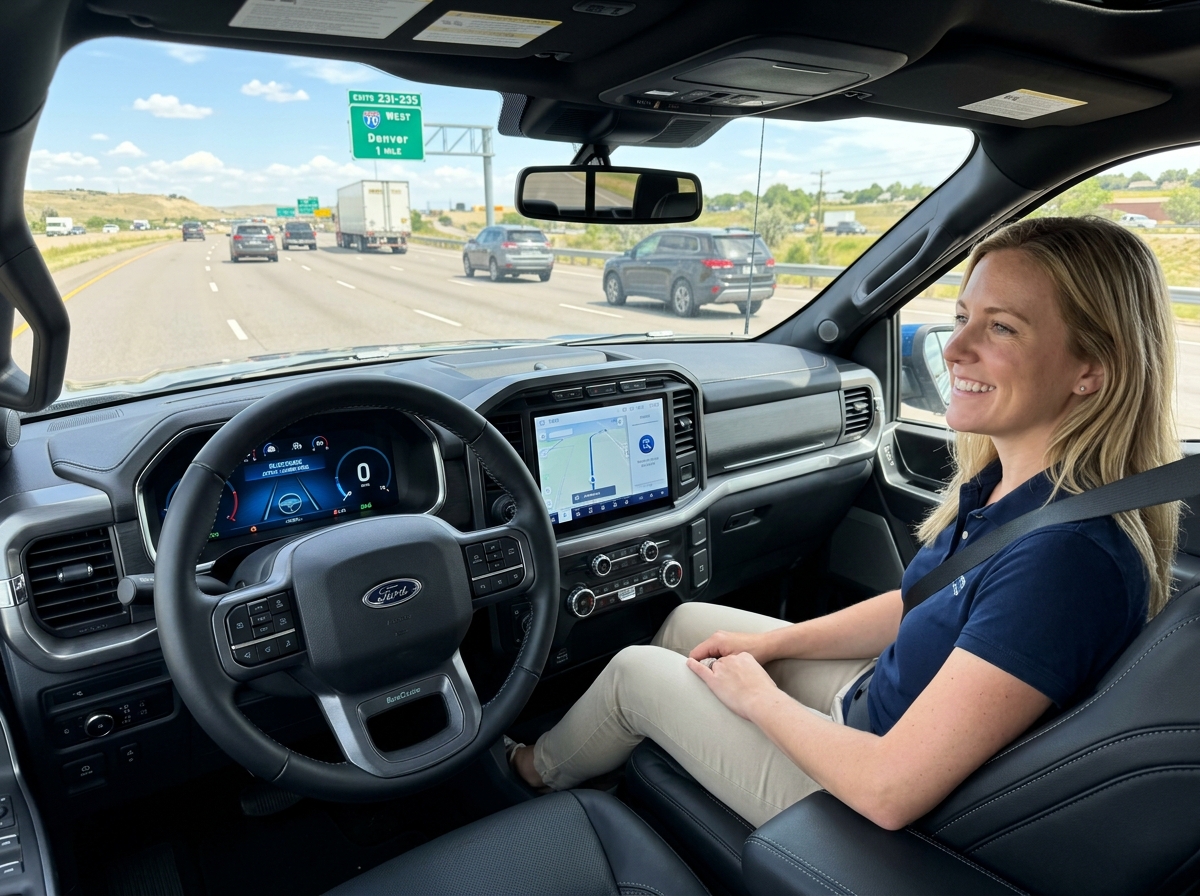
The headline act is BlueCruise 1.4. This isn’t just a minor patch; it is a fundamental upgrade to how the truck handles highway driving. For those of us who spend hours on the interstate, the ability to stay in hands-free mode up to eight times longer on average compared to version 1.0 is a game-changer. By reducing lane center deviations by nearly 80%, the truck feels much more “locked in” and less prone to “ping-ponging” between lines.
New features in BlueCruise 1.4 include:
- In-Lane Repositioning: This subtly shifts the truck away from large vehicles in adjacent lanes, providing a much more natural and comfortable “buffer” when passing semis.
- Lane Change Assist: A simple tap of the turn signal allows the truck to perform a hands-free lane change when the path is clear.
Beyond driving assistance, the tag/ford-motor-company has finally addressed one of the biggest pain points for early adopters: DC fast charging speeds. By increasing the peak current from 450 amps to 500 amps, the truck can now take full advantage of high-powered chargers.
Performance Gains from Ford F-150 Lightning Updates
The numbers tell a compelling story. Before these ford f150 lightning updates, a 10-80% charge on the 131 kWh Extended Range battery typically took about 44 to 45 minutes. After the software refresh, that window has dropped to 39 minutes and 43 seconds. That is roughly an 11% improvement, or 5-6 minutes saved per session.
For the 98 kWh Standard Range battery, the gains are equally impressive, bringing the 15-80% charge time down to approximately 32 minutes. Real-world testing by EV journalists has shown the truck holding a peak of 180 kW for about seven minutes, then staying above 160 kW for an additional ten minutes. This flatter, more aggressive charging curve means you spend less time at the pedestal and more time on the road. You can find a detailed charging speed analysis that highlights how these seconds add up during a long-haul trip.
Model Eligibility for the Latest Ford F-150 Lightning Updates
One of the best things about these ford f150 lightning updates is the wide net they cast. All 2022 through 2025 models equipped with the necessary hardware are eligible for the BlueCruise 1.4 rollout. While 2025 models often come with these features from the factory, older trucks receive them via the SYNC 4A over-the-air system.
Owners of 2022 and 2023 models should keep an eye on their “Software Update” menu. While 2024 models already featured the 500-amp charging capability from the factory, the OTA update effectively “backports” this hardware potential to the first two model years, ensuring early supporters aren’t left behind as technology marches forward.
The 2025 Ford F-150 Lightning: New Packages and Hardware Changes
As we move into the 2025 model year, Ford has refined the lineup to better match what customers are actually asking for. While the core “bones” of the truck remain the same, there are several aesthetic and functional shifts that potential buyers should note.
The most striking visual update is the Dark Elements appearance package, available exclusively on the Platinum trim. This package swaps out chrome for a more aggressive, stealthy look, featuring:
- 22-inch black-painted aluminum wheels.
- Black Ford oval badging and “Lightning” bedside decals.
- A unique black interior theme.
For those interested in the mid-range trims, the Flash model now receives ActiveX seating material, which is durable and easy to clean—perfect for a truck that actually sees some work. If you are ready to spec out your own, you can Build and Price the 2025 model on Ford’s official site to see how these new options affect the bottom line.
However, it’s not all additions. In an effort to streamline production, Ford has removed the built-in SecuriCode keyless entry keypad from the factory; it is now available as a dealer-installed accessory. Additionally, the Interior Work Surface has been deleted from XLT and Flash trims, though it remains available on higher-tier models.
Hardware Refinements in 2025 Ford F-150 Lightning Updates
The 2025 tag/f-150 Lightning also sees some smart hardware tweaks. Perhaps the most significant “physical” update is the inclusion of the NACS (North American Charging Standard) adapter. This allows Lightning owners to tap into a much wider array of public fast chargers without needing to carry a third-party dongle.
Other hardware updates include:
- eLocking Rear Axle: Now an optional standalone feature or part of the Max Trailer Tow Package.
- Spare Tire Options: A full-size spare tire is now more readily available across different configurations.
- Pro Power Onboard: Continues to offer up to 9.6 kW of exportable power, capable of running a job site or even a home during an outage for up to three days.
For a deeper dive into the nitty-gritty of what’s changed under the hood, check out the official 2025 feature breakdown.
Comparing 2024 vs 2025 Model Specifications
To help you decide which model year is right for you, we’ve put together a quick comparison of the key specs.
| Feature | 2024 Model | 2025 Model |
|---|---|---|
| Max Towing (ER Battery) | 10,000 lbs | 10,000 lbs |
| Max Range (ER Battery) | 320 miles | 320 miles |
| Hands-Free Tech | BlueCruise 1.2 (standard) | BlueCruise 1.4 (standard) |
| Charging Port | J1772/CCS | J1772/CCS + NACS Adapter |
| Standard Screen (XLT+) | 12-inch or 15.5-inch | 12-inch or 15.5-inch |
While the range and towing numbers haven’t jumped for 2025, the software integration and charging flexibility make the newer model a slightly more polished package.
Future Outlook: The 700-Mile Next-Gen EREV
Perhaps the most shocking news in ford f150 lightning updates is the announcement of the next-generation F-150 Lightning EREV (Extended Range Electric Vehicle). While current production of the standard Lightning is slated to end soon, Ford is pivoting toward a “no-compromise” solution that addresses the number one concern for truck owners: range while towing.
Under the leadership of tag/ford-ceo-jim-farley, Ford is developing a truck that is propelled 100% by electric motors but carries a high-power on-board generator. This isn’t a traditional hybrid where the engine drives the wheels; instead, the generator keeps the battery topped up during long hauls.
The result? An estimated range of more than 700 miles. This next-gen tag/f-series is being designed to “tow like a locomotive” without the need to stop at a charging station every 100 miles when pulling a heavy trailer. It will be assembled at the Rouge Electric Vehicle Center in Dearborn, continuing the legacy of American truck manufacturing while pushing the boundaries of what an EV can do.
Managing Your Ownership Experience and OTA Installations
Owning a software-defined vehicle means you need to know how to manage your updates. For most owners, the process is seamless—the truck downloads the update via Wi-Fi or its built-in cellular connection and installs it while you sleep.
However, we’ve seen some common questions in the community. For instance, do OTA updates continue after the warranty expires? The answer is a resounding yes. Ford continues to push software improvements and critical bug fixes to vehicles even after the 3-year/36,000-mile bumper-to-bumper warranty has lapsed.
Recent ford f150 lightning updates have also focused on quality-of-life improvements:
- Parking Brake Fixes: Improved consistency and performance of the electronic parking brake.
- Instrument Panel Bugs: Elimination of “false” warning lights that were causing unnecessary stress for owners.
- Charging Integration: Apple CarPlay now shows real-time NACS charging station information.
- Universal Charge Limits: You can now set a maximum charge level (e.g., 80%) that applies to all charging locations, helping preserve battery health.
If you find that your truck is missing features like “Walk-Away Locking” or “Phone-as-a-Key” proximity functions after a dealer visit or a reset, we recommend checking the “Software Updates” sub-menu in your SYNC 4 settings to ensure you are on the latest version.
Frequently Asked Questions about Ford F-150 Lightning Updates
How much faster is DC fast charging after the software update?
On average, the update shaves about 5 to 6 minutes off a 10-80% charge session for the Extended Range battery. By increasing the current limit to 500 amps, the truck can now complete that charge in under 40 minutes, compared to the previous 45+ minutes.
Which model years are eligible for BlueCruise 1.4?
All F-150 Lightning models from 2022 through 2025 that are equipped with the BlueCruise hardware are eligible. While 2025 models often come with it pre-installed, 2022-2024 owners will receive the upgrade via an over-the-air update.
Do OTA updates continue after the vehicle warranty expires?
Yes. Ford’s software update architecture is designed to support the vehicle throughout its life cycle. While hardware repairs might require a warranty, software enhancements and bug fixes are delivered to all connected vehicles regardless of warranty status.
Conclusion
At Apex Observer News, we’ve watched the EV market shift from “novelty” to “necessity,” and the ford f150 lightning updates are a perfect example of how a legacy brand can stay competitive. By improving charging speeds, refining self-driving tech, and listening to owner feedback regarding bug fixes, Ford is ensuring that a Lightning purchased today remains relevant for years to come.
The combination of maintenance savings—estimated at 49% lower than a gas F-150 over five years—and the constant evolution of the truck’s software makes it a compelling choice for both fleets and families. Whether you’re looking at a 2025 Platinum with the Dark Elements package or an early 2022 model getting a fresh lease on life through an OTA update, the future of the F-Series looks brighter (and faster) than ever.
Stay tuned to our Latest Automotive Industry News for more updates on the next-gen EREV and the evolving world of electric trucks.
