

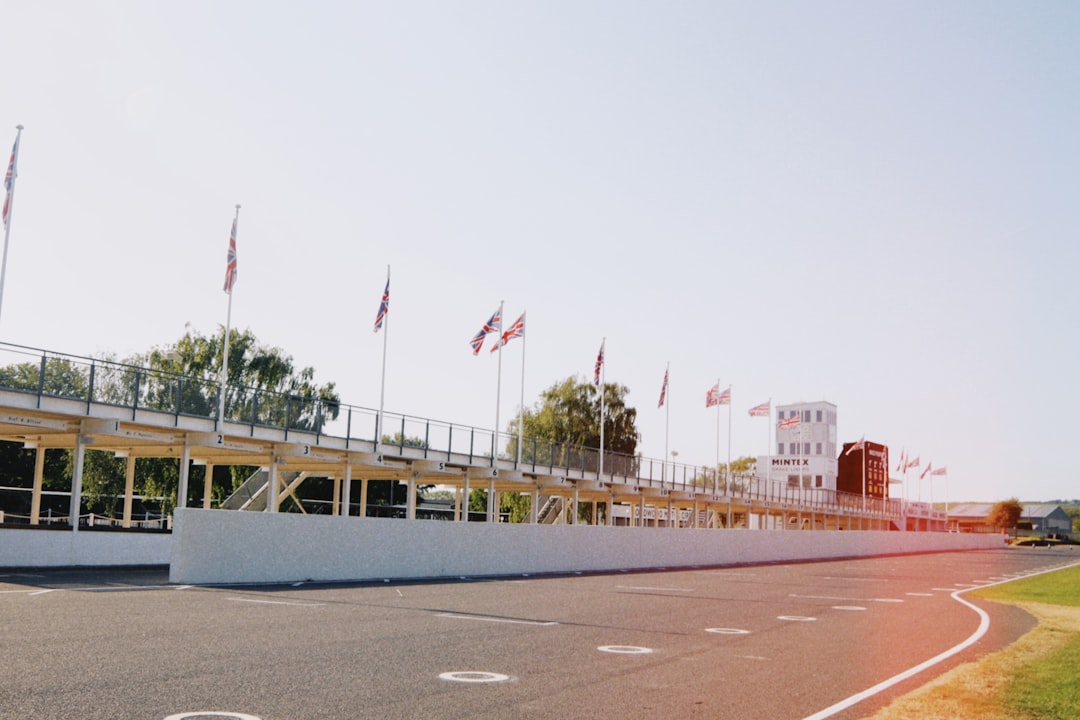
Why the F1 Japanese GP Is One of Formula 1’s Most Thrilling Races
The F1 Japanese GP is one of the most iconic rounds on the Formula 1 calendar — and the 2026 edition at Suzuka delivered exactly the drama fans expected.
Here’s a quick snapshot of what you need to know:
| Detail | Info |
|---|---|
| Race | 2026 F1 Japanese Grand Prix |
| Circuit | Suzuka International Racing Course |
| Date | Sunday, 29 March 2026 |
| Winner | Kimi Antonelli (Mercedes) |
| P2 | Oscar Piastri (+13.722s) |
| P3 | Charles Leclerc (+15.270s) |
| Race Distance | 53 laps / 307.471 km |
| Championship Round | Round 3 of 2026 season |
Antonelli bounced back from sixth place on the opening lap to win by nearly 14 seconds. It was his second consecutive victory of the season — and it made him the youngest championship leader in F1 history.
The race wasn’t just about speed. A dramatic Safety Car, a frightening crash involving Oliver Bearman, and growing safety concerns about the 2026 regulations all added layers to an already gripping weekend.
Suzuka has hosted F1 since 1987 and remains a firm favourite for drivers and fans alike. Its figure-eight layout, high-speed corners like 130R, and legendary atmosphere make it unlike any other race on the calendar.
I’m Faisal S. Chughtai, founder of ActiveX and a digital analyst who covers major sporting events including the F1 Japanese GP through an SEO and media lens. With a background spanning branding, web development, and digital marketing, I break down complex race weekends into clear, useful coverage for fans on the go.
2026 F1 Japanese GP: Race Results and Podium
The 2026 edition of the F1 Japanese GP was a masterclass in recovery and strategic execution. Held over 53 laps of the legendary Suzuka circuit, the race saw a total distance of 307.471 km covered under the intense gaze of over 260,000 fans. While the morning started with questions about the new 2026 power units, the afternoon ended with a clear statement from the next generation of F1 stars.
Kimi Antonelli took the top step of the podium, marking his second win in as many races. He was joined by McLaren’s Oscar Piastri, who drove a defensive blinder to keep the chasing pack at bay, and Ferrari’s Charles Leclerc, who managed to salvage a podium finish despite the Scuderia’s ongoing struggle to match the raw pace of the Mercedes and McLaren cars.
For a detailed breakdown of the 2026 Japanese Grand Prix results, see the official standings below:
| Position | Driver | Team | Time Gap | Points |
|---|---|---|---|---|
| 1 | Kimi Antonelli | Mercedes | 1:28:03.403 | 25 |
| 2 | Oscar Piastri | McLaren | +13.722s | 18 |
| 3 | Charles Leclerc | Ferrari | +15.270s | 15 |
| 4 | George Russell | Mercedes | +15.754s | 12 |
| 5 | Lando Norris | McLaren | +23.479s | 10 |
How Antonelli Won the F1 Japanese GP
Winning the F1 Japanese GP is never easy, but Kimi Antonelli made it look like a choreographed comeback. His race nearly unraveled at the very start; a poor getaway saw the young Italian drop from the front row down to sixth place by the time the field reached the first Degner curve.
However, Antonelli’s maturity shone through. Rather than panicking, he utilized the superior straight-line speed of the Mercedes W17 to pick off his rivals one by one. The turning point came when a Safety Car was deployed following Oliver Bearman’s heavy crash. Mercedes reacted instantly, bringing Antonelli in for a “cheap” pit stop that saved him significant time relative to those who had already pitted under green flag conditions.
Once he reclaimed the lead, he was untouchable. He managed his tires perfectly through the high-energy S-curves and eventually crossed the line with a nearly 14-second cushion. This victory wasn’t just about luck; it was about a driver and a team operating in perfect harmony with the 2026 regulations.
Performance of the Top Drivers at Suzuka
While Antonelli took the headlines, the battle behind him was equally fierce. Oscar Piastri proved why he is considered a future world champion by holding off a much faster George Russell for the majority of the final stint. Piastri’s ability to manage his battery deployment out of the hairpin was critical in preventing Russell from using the DRS advantage on the run down to 130R.
Charles Leclerc expressed mixed emotions after the race. “The car felt good in the corners, but we are still missing that final bit of deployment on the straights,” he noted in his post-race comments. Ferrari’s struggle with the new 2026 engine mapping was evident, as Leclerc was often a “sitting duck” on the main straight.
George Russell, on the other hand, felt he was the “moral winner.” Having pitted just before the Safety Car, he lost track position to both Antonelli and Leclerc. Despite his frustration, his fourth-place finish secured a massive haul of points for Mercedes, further solidifying their lead in the championship. Lando Norris rounded out the top five, showing that McLaren has successfully leapfrogged Ferrari in the early-season development race.
Key Incidents and the 2026 Regulation Debate
The 2026 F1 Japanese GP will unfortunately also be remembered for a terrifying incident that highlighted the growing pains of the new technical regulations. Oliver Bearman suffered a massive crash that sent shockwaves through the paddock. The incident occurred when Bearman was closing in on Franco Colapinto’s Alpine.
The crash resulted in a 50G impact for the drivers involved, necessitating an immediate Safety Car. While both drivers walked away, the wreckage of the cars served as a grim reminder of the speeds involved at Suzuka.

According to the official race report, the recovery process was swift, but the conversation in the paddock shifted immediately from racing to safety.
Safety Concerns and 2026 Regulations at the F1 Japanese GP
The Bearman-Colapinto crash has reignited a fierce debate regarding the 2026 power unit regulations. Analysis of the telemetry showed a staggering 200kW power difference between the two cars at the moment of the incident. This was due to “clipping”—a phenomenon where one car exhausts its battery energy while the following car has a full charge.
This led to closing speeds of approximately 45km/h, a delta that many drivers feel is unsafe, especially on a narrow, high-speed track like Suzuka. The FIA has already announced a safety review to look into battery deployment logic. The concern is that the current regulations create “dangerous speed differentials” that drivers cannot always predict, particularly in high-speed sections like the approach to 130R.
Team Performance Analysis: Winners and Losers
As we analyze the fallout of the F1 Japanese GP, clear patterns are emerging for the 2026 season. Mercedes is clearly the team to beat, having mastered the integration of their in-house power unit with a chassis that handles the “bouncing” issues of previous years much better than their rivals.
McLaren is the biggest “winner” in terms of momentum. By figuring out the intricacies of the Mercedes customer power unit, they have officially moved ahead of Ferrari. On the other side of the coin, Red Bull continues to struggle. The team that dominated the previous era is finding it difficult to get their chassis to cooperate with their new power unit, leading to a frustrated Max Verstappen who finished outside the top five.
Impact on the 2026 Constructors’ Championship
The standings took a dramatic turn after Round 3 in Japan. Alpine, despite the crash involving Colapinto, saw Pierre Gasly secure a strong seventh-place finish. This was enough to allow Alpine to overtake Red Bull in the constructors’ standings—a feat that would have seemed impossible just twelve months ago.
Mercedes currently holds a comfortable lead, but the midfield is tighter than ever. Williams, who spent all of 2025 focusing on these 2026 regulations, still seems to be treating these early races as “glorified test sessions,” which is a worrying sign for their fans.
| Team | Current Standing | Trend |
|---|---|---|
| Mercedes | 1st | Up |
| McLaren | 2nd | Up |
| Ferrari | 3rd | Steady |
| Alpine | 4th | Up |
| Red Bull | 5th | Down |
The Ultimate Guide to the F1 Japanese GP Circuit
To understand why the F1 Japanese GP is so special, one must look at the history of the Suzuka International Racing Course. Built in 1962 by Soichiro Honda as a test track for his automotive company, it was designed by Dutchman John Hugenholtz. It remains the only figure-eight circuit on the F1 calendar.
The track is famous for its “S” Curves, the challenging Degner curves (named after motorcyclist Ernst Degner), and the flat-out 130R. As the Wikipedia entry for the Japanese Grand Prix notes, Suzuka has been the scene of 13 world championship deciders, including the legendary and controversial battles between Ayrton Senna and Alain Prost in 1989 and 1990.
Historical Records of the F1 Japanese GP
Suzuka is a place where legends are made. Michael Schumacher holds the record for the most driver wins with six victories. On the constructor side, McLaren leads the way with nine wins, though Red Bull is hot on their heels with eight.
The 2026 race maintained the traditional format:
- Laps: 53
- Circuit Length: 5.807 km
- Race Distance: 307.471 km
- Fastest Lap: Kimi Antonelli holds the modern record with a 1:30.965 set in 2025.
Attendance at the F1 Japanese GP remains among the highest in the world. While the 2006 race holds the all-time record of 361,000 fans over the weekend, the 2025 and 2026 events have seen a resurgence, with crowds consistently exceeding 260,000.
Frequently Asked Questions about the F1 Japanese GP
What was the full weekend timetable for the 2026 race?
The 2026 F1 Japanese GP followed a standard fly-away schedule. Practice 1 and 2 took place on Friday, March 27, at 11:30 and 15:00 local time. Saturday saw Practice 3 at 11:30 followed by Qualifying at 15:00. The main race started at 14:00 local time on Sunday, March 29. Because Suzuka is 9 hours ahead of UTC, European fans had to wake up early to catch the action!
Who is the youngest-ever F1 championship leader?
Following his victory at the 2026 F1 Japanese GP, Kimi Antonelli became the youngest driver to ever lead the Formula 1 World Drivers’ Championship. His back-to-back wins in the opening rounds of 2026 catapulted him past the records previously held by Max Verstappen and Sebastian Vettel.
Where are the best places to watch the race at Suzuka?
If you’re planning a trip to the F1 Japanese GP, the “S” Curves (Grandstands D and E) offer the best view of the cars’ aerodynamic capabilities. For high-speed thrills, Grandstand G at 130R is unbeatable. If you prefer overtaking action, the Hairpin (Grandstand I) is the place to be, as it’s one of the few heavy braking zones on the circuit.
Conclusion
The 2026 F1 Japanese GP was more than just a race; it was a glimpse into the future of Formula 1. Kimi Antonelli’s victory showed a level of maturity that suggests he is ready to lead the Mercedes era for years to come. Meanwhile, the struggles of Red Bull and the safety concerns surrounding the new regulations provide plenty of storylines to follow as the season progresses.
As we look toward the next rounds, the championship fight is wide open, with Mercedes, McLaren, and Ferrari all showing flashes of brilliance. For fans of the sport, there has never been a more intriguing time to follow the action.
For more deep dives into the latest sports results and technical analysis, be sure to check out our latest news and trends at Apex Observer News. We’ll keep you updated as the 2026 season continues to unfold!
