

Why the Oil Prices Market Impact Matters Right Now
The oil prices market impact is rippling across global stocks, inflation, and everyday costs at a speed not seen since the 2022 Russia-Ukraine crisis — and it’s accelerating fast.
Here’s a quick snapshot of what’s happening and why it matters:
| Factor | What’s Happening | Market Impact |
|---|---|---|
| WTI Crude Price | ~$98/bbl, up ~48% in one month | Stocks under pressure, energy sector rallying |
| Brent Crude | ~$92-$105/bbl, spiked near $120/bbl | Risk premiums elevated globally |
| Strait of Hormuz | Disrupted — handles 20% of world oil supply | Insurance halted, tanker traffic plunging |
| Global Supply Loss | ~8-10 million barrels/day cut | Largest disruption in oil market history |
| Diesel Prices | Crossed $5/gallon for first time since 2022 | Trucking, logistics, and consumer prices rising |
| Jet Fuel | Costs nearly doubled | Airlines losing hundreds of millions per quarter |
| IEA Response | Released 400 million barrels from emergency reserves | Temporary buffer — not a long-term fix |
The trigger? Military action in the Middle East beginning February 28, 2026, drawing in Iran, disrupting the Strait of Hormuz, and sending shockwaves through energy markets worldwide.
This isn’t just a story about oil. It’s about your grocery bill, your flight tickets, your investment portfolio — and how a single maritime chokepoint can shake the entire global economy.
I’m Faisal S. Chughtai, founder of ActiveX and a digital strategy analyst who has tracked the oil prices market impact across financial markets, business ecosystems, and consumer behavior for years. In the sections ahead, we’ll break down exactly what’s driving this crisis, who’s getting hit hardest, and what you can do about it.
Explore more about oil prices market impact:
Geopolitical Volatility and the Oil Prices Market Impact
When we talk about the oil prices market impact, we aren’t just looking at numbers on a screen; we are looking at the pulse of global stability. The recent surge in crude prices is a direct result of a “perfect storm” of geopolitical events. Since the conflict involving Iran escalated in late February 2026, the energy sector has moved into a crisis-driven bull phase.
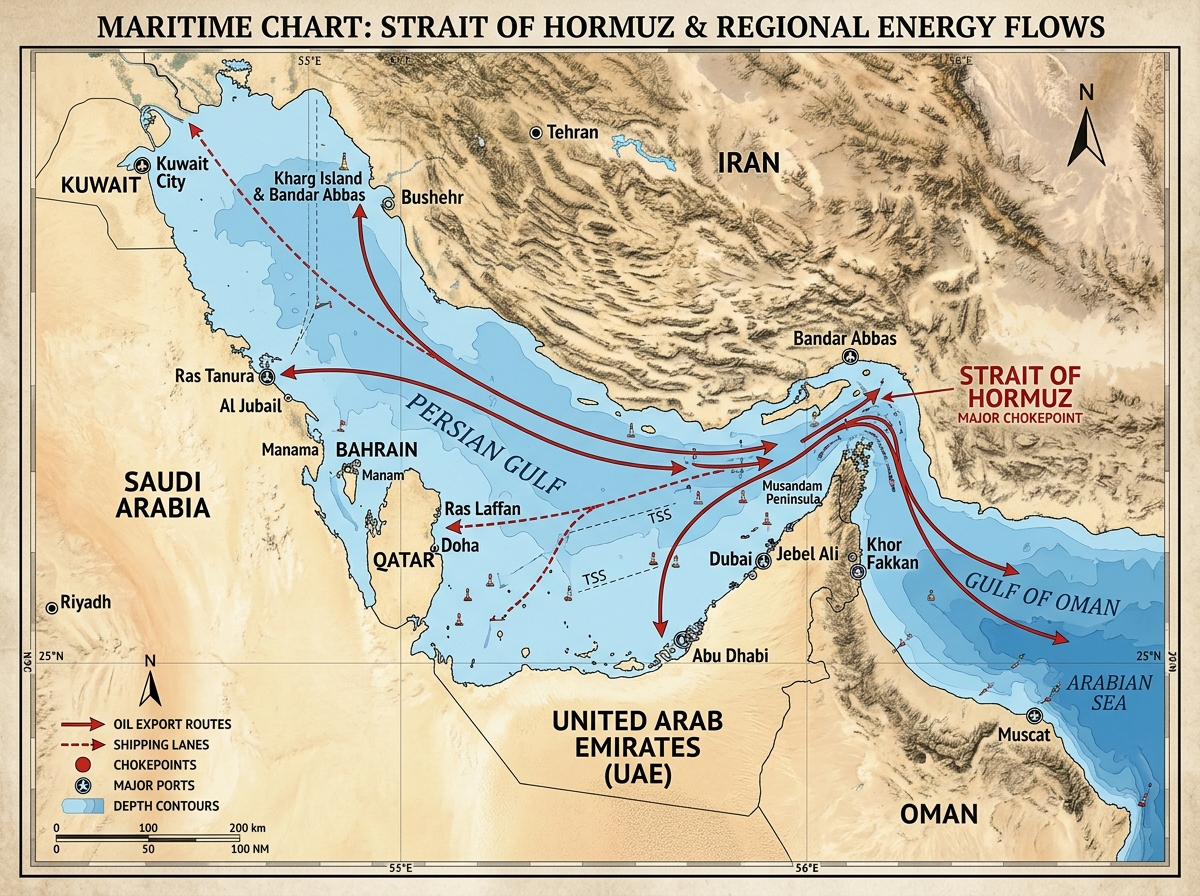
The most critical factor is the Strait of Hormuz. This narrow waterway is the world’s most important oil chokepoint, handling roughly 20 million barrels per day (mb/d). That is 20% of the world’s total oil supply. When tankers stop moving through this strait due to security threats, the global market loses its breath. We’ve seen leading marine insurers halt coverage, effectively freezing traffic and sending WTI crude oil futures up over 47% in a single month.
This volatility isn’t isolated. It creates a domino effect. For instance, as energy costs soar, we often see a bond and bitcoin selloff that leaves stocks unsteady. Investors flee to “safe-haven” assets, but even those are tested when the core energy input for the global economy is at risk. According to the Asset Management Oil Price Forecast for 2026, while fundamentals might look soft in the long term, these “wild card” geopolitical risks are currently the primary drivers of price.
Escalation in the Middle East
The situation on the ground is grim. We have seen reports of extensive damage to the Ras Laffan Industrial City in Qatar following missile strikes. In the UAE, renewed attacks on the Fujairah export terminal caused fires that halted oil loading, immediately impacting about 1% of global demand.
Furthermore, the conflict has led to:
- South Pars Gas Field Strikes: Direct hits on major energy infrastructure.
- Drone Strikes on Kuwaiti Refineries: Disrupting refined product output.
- Iraq Force Majeure: Iraq has declared force majeure on all oilfields, cutting off vital flows to Turkey and beyond.
- UAE Output Cuts: Production in the UAE has fallen by more than half because the oil simply has nowhere to go with the Strait of Hormuz closed.
Supply Disruptions and Global Production Shocks
The sheer volume of oil removed from the market is staggering. We are witnessing the largest supply disruption in the history of the global oil market. Estimates suggest a plunge of 8 mb/d in March 2026 alone, with total curtailments from Gulf countries reaching at least 10 mb/d when including condensates and NGLs.
To put this in perspective, global observed oil stocks stood at 8.2 billion barrels in January 2026—the highest since early 2021. This “buffer” is the only thing preventing an even more catastrophic price spike. However, inventories are being depleted at an alarming rate. At the Cushing hub in Oklahoma, US crude stocks rose to 27.52 million barrels as domestic supply tries to bridge the gap, but it isn’t enough to offset the loss of Middle Eastern flows.
Emergency Policy Responses
Governments and international organizations are pulling every lever available to mitigate the oil prices market impact. The International Energy Agency (IEA) has agreed to an unprecedented release of 400 million barrels from emergency reserves. This is double the volume of the 2022 release and is designed to act as a “stop-gap” while the world waits for a resolution.
In the United States, the administration has implemented several emergency measures:
- Jones Act Waiver: A 60-day waiver allowing foreign-flagged vessels to move fuel between U.S. ports to ease domestic shortages.
- Summer-Blend Restrictions: Temporarily lifting smog-cutting regulations to increase the volume of gasoline available for the market.
- Venezuela Sanctions License: Authorizing certain deals with PDVSA to bring more crude into the fold.
- OPEC+ Shifts: While OPEC+ initially agreed to small production increases, the physical inability to ship oil from the Gulf has rendered many of these quotas moot.
Economic Consequences: Inflation and Sector Performance
Economists refer to this situation as a “negative supply shock.” This means production becomes more expensive across the board, and companies must either absorb the costs or pass them to us—the consumers. Usually, they do both.
The oil prices market impact on inflation is a major headache for central banks. In the US, the dollar has hit 3-month highs as traders pare rate cut wagers, fearing that high energy prices will keep inflation sticky. The Reserve Bank of Australia has already warned that this supply shock adds significant upward pressure on prices, potentially leading to further interest rate hikes.
The Oil Prices Market Impact on Transportation and Logistics
No sector feels the heat quite like transportation. Jet fuel typically accounts for 20% to 30% of an airline’s operating costs. With jet fuel prices nearly doubling to over $423 per gallon, major carriers like Delta and American Airlines are projecting added costs of $400 million each in the first quarter alone.
The trucking industry is in a similar bind. The national average diesel price has crossed $5 per gallon, up from under $3.80 before the conflict. Since trucking moves the vast majority of consumer goods, these fuel surcharges eventually land on your grocery receipt. Shipping rates are also skyrocketing as marine insurers cancel coverage for the Persian Gulf, forcing ships to take longer, more expensive routes.
Industrial and Manufacturing Strains
Beyond transport, the high cost of oil acts as a tax on manufacturing. Petrochemical feedstocks—the “ingredients” for everything from plastics to fertilizers—are becoming prohibitively expensive. This leads to:
- Squeezed Refining Margins: While some complex refiners benefit from high spreads, many are struggling with high feedstock costs.
- Stagflation Risks: The combination of slowing global growth and rising inflation is the “nightmare scenario” for policymakers.
- Consumer Spending Squeeze: Since household consumption accounts for roughly 60% of advanced economies, every extra dollar spent at the pump is a dollar not spent at a restaurant or retail store.
Market Dynamics: Backwardation and Future Forecasts
For those of us tracking the financial side, the current “curve structure” of the oil market tells a fascinating story. Right now, the market is in heavy backwardation. This is a fancy way of saying that the price for oil delivered today is much higher than the price for oil delivered a year from now.
For example, while WTI might be trading near $98/bbl for April delivery, the contracts for late 2026 are significantly lower. This indicates that the market views the current crisis as an acute, short-term supply squeeze rather than a permanent change in fundamentals. Traders are essentially paying a “war premium” for immediate access to barrels.
According to a Crude Oil Market March 2026 Analysis, Brent briefly spiked to $126/bbl during the height of the Hormuz crisis. While some analysts warn of “tail-risk” scenarios where prices could hit $200/bbl if the conflict lasts through June, the baseline expectation is that prices will eventually settle back toward $60-$70/bbl as supply-demand fundamentals reassert themselves.
Strategic Hedging Against the Oil Prices Market Impact
In this environment, businesses and investors aren’t just sitting ducks; they are hedging. Airlines use “fuel swaps” to lock in prices, while producers are layering in hedges for 2027 output at today’s elevated levels. Interestingly, we are seeing gold, silver, and copper reaching record highs together as investors diversify away from the volatility of the energy and equity markets.
New financial tools are also emerging. We are seeing the rise of “event-based contracts” or prediction markets, where traders can bet on whether oil will stay above a certain price by a specific date. These markets, offered by groups like CME and even integrated into some sports betting apps, provide a real-time gauge of market sentiment regarding geopolitical escalations.
Frequently Asked Questions about Oil Market Volatility
Why does the Strait of Hormuz matter for oil prices?
The Strait of Hormuz is the world’s most vital maritime chokepoint. It handles 20 million barrels of oil and LNG per day—about 20% of global supply. Because there are limited pipelines to bypass this route, any disruption or threat of conflict leads to immediate insurance cancellations and a halt in tanker traffic. This creates an instant global shortage, driving prices up through a “risk premium.”
How do high oil prices affect inflation and interest rates?
Oil is an input for almost everything. When oil prices rise, the cost of transporting goods and running factories goes up. This is “cost-push inflation.” Central banks, like the Federal Reserve, watch these numbers closely. If high energy prices start pushing overall inflation too high, central banks may raise interest rates to cool the economy, even though rate hikes don’t actually fix the oil supply problem.
What is backwardation in the oil market?
Backwardation occurs when the spot price (current price) of oil is higher than the futures price (price for delivery later). It usually happens when there is a severe short-term scarcity. It signals that people are desperate for oil right now and are willing to pay a premium for it, while they expect the situation to improve or supply to increase in the future.
Conclusion
The oil prices market impact we are seeing in 2026 is a stark reminder of how interconnected our world truly is. From the tanker lanes of the Middle East to the gas stations in our local neighborhoods, the ripple effects of geopolitical conflict are undeniable. While the IEA’s massive stock release and U.S. policy shifts provide a temporary buffer, the market remains on edge, watching for the next headline.
At Apex Observer News, we are committed to bringing you the most accurate, real-time aggregation of these shifting tides. Whether you are an investor rebalancing your portfolio, a business owner managing rising logistics costs, or a consumer wondering why your bills are rising, staying informed is your best defense against volatility. The “Crude Awakening” is here, but with the right data and a clear understanding of market dynamics, we can navigate these choppy waters together.
For more updates on how global events are shaping your financial future, check out the latest business headlines on our main platform. Stay vigilant, stay diversified, and keep an eye on the curves.
