

Why the BRICS Currency Debate Is Reshaping Global Finance
The BRICS currency is one of the most talked-about ideas in global finance right now. Here’s a quick snapshot of what you need to know:
| Question | Quick Answer |
|---|---|
| What is it? | A proposed shared settlement currency called the “Unit” for BRICS nations |
| Is it real yet? | No official launch; experimental phase targeted for late 2025–2027 |
| Is it gold-backed? | Proposed as 40% gold, 60% basket of BRICS national currencies |
| Does it replace the dollar? | No — it aims to reduce dollar dependence, not replace it |
| Who are BRICS members? | 10 nations: Brazil, Russia, India, China, South Africa, Egypt, Ethiopia, Iran, UAE, Indonesia |
For decades, the US dollar has ruled global trade. It shows up in roughly 89% of all currency exchanges and makes up about 56% of global foreign currency reserves. But a growing coalition of nations wants to change that.
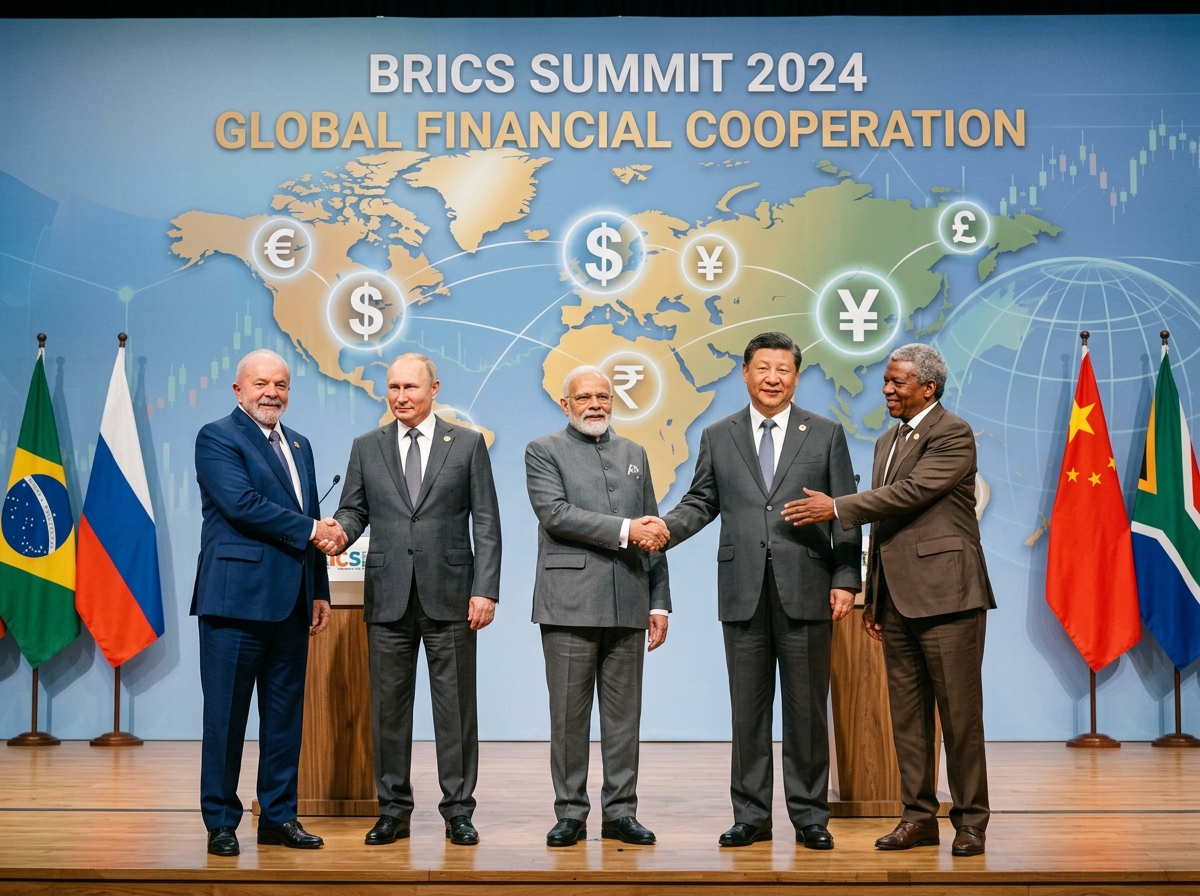
BRICS — originally an economic shorthand coined by Goldman Sachs — has evolved into a serious geopolitical bloc. It now represents over 36% of global GDP (by purchasing power) and nearly half the world’s population. At the 2024 Kazan Summit, Russian President Vladimir Putin even displayed a prototype BRICS banknote, signaling that the idea is moving beyond theory.
The push isn’t just political theater. Sanctions, trade wars, and the “weaponization” of the dollar have made many nations eager to build financial alternatives — fast.
I’m Faisal S. Chughtai, founder of ActiveX and a digital strategy professional who has tracked the evolution of the BRICS currency debate across global financial and tech landscapes. My work in financial content and digital infrastructure gives me a grounded lens on how these monetary shifts play out in real markets. Buckle up — this topic moves quickly, and the details matter.
The Global Ambition Behind a brics currency
When we talk about the brics currency, we aren’t just talking about a new piece of paper. We are talking about a fundamental shift in how countries pay each other for oil, gold, and electronics. The ambition is to create a “multipolar” financial world where one country’s domestic policy doesn’t dictate the global economy.
The “Unit” and Gold-Backed Alternatives
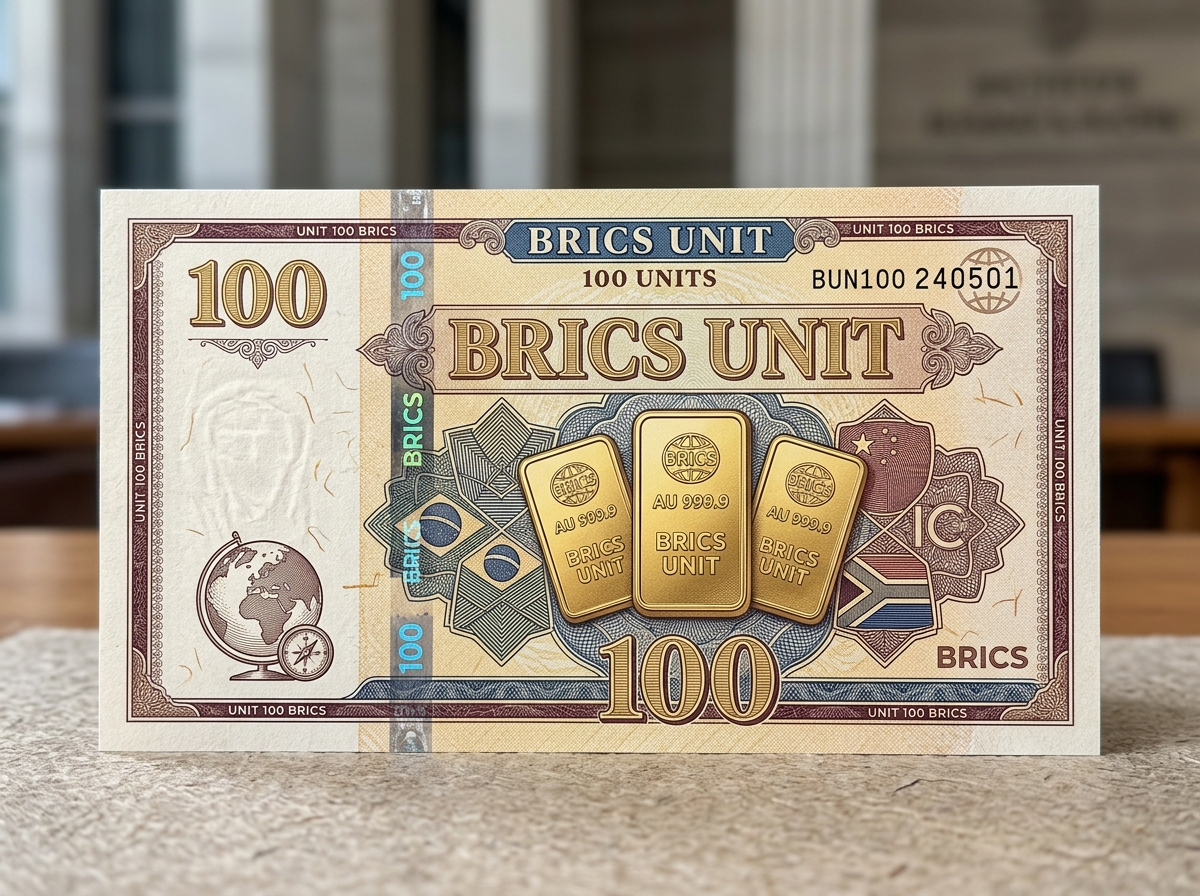
The most concrete proposal on the table is the “Unit.” Think of it not as a currency you’d carry in your wallet to buy a coffee, but as a “unit of account” for massive international trades. The proposed structure is fascinating: it is intended to be backed 40% by gold and 60% by a basket of BRICS national currencies.
This is often called the R-5 basket, named after the five original currencies that all start with the letter ‘R’: the Brazilian Real, Russian Ruble, Indian Rupee, Chinese Renminbi (Yuan), and South African Rand. By anchoring the Unit to gold, the bloc hopes to provide a stable alternative to the “fiat” US dollar, which hasn’t been backed by gold since 1971.
A Massive Gold Hoard
One of the biggest reasons people take the brics currency seriously is the sheer amount of gold these nations hold. Collectively, the central bank gold holdings of the original BRICS plus Egypt account for more than 20 percent of all gold held in the world’s central banks.
Russia and China are leading the pack, both ranking in the top 10 globally for gold reserves. Russia holds approximately 2,326.42 metric tons (MT), while China follows closely with 2,306.3 MT. Even India has significantly ramped up its holdings to over 880 MT.
De-dollarization and the US Response
“De-dollarization” sounds like a scary technical term, but it’s actually quite simple: it’s the global effort to use the US dollar less. Why? Because when the US places sanctions on a country—like it did with Russia after the Ukraine conflict—that country can be cut off from the global financial system (SWIFT). Other nations watched this and thought, “We need a Plan B.”
The Mighty Greenback
Despite the hype, the US dollar is still the heavyweight champion. According to the Federal Reserve, the dollar was used in 96 percent of international trade invoicing in the Americas and 74 percent in the Asia-Pacific region between 1999 and 2019.
Recent data from the Bank for International Settlements (BIS) confirms that the dollar still accounts for about 89 percent of all currency trading. It is the most liquid and trusted currency in the world, making it very hard to replace overnight.
The Trump Factor and Tariffs
The US isn’t sitting idly by. Former President Donald Trump has been very vocal about protecting the dollar’s status. During his campaign and subsequent debates, he doubled down on his pledge to punish nations that move away from the dollar.
His proposed weapon? Tariffs. Trump has threatened a 100% tariff on goods from countries that seek to replace the dollar in trade. In mid-2025, his administration even suggested an extra 10 percent on countries aligning with “Anti-American” BRICS policies. For countries like Brazil, which is a top-three source for US steel imports, these threats carry massive economic weight.
Digital Infrastructure: BRICS Pay and mBridge
While a physical brics currency might be years away, the digital plumbing is already being installed. We are moving away from traditional bank transfers toward blockchain-based systems that are faster, cheaper, and harder to block.
Project mBridge: The New Silk Road
One of the most successful experiments is Project mBridge. This is a collaboration between the central banks of China, Thailand, the UAE, and Hong Kong (with Saudi Arabia joining later). It uses a “multi-CBDC” (Central Bank Digital Currency) platform to settle trades instantly.
As of November 2025, Project mBridge has processed 4,047 transactions worth US$55.49 billion. That is a massive jump from the mere $22 million processed in 2022. It proves that nations can trade billions of dollars worth of goods without ever touching the US banking system.
BRICS Pay and Financial Sovereignty
Then there is BRICS Pay, a decentralized messaging and payment system. Think of it as a SWIFT alternative that uses blockchain technology.
By using these systems, BRICS nations can maintain their “financial sovereignty.” If the US decides to sanction one member, the others can keep trading using their own digital rails. India has even proposed linking the Digital Rupee with other BRICS digital currencies to make cross-border payments as easy as sending a text message.
Feasibility and Challenges for the Bloc
Is a unified brics currency actually feasible? Many economists are skeptical. Creating a shared currency is like getting ten people who all have different diets and budgets to agree on a single grocery list.
The Problem of Diversity
The Euro works because European nations have relatively similar economies and political goals. BRICS, however, is a “motley crew.”
- China produces 70% of the bloc’s economic output.
- Russia is dealing with 21% interest rates to fight inflation.
- India and China have ongoing border disputes and deep geopolitical mistrust.
Experts believe that a unified currency requires a single interest rate. How do you set one rate that works for China (where rates are dropping to spark growth) and Russia (where rates are skyrocketing)?
The “German Racket” Parallels
Some analysts compare China’s role in BRICS to Germany’s role in the Eurozone. Critics used to call the Euro a “German racket” designed to help German exports. Within BRICS, there are fears that a new currency would simply be a “Chinese racket,” making other members like Brazil and India even more dependent on the Chinese Yuan.
Feasibility and the brics currency Timeline
Don’t expect to see a BRICS banknote in your local currency exchange tomorrow. Government officials in Brazil, which held the rotating presidency in 2025, have stated clearly that there are no immediate plans for a full currency.
Instead, the focus is on national currency trade. We are already seeing this in the oil markets. In 2023, one-fifth of global oil trades were reportedly made using non-US dollar currencies. Russia and Iran have already signed deals to coordinate their resistance to Western sanctions by trading in their own currencies.
The 2026 BRICS Summit in India will be a major milestone. India’s External Affairs Minister S. Jaishankar stated that while India isn’t looking to “weaken” the dollar, they are very interested in making their own currency, the Rupee, more international.
Frequently Asked Questions
What is the brics currency and is it backed by gold?
The most discussed version is the Unit, a digital settlement instrument. It is not a traditional currency but a “basket.” It is proposed to be backed 40% by physical gold and 60% by the national currencies of the member states. Because BRICS nations hold over 20% of the world’s central bank gold, this backing gives the Unit a layer of protection against the inflation that often plagues fiat currencies.
How would a new currency impact the US dollar?
It wouldn’t destroy the dollar, but it could chip away at its “reserve status.” Currently, the dollar makes up 56% of all foreign currency reserves. If BRICS nations start settling their oil and gas trades in the Unit or their own currencies, the global demand for dollars will drop. This could lead to higher borrowing costs for the US and a shift toward a more fragmented global economy where the dollar is just one of several major players.
Which countries are currently in BRICS?
As of late 2025, there are 10 full members:
- Brazil
- Russia
- India
- China
- South Africa
- Egypt
- Ethiopia
- Iran
- United Arab Emirates (UAE)
- Indonesia (joined in January 2025)
Saudi Arabia was invited but has remained “on the fence,” recently pledging a US$1 trillion investment in the US economy, signaling they aren’t ready to leave the dollar’s orbit just yet.
Conclusion
At Apex Observer News, we believe that while the “death of the dollar” is greatly exaggerated, the rise of a brics currency infrastructure is a reality that investors cannot ignore. The world is moving toward a system where trade is more digital, more decentralized, and less dependent on a single Western capital.
For those looking to prepare, many investment experts suggest gold diversification. Since the BRICS strategy is so heavily anchored in precious metals, gold remains a classic hedge against the geopolitical volatility this shift creates. You might also consider exploring emerging market ETFs or keeping an eye on latest crypto news as blockchain technology becomes the foundation for these new payment rails.
The financial world is changing, and staying informed is your best defense. Whether it’s the latest on Bitcoin rebounds or shifts in business and crypto, we’ll be here to demystify the terms and keep you ahead of the curve.
Want to stay updated on the global economic shift? Follow us for real-time news aggregation and expert analysis on the future of finance.
