

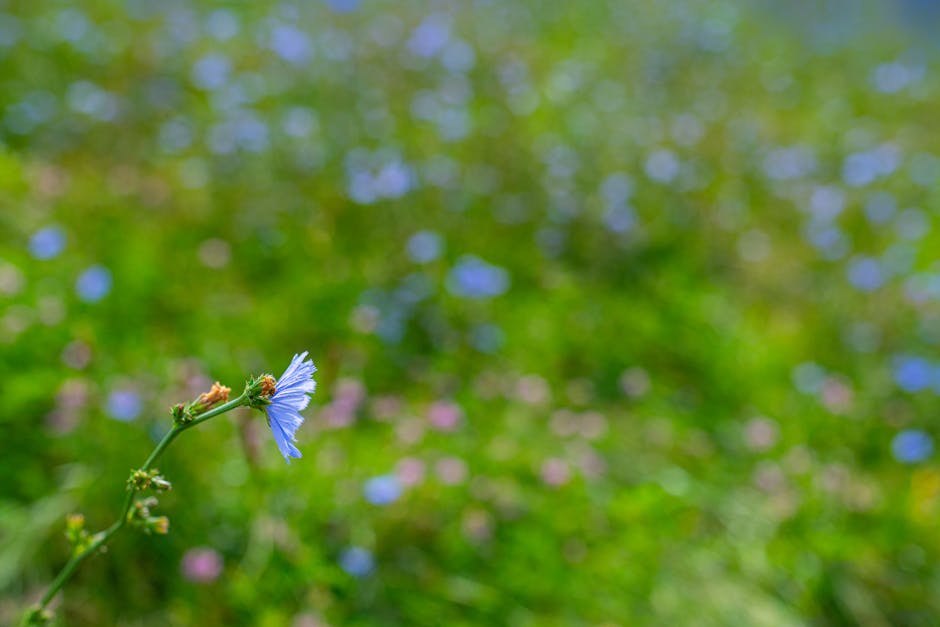
What Are Wildflowers? A Quick Guide to Nature’s Unplanted Blooms
Wildflowers are plants that grow without being intentionally seeded or cultivated by humans. Here’s a fast breakdown:
| Feature | Wildflowers | Cultivated Flowers |
|---|---|---|
| Origin | Grow naturally in the wild | Planted and bred by humans |
| Maintenance | Little to none | Regular care required |
| Genetics | Native or naturalized species | Often hybrids or selected cultivars |
| Ecosystem role | Support pollinators and wildlife | Varies; often lower ecological value |
Key wildflower facts at a glance:
- They can be native, naturalized, or even invasive species
- The term refers to the whole plant, not just the bloom
- California alone has over 1,450 plant species in Yosemite National Park, representing 25% of the state’s native flora
- Wildflower-rich habitats are critical for bees, butterflies, and other pollinators
- “Superblooms” — exceptional mass flowering events — can draw thousands of visitors to places like California’s Antelope Valley each spring
Whether you want to visit a bloom, grow your own meadow, or simply understand what you’re looking at on a hike, this guide covers everything you need to know.
Wildflowers are more than just pretty scenery. They are a cornerstone of healthy ecosystems. From the sun-baked hills of Southern California to the alpine meadows of the Sierra Nevada, these unplanted blooms feed pollinators, anchor soil, and paint entire landscapes in color — often with no human help at all.
The difference between a wildflower and a garden flower isn’t always obvious. Botanically speaking, a wildflower is any flowering plant that grows without intentional seeding or planting. It implies the plant is not a hybrid or a cultivar selected to differ from its natural form. That said, the term is imprecise — it can cover native species, naturalized imports, and even invasive plants depending on context.
What makes wildflowers remarkable is their resilience. They ask for nothing and give back enormously — to insects, birds, soil, and the people lucky enough to stumble across a hillside blazing with California poppies in March.
I’m Faisal S. Chughtai, founder of ActiveX and a digital strategist with deep experience researching and communicating topics like wildflowers for modern, tech-savvy audiences. In this guide, I’ll walk you through everything from identifying wildflowers in the field to growing them in your own backyard — clearly and without the jargon.
The Ecological Importance of Wildflowers
We often look at wildflowers as mere eye candy for our Instagram feeds, but their role in the environment is a heavy-lift operation. These plants are the backbone of Wildflowers and biodiversity, providing the essential resources that keep our local ecosystems humming.
One of their most vital roles is supporting pollinators. Bees, butterflies, moths, and even hummingbirds rely on the nectar and pollen provided by native blooms. For example, the Butterfly Weed (Asclepias tuberosa) is a top-ranked plant for a reason: it serves as a critical host for Monarch and Queen butterflies. Without these specific plants, these iconic species simply cannot complete their life cycles.
Beyond the “birds and the bees,” wildflowers perform unglamorous but essential tasks like soil stabilization. Their deep, complex root systems prevent erosion and help the ground absorb water more efficiently. They also provide a habitat for beneficial insects—like hoverflies and parasitic wasps—that act as a natural pest control squad for nearby agricultural crops. In fact, in regions like the UK, wildflower-rich habitats are credited with supporting the insects that pollinate essential food crops like strawberries and cherries.
To understand why we prioritize native species, take a look at how they stack up against invasive competitors:
| Feature | Native Wildflowers | Invasive Species |
|---|---|---|
| Ecosystem Harmony | Evolved alongside local wildlife | Disrupts and outcompetes local flora |
| Resource Needs | Adapted to local rainfall/soil | Often hogs water and nutrients |
| Wildlife Support | Provides specific food for larvae | Often provides “junk food” or no food |
| Biodiversity | Promotes a variety of life | Creates “monocultures” (only one species) |
Where and When to See California Wildflowers
California is arguably the wildflower capital of the world. Because the state features such dramatic changes in elevation—from 2,000 feet in the west to 13,000 feet in the east—the blooming season is incredibly long. If you know where to look, you can find blossoms almost year-round.
When we talk about Wildflower identification and terminology, we have to look at the sheer diversity of the Golden State. Yosemite National Park alone is home to 1,450 species of flora. That means 25% of all California’s native plants can be found within the park’s boundaries. The “show” usually starts in the lower elevations like the Merced River canyon in March and gradually migrates up the mountains, reaching the high alpine meadows by July and August.
Peak Season and the 2026 Superbloom Forecast
The term “superbloom” isn’t a scientific one, but we use it to describe those rare years when the desert floor transforms into a solid carpet of color. For a superbloom to happen, several stars must align: significant autumn rains to soak the seeds, followed by a cool winter and a well-timed spring warm-up.
For 2026, the forecast is a bit of a mixed bag. While some areas are seeing lush growth, others are experiencing a “scavenger hunt” year. For instance, reports from Chino Hills State Park as of March 2026 indicate that while the park is stunningly green, the conditions didn’t align for a massive, sweeping superbloom. Instead, visitors are finding scattered native gems—a rewarding experience for those willing to slow down and look closely.
Generally, the peak window for California is March through May for lower elevations and deserts, while the Sierra Nevada peaks in June and July.
Iconic Wildflowers of the Golden State
If you’re heading out with a field guide, here are the “celebrities” you’re likely to encounter:
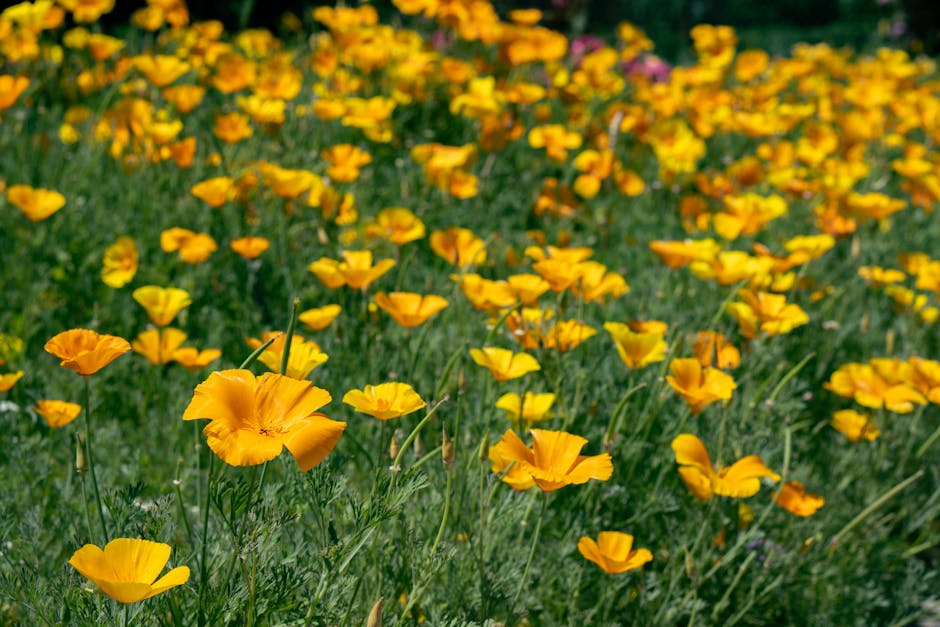
- California Poppy: Our state flower. Its petals actually close up at night or during cloudy, windy weather to protect its pollen.
- Lupine: Known for its tall, purple spires. You’ll often find these growing alongside poppies for a stunning orange-and-purple contrast.
- Goldfields: These tiny yellow flowers grow in such dense clusters that they can make an entire hillside look like it was painted with gold leaf.
- Snow Plant: A strange, bright red plant that lacks chlorophyll. It doesn’t need the sun for food; instead, it gets its nutrients from soil fungi.
- Pussy Paws: These have a mysterious habit of raising their flower stems in the morning and lowering them in the evening. Scientists still aren’t entirely sure why!
For those inspired to bring this beauty home, there are 19 types of wildflowers to grow that are particularly resilient and pollinator-friendly, such as Black-Eyed Susans and Coneflowers.
Best Trails and Parks for Petal-Peeping
If you want the best “bang for your buck,” we recommend these legendary spots:
- Carrizo Plain National Monument: When conditions are right, the ridges here glow with goldfields and tidy tips.
- Yosemite National Park: Check out Cook’s Meadow Loop for easy spring viewing or McGurk Meadow for high-elevation summer blooms.
- Midpeninsula Regional Open Space District: Preserves like Russian Ridge are famous for their “Monet-like” displays of poppies and lupine.
- Point Mugu State Park: The La Jolla Canyon Trail is a perennial winner for coastal views paired with purple lupine.
- North Table Mountain Ecological Reserve: Famous for its vernal pools and ephemeral waterfalls that are ringed by wildflowers in the spring.
Responsible Viewing and Tracking Resources
With the rise of “flower tourism,” we have to be more careful than ever. A single person stepping into a field for a “candid” photo can crush hundreds of delicate plants and compact the soil, preventing seeds from growing next year.
Petal-Peeping Etiquette 101:
- Stay on the trail: This is the golden rule. Take your photos of the flowers, not in the flowers.
- Don’t pick them: Wildflowers wilt almost immediately once picked, and you’re removing the seeds that would have created next year’s bloom.
- Leave No Trace: If you pack it in, pack it out.
- Check the weather: Many parks, like Chino Hills, close for 48 hours after heavy rain to protect the trails from damage.
Tools for Tracking Real-Time Blooms
Don’t just drive out to the desert and hope for the best! We have access to some incredible real-time data. The Theodore Payne Foundation Wild Flower Hotline has been a staple since 1983. They release new, narrated reports every Friday from March through May. You can call them or listen to their updates on platforms like Spotify.
Another great resource is the Texas Wildflower Central hub, which—while focused on the Lone Star State—provides an excellent model for how to use Instagram hashtags (like #TXWildflowers2026) to track blooms in real-time. Many California parks now use similar social media tracking to help visitors find the best spots.
Regional Wildflower Centers and Hotlines
If you find yourself traveling, these organizations are the gold standard for wildflower info:
- Lady Bird Johnson Wildflower Center: Located in Austin, Texas, this center manages a massive database of over 2,700 species and offers a “What’s in Bloom” list that is updated weekly.
- Midpeninsula Regional Open Space District: They provide specific “Common Wildflower Guides” for the Bay Area that are perfect for beginners.
- Wildseed Farms: If you want to know which Wildflower seeds and varieties are currently thriving in the southern regions, their regional mixes are a great indicator.
How to Grow Wildflowers in Your Home Garden
You don’t have to hike five miles to see a meadow. Growing wildflowers at home is one of the most rewarding (and low-maintenance) ways to garden. Plus, it’s a huge win for local bees.
When selecting plants, we suggest looking at the Top 50 Wildflowers for gardeners to see what performs best in a residential setting. Butterfly Weed, Purple Coneflower, and Black-Eyed Susans are perennial favorites because they are hardy and look great in arrangements.
Selecting the Right Wildflower Seed Mixes
The biggest mistake we see gardeners make is buying a “one size fits all” seed packet. For success, you need a mix tailored to your specific conditions. Companies like American Meadows and Eden Brothers offer over 140 varieties of mixtures.
Consider these factors:
- Regional Adaptation: Seeds meant for the Pacific Northwest won’t thrive in the heat of the Southwest.
- Sun vs. Shade: Most wildflowers love full sun, but there are specific “Shade Mixes” for those with wooded yards.
- Pollinator-Friendly: Look for mixes that explicitly state they are non-GMO and untreated to ensure they are safe for bees.
- Annual vs. Perennial: Annuals (like Poppies) bloom fast and then die, while Perennials (like Coneflowers) take longer to establish but come back year after year.
For more technical advice, the Wildflower gardening resources provided by major botanical centers can help you navigate soil preparation and timing.
Maintenance and Long-Term Care
The beauty of a wildflower garden is that it doesn’t need a “manicured” look. However, a little care goes a long way:
- Timing: Plant in the spring after the final frost, or in the fall after a killing frost (this allows the seeds to “overwinter” in the soil).
- Soil Prep: You don’t need fancy fertilizer. In fact, many wildflowers prefer poor soil. Just clear the area of existing grass and weeds so the seeds have “soil-to-seed” contact.
- Deadheading: If you want more blooms, snip off the faded flowers. If you want the garden to spread naturally, leave the seed pods alone!
- Watering: Once established, most native wildflowers are incredibly drought-tolerant, but they’ll need regular misting during the first few weeks of germination.
Frequently Asked Questions about Wildflowers
What is the difference between a wildflower and a weed?
It’s often a matter of perspective! Botanically, a “weed” is simply a plant in the wrong place. However, most people define wildflowers as native or naturalized plants that provide ecological value, whereas “weeds” are often non-native, invasive species that provide little benefit to local wildlife and aggressively take over garden beds.
When is the best time to plant wildflower seeds?
In most regions, early spring is best—just as the ground warms up but before the summer heat hits. However, “dormant planting” in late fall is also very effective, as the winter rain and snow help settle the seeds into the ground for an early spring start.
Are there any superblooms predicted for 2026?
As of March 2026, there is no official “statewide” superbloom. While the landscapes are green and lush, the specific rainfall patterns required for a mass desert bloom were inconsistent. However, specific “pockets” of exceptional color are still appearing in places like the Carrizo Plain and parts of the Eastern Sierra.
Conclusion
Wildflowers are a vital part of our natural heritage. Whether they are supporting a Monarch butterfly’s long journey or simply brightening up a roadside, they remind us of the beauty that happens when we let nature take the lead. By viewing them responsibly and perhaps planting a few in our own yards, we help ensure these “mountains of gold” continue to bloom for generations to come.
For more updates on nature, conservation, and the Latest lifestyle and nature trends, stay tuned to Apex Observer News. We’re here to keep you connected to the world around you—one bloom at a time.
