

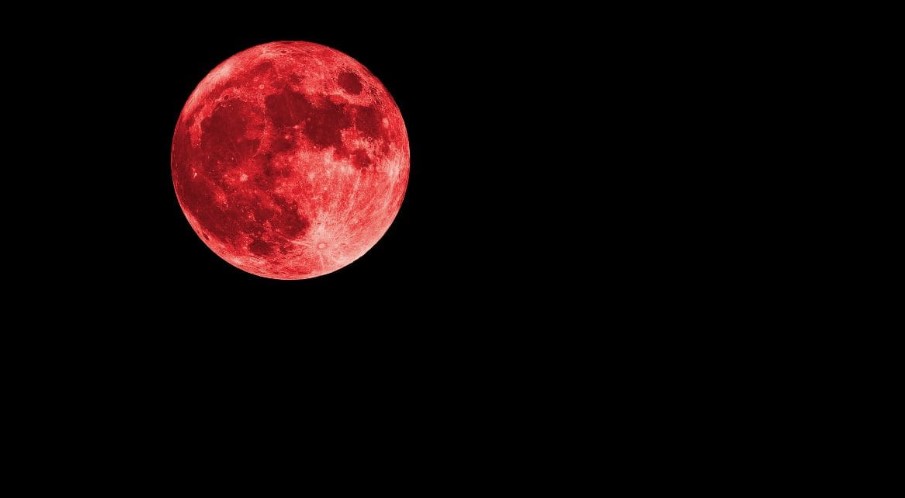
NEW YORK (AP) — A blood-red moon will soon grace the skies for a total lunar eclipse — and there won’t be another until late 2028.
The spectacle will be visible Tuesday morning from North America, Central America and the western part of South America. Australia and eastern Asia can catch it Tuesday night. Partial stages of the eclipse with small bites taken out of the moon can be seen from Central Asia and much of South America. Africa and Europe will be shut out.
Solar and lunar eclipses happen due to a precise alignment of the sun, moon and Earth. There are between four and seven a year, according to NASA.
The eclipses tend to follow each other, taking advantage of the sweet spot in the celestial bodies’ orbits. Tuesday’s total eclipse of the moon comes two weeks after a ‘ring of fire’ solar eclipse that dazzled people and penguins in Antarctica.
During a total lunar eclipse, the Earth is between the sun and full moon, casting a shadow that covers the moon. The so-called blood moon looks red because of stray bits of sunlight filtering through Earth’s atmosphere.
The show unfolds over several hours, with totality lasting about an hour.
