

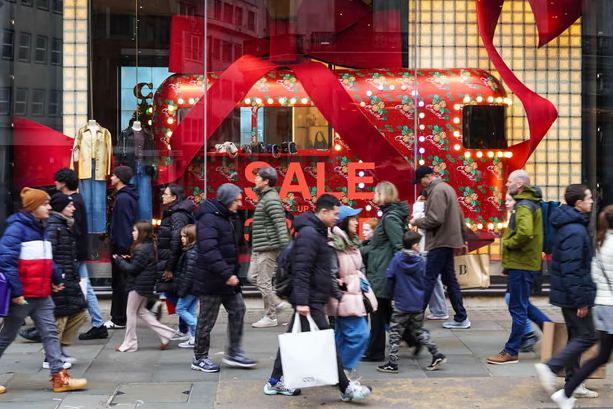
UK shoppers are expected to spend £3.8bn this Boxing Day, 2% more than last year, with online sellers experiencing most of that growth but high streets also enjoying a boost from a renewed appetite for post-Christmas bargains.
Boxing Day remains one of the busiest shopping days of the year, but in recent years the dash for the high street has eased as more people opt to search for bargains from the sofa.
With many discounts kicking off from midnight on Christmas Eve, Christmas Day is now worth more than £1bn in sales, with 23 million people in the UK expected to be buying online shortly after unwrapping their gifts. That is half a million more than last year, according to analysis by the research company GlobalData for Vouchercodes.co.uk.
High streets and other shopping centres are expected to record a 1.5% rise in sales on Boxing Day compared with last year, ahead of the 0.6% pace of shop price inflation, according to the latest British Retail Consortium figures. That is less than half the 3.4% growth expected in online sales, according to GlobalData.
Kien Tan at the advisory firm PwC said Boxing Day could benefit from a more lacklustre Black Friday sales period this year, during which retailers were disappointed by demand as shoppers held out for better bargains.
“There are signs are that Black Friday has peaked in the UK and there will still be people looking for bargains on Boxing Day. It’s not necessarily a comeback but it’s still there – a British institution.”
He said the hunt for bargains came as shoppers were feeling more cautious than a year ago as there was “a lot more uncertainty and people are holding back”.
Tan said online shopping was on the rise again, driven by busy middle-aged people rather than fashion shoppers. They are likely to be ready to spend more on furniture and other gadgets for the home in the post-Christmas sales as it is now five years since the pandemic fuelled a boom in spending on home improvements, so many goods bought at that time are becoming worn out.
Before Christmas, there were signs that shoppers were holding off on purchases. On Christmas Eve, fashion retailers launched early discounts after a mild autumn and winter for much of the country held back sales of knitwear and coats. New Look, Boohoo and Sports Direct all offered discounts of up to 70%, and Next, John Lewis and Topshop offered 50% off.
Visitor numbers were down 4.5% on Tuesday compared with 23 December last year, according to the retail footfall measuring firm MRI as a bounceback in cities including London was offset by poor numbers in towns and shopping centres. Footfall recovered some ground on Christmas Eve, up 0.4% on a year earlier.
Moji Oshisanya, the chief commercial officer of VoucherCodes.co.uk, said: “The uplift in sales over the Boxing Day sales period is driven by two key factors. We’re seeing a resurgence in appetite for the Boxing Day sales, with shopper numbers forecast to be at their highest level in four years – a healthy 105.2 million [over a week]. The Boxing Day sales are often a moment for consumers to treat themselves post-Christmas, and with finances tight, the deals and discounts available will be used to stretch budgets further.
“However, increased participation isn’t the only driver: inflation is also to blame. Over the wider six-week Christmas period, from mid-November to the end of December, sales value is expected to grow by 3.2%, yet sales volume is forecast to fall by 0.3%. This indicates that while people are spending more, driving up overall sales figures, they won’t necessarily be taking home more items.”
Boxing Day now vies with 27 December for the busiest shopping day post-Christmas and that will be particularly true this year as the 27th is a Saturday, so many people will be off work.
About 44% of consumers say they plan to hit the high streets from Boxing Day onwards, with 29% heading to retail parks and 22% expecting to visit big shopping centres, according to MRI.
High street spending has come under pressure in recent years as some big retailers – including most John Lewis outlets, Aldi, Poundland, B&Q, Next and large Marks & Spencer stores, remain closed on Boxing Day.
With family structures more diverse, many households also enjoy several celebratory meals in different locations, while public transport shutdowns can hold up trade on the traditional start to the post-Christmas sales.

British shoppers are expected to stay away from the Boxing Day sales as Rachel Reeves’s tax raid hits consumer confidence.
Spending during the festive sales period is forecast to drop by £1bn to £3.6bn this year, according to Barclays.
The decline is driven by falling appetite among shoppers, with only 26pc planning to take part in the Boxing Day sales, down from 28pc in 2024.
Those who will take part intend to spend more, with average outlay forecast at £253 per person, up by £17 compared with a year ago.
However, the lower overall expenditure forecast will deal a fresh blow to already struggling high street retailers, who rely heavily on sales during the so-called “golden quarter” to boost their revenues.
Households face continued strain on their budgets, with almost 70pc of consumers blaming lower spending on cost pressures. That is up from less than half a year ago.
Barclays’ survey found that a quarter of Boxing Day shoppers will only buy items they consider to be essential.
Ms Reeves announced a fresh tax raid in last month’s Budget through a freeze on income tax thresholds that will drag millions into paying more, as well as higher taxes on property and savings.
Consumer confidence fell to -19 just ahead of the Budget, according to GfK’s long-running survey.
‘Less competition from fewer sales shoppers’
Separate data from Barclays showed that households cut back spending at the fastest pace since the pandemic last month, despite heavy discounting during the Black Friday sales period.
Karen Johnson, head of retail at Barclays, said: “Shoppers have demonstrated just how cost-conscious they are throughout 2025, and we expect that we’ll see this play out during the Boxing Day sales.
“Those that do hit the high street might benefit both from bigger budgets, perhaps having held out for the sales, and potentially less competition from fewer sales shoppers.
“Boxing Day is still a pivotal moment for retailers, fuelled by Christmas nostalgia, but it has evolved to reflect modern consumer demands.”
Shops have also been hit by the Chancellor’s recent Budgets. In particular, increases in the minimum wage and a rise in employers’ National Insurance contributions have disproportionality affected the sector, which relies heavily on lower-paid workers.
Labour’s upcoming Employment Rights Bill, which will crack down on zero hours contracts, will further increase red tape and hamper the sector’s ability to offer flexible and part-time jobs.
The latest figures from the Office for National Statistics show there were 2.8 million UK retail jobs in September, down by 74,000 from the same point last year and 355,000 fewer than in 2015.
Vice President J.D. Vance Joins Navy SEALs for Grueling 90-Minute Training Session
