


Introduction
The global technology landscape is undergoing significant shifts, propelled by fast-moving innovations. As we look toward the 2025 horizon, the World Economic Forum (WEF) has released its definitive report on the breakthroughs poised to redefine our world. These new tech technologies were not chosen at random; they were selected based on a rigorous foresight evaluation across five critical dimensions: scientific progress, strategic impact, investment momentum, talent availability, and ecosystem readiness.
Understanding these trends is no longer optional for leaders. Whether it is the convergence of AI and robotics or the “rebuild” of AI-native organizations, the distance between “emerging” and “mainstream” is collapsing. As the knowledge half-life of tech shrinks to mere months, staying informed is your only defense against obsolescence.
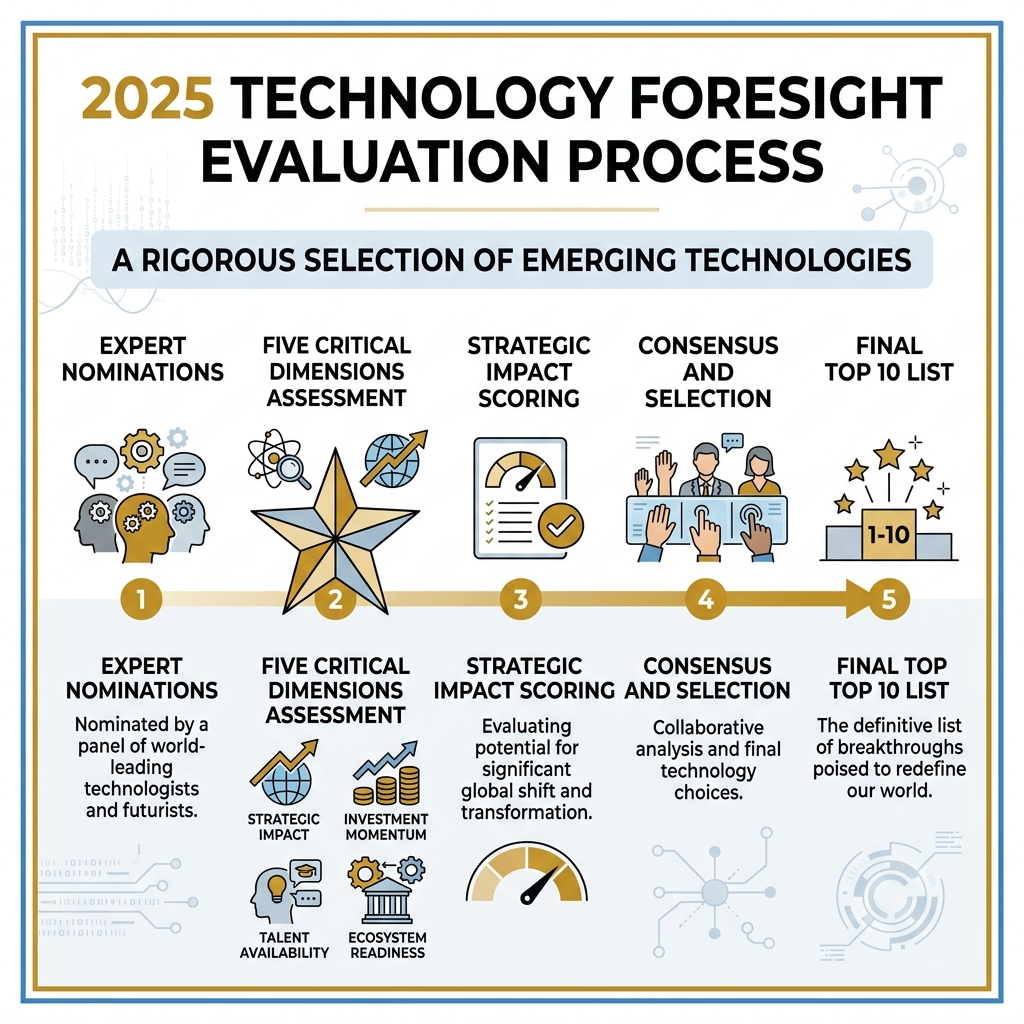
The World Economic Forum’s Top 10 Emerging New Tech Technologies
Published on 24 June 2025, the WEF’s report serves as a roadmap for the next decade. These innovations are selected because they have passed the “hypothetical” stage—they exist in labs or prototypes—but have not yet reached the mass market where they lose their “emerging” status.
The strategic impact of these technologies is immense. For example, the shift toward agentic systems means we are moving from “AI as a tool” to “AI as a coworker.” This requires a complete rethink of our infrastructure. Companies like SK Hynix are already responding to this demand, recently filing for a US listing that could raise up to $14 billion to fund the next generation of memory chips required for these high-compute tasks.
| Technology | Scientific Progress | Commercialization Status | Key Industry |
|---|---|---|---|
| AI Watermarking | High | Early Adoption | Media & Security |
| Structural Batteries | Medium | Prototypes | Aerospace & EV |
| Living Therapeutics | Medium | Clinical Trials | Healthcare |
| Osmotic Power | Medium | Pilot Plants | Energy |
| 6G Systems | Low | Research Phase | Telecom |
AI Watermarking and Digital Trust in New Tech Technologies
In an era where OpenAI’s Sora can generate hyper-realistic video (though OpenAI recently made headlines for pausing certain Sora developments to focus on safety), the line between reality and fabrication is blurring. AI-generated content watermarking is the industry’s answer to the “deepfake” crisis.
This technology involves embedding imperceptible metadata or digital “fingerprints” directly into the file’s structure. Unlike a visible logo, these marks are resistant to cropping or editing. For us, this represents a vital step in misinformation prevention. It allows platforms to verify content provenance, ensuring that when you see a news clip or a political speech, you know exactly where it came from and if a machine had a hand in creating it.
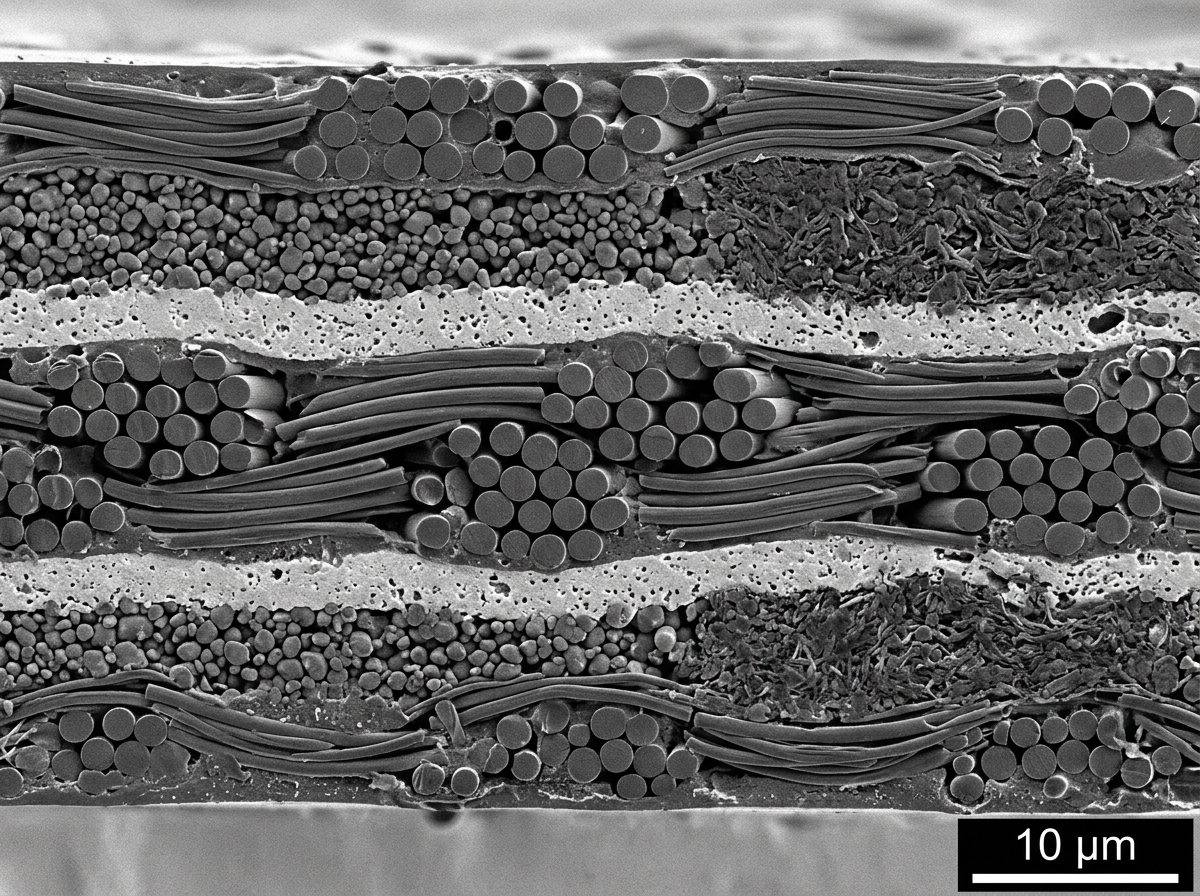
Structural Battery Composites and Energy Storage
Imagine if the body of your car was the battery. That is the promise of structural battery composites. By using carbon fiber that can both carry a physical load and store electrical energy, we can eliminate the dead weight of traditional battery packs.
This is a game-changer for electric vehicles (EVs) and aerospace. In drones, for instance, replacing heavy lithium-ion blocks with energy-storing wings could double flight times. We are also seeing a push toward wireless charging integration within these materials, allowing devices to “sip” power from their environment without needing to be plugged in. This aligns perfectly with the rise of 5 amazing new technology hacks that prioritize seamless user experiences.
Innovations Reshaping Health and the Environment
Sustainable growth and inclusive innovation are the pillars of the 2025 tech movement. We aren’t just building faster gadgets; we are building systems that help the planet breathe and the body heal. This is particularly evident in the agricultural sector, where Scientific research on agricultural robotics shows a massive trend toward automation to reduce chemical use and increase yields.
Engineered Living Therapeutics
This is the “software-ization” of biology. Instead of taking a chemical pill, patients might soon ingest “engineered living therapeutics”—living cells (often bacteria or yeast) that have been programmed to sense a disease and produce a localized cure.
By targeting the human microbiome, these synthetic biology breakthroughs can treat everything from Crohn’s disease to rare metabolic disorders. It is the ultimate form of personalized medicine. While still largely in the clinical trial phase, the potential to reduce the side effects of systemic drugs is massive. If you want to dive deeper into how machines and biology are merging, check out How AI and robotics work together to change the world.
Osmotic Power and Clean Energy
Also known as “Blue Energy,” osmotic power generates electricity where fresh water meets salt water—at river estuaries. By using specialized membranes to capture the energy released during the mixing of different salinity gradients, we can create a steady, 24/7 renewable power source that doesn’t depend on the sun or wind.
Coastal cities are the primary candidates for this infrastructure. As we push for carbon neutrality, osmotic power offers a predictable baseload of energy. It is a perfect example of using natural gradients to solve human problems, much like the The future of food and artificial intelligence on the farm uses data gradients to optimize crop health.
The Next Frontier of Computing and Connectivity
The “compute wars” are heating up. NVIDIA recently unveiled its Vera Rubin platform, which Jensen Huang described as a “generational leap” designed to power agentic AI factories. Meanwhile, Arm has made a historic move by launching the Arm AGI CPU—its first-ever production-ready silicon product—specifically designed to orchestrate the thousands of distributed tasks required by autonomous AI agents.
6G Systems and the Connectivity of New Tech Technologies
While we are still getting used to 5G, researchers are already laying the groundwork for 6G. According to A Vision of 6G Wireless Systems, this next generation will utilize terahertz frequencies to achieve near-zero latency.
This isn’t just about faster Netflix downloads. 6G is the “nervous system” for smart cities and the Internet of Things (IoT). It will allow for real-time satellite integration and the coordination of millions of autonomous devices, from self-driving cars to delivery drones. It will likely solve the “quest for power” we see in current mobile devices, as discussed in our look at the New iPad OS and the quest for desktop power.
Quantum Computing and Fusion Power
Quantum computing has moved from science fiction to “noisy” prototypes. By using qubits that can exist in multiple states at once, these machines can crack codes and simulate molecules in seconds—tasks that would take a classical supercomputer millennia. For a plain-English breakdown, see The rise of quantum computing what you need to know.
Simultaneously, we are seeing renewed hope in fusion power. Unlike traditional nuclear fission, fusion mimics the sun to create nearly limitless clean energy without long-lived radioactive waste. While commercialization is still a “horizon” goal, the convergence of AI-driven plasma control and new superconducting materials has brought us closer than ever.
Risks and Regulatory Challenges for Emerging Tech
With great power comes great… legal fees. The rapid adoption of new tech technologies has outpaced the law, leading to significant friction. Meta was recently ordered to pay $375 million in a New Mexico lawsuit over child exploitation and user safety claims. This follows a broader trend of regulators cracking down on social media tools and AI safety.
Legal hurdles aren’t the only barriers. The industry is also facing economic “reality checks.” Epic Games recently announced layoffs of over 1,000 employees as Fortnite usage patterns shifted, and GameStop saw a 14% fall in revenue as gamers moved toward purely digital ecosystems.
Key risks we must address include:
- Privacy Concerns: The death of the tracking cookie is forcing a move toward “privacy-first” AI, but tracking remains a major ethical hurdle.
- Commercialization Barriers: Gartner predicts that 40% of agentic AI projects will be canceled by 2027 because companies are trying to automate broken processes rather than redesigning them.
- Ethical Considerations: As AI begins to grade our work and even our students, we must ask Why ethics matter in the future of artificial intelligence.
Frequently Asked Questions about New Tech Technologies
What are the top emerging technologies for 2025?
According to the World Economic Forum, the top 10 include structural battery composites, engineered living therapeutics, osmotic power, AI-generated content watermarking, and high-altitude platform stations. Additionally, agentic AI and 6G systems are critical trends to watch.
How does AI watermarking protect digital content?
It embeds a hidden digital layer into images, audio, and video. This metadata helps verify if the content is authentic or AI-generated, which is crucial for fighting deepfakes and maintaining trust in digital media.
What is the current status of solid-state batteries?
They are currently in the advanced prototype and early testing phase. Major automakers and tech companies are investing billions to move them into mass production by the late 2020s, as they offer higher energy density and better safety than current lithium-ion batteries.
Conclusion
At Apex Observer News, we believe that the future belongs to those who can navigate the “AI infrastructure reckoning.” Whether it is the rise of AI companies in Pakistan or the global push for Technology innovations are changing by AI in 2025, the common thread is a shift from experimentation to impact.
Leaders must adopt strategies for inclusive growth and future resilience. This means not just buying the latest “agentic” tool, but rebuilding the organization to be AI-native from the ground up. As we track these new tech technologies, our goal remains the same: to provide the real-time, diverse news aggregation you need to lead with confidence.
Explore more about the future of innovation at aonews.fr/category/technology/emerging-technologies/
