

Why New Design Technologies Are Changing Everything Right Now
New design technologies are reshaping how products, spaces, and experiences are built — faster and more powerfully than ever before.
Here’s a quick look at the top emerging design technologies transforming the industry today:
| Technology | What It Does |
|---|---|
| AI & Generative Design | Automates ideation, predicts trends, optimizes structures |
| AR/VR | Enables immersive prototyping and client presentations |
| 3D Printing | Creates complex geometries and reduces material waste |
| 4D Printing | Produces shape-shifting parts that respond to heat, moisture, or light |
| Mechanical Metamaterials | Engineers programmable behavior through geometry |
| Blockchain | Protects IP and automates design licensing |
| Centrifugal Additive Manufacturing | Eliminates layer lines for stronger, production-ready parts |
The design world is moving fast. AI tools are generating architectural options in minutes. 4D-printed materials are being engineered to self-assemble in space. The 4D printing market alone is projected to reach $1.3 billion by 2030.
And yet, most designers are still using the same core workflows they used five years ago.
The gap between what’s possible and what’s being used has never been wider — or more worth closing.
Whether you’re a product designer, architect, or UX professional, understanding these tools isn’t optional anymore. It’s how you stay relevant.
I’m Faisal S. Chughtai, founder of ActiveX, with years of experience helping businesses adopt and communicate new design technologies across branding, web, and digital platforms. I’ll walk you through the 10 most impactful tools and techniques you can start exploring right now.
Quick look at new design technologies:
How AI and Generative Design Redefine Creativity
When we talk about new design technologies, the conversation usually starts and ends with Artificial Intelligence. But there is a massive difference between simple automation and the deep structural shifts we are seeing today. We are moving away from a world where we manually draw every line and toward one where we define the goals and let the software explore the possibilities.
Generative design is the ultimate example of this. Unlike traditional CAD where you model a specific shape, generative design uses algorithms to iterate through thousands of potential solutions based on your constraints. Whether it’s minimizing weight for an airplane part or maximizing sunlight in a new office building, the computer acts as a co-creator.
As noted in Generative design: Streamlining iteration and innovation, this isn’t just about making things look “organic” or “cool.” It’s about performance. By using these tools, we can achieve efficiency levels that human intuition alone might never reach. However, even with all this power, we still need to know how to define design principles to ensure the final output aligns with human values and brand identity.
How AI Enhances New Design Technologies
The real magic happens when we look at “Inverse Design.” Traditionally, a designer creates a shape and then tests if it works. Inverse design flips this: we tell the AI what mechanical behavior we want (like a specific level of flexibility or strength), and the AI works backward to generate the exact geometry needed to achieve it.
Tools like Introducing InfinitForm: AI-Powered Engineering Design are bridging the gap between high-performance design and actual manufacturing. Too often, a beautiful AI-generated design is impossible to actually build. These new platforms integrate “Design for Manufacturing” (DFM) intelligence from day one, ensuring that what we see on the screen can actually be produced in a factory. This massive leap in workflow efficiency means we can spend less time fixing technical errors and more time on high-level creative strategy.
Optimization and Sustainability in Generative Design
Sustainability is no longer a “nice-to-have” feature; it’s a core requirement. We are seeing new design technologies used to radically reduce carbon footprints. By using topology optimization, we can strip away every gram of unnecessary material from a product without sacrificing its strength.
For instance, generative design has been used to create aircraft partitions that are 45% lighter than traditional versions. In architecture, where buildings contribute to nearly one-third of global greenhouse gas emissions, these tools help us optimize for energy efficiency and material use. You can explore more about these shifts in our tag/design section, where we track how aesthetics and ethics are merging in the modern era.
The Impact of New Design Technologies on Modern Fabrication
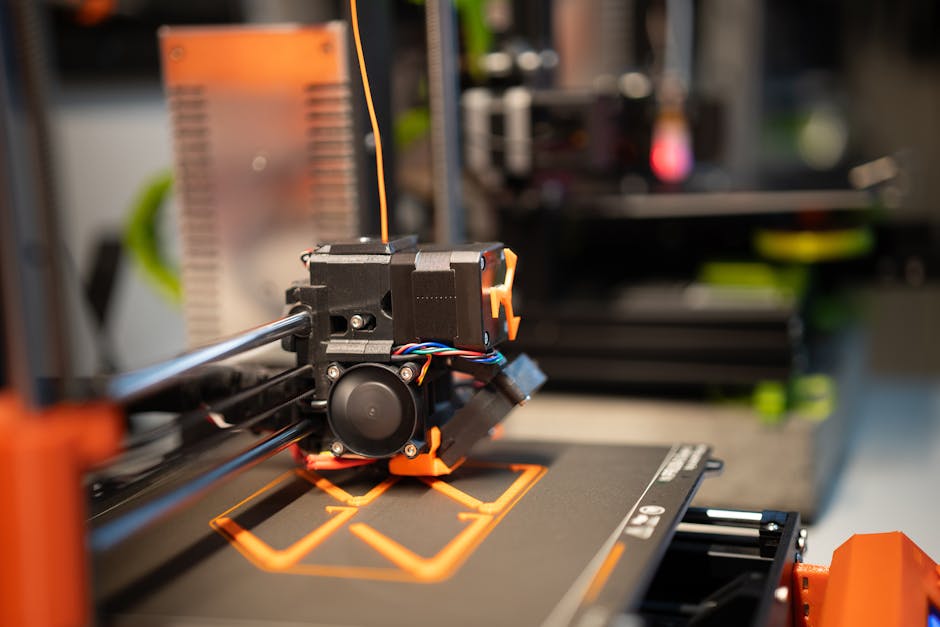
If AI is the “brain” of modern design, then advanced fabrication is the “body.” We’ve moved far beyond the days of 3D printers that only made brittle plastic trinkets. Today, we are talking about real-world production-ready parts that are often stronger and more complex than anything made with traditional molds or CNC machines.
A major player in this space is FUGO 3D | Revolutionary Centrifugal Additive Manufacturing. By using centrifugal force, this technology eliminates the “layer lines” that have long been the weakness of 3D printing. This results in parts with uniform material distribution and incredible surface quality. Similarly, the Carbon Design Engine – A New Way to Design 3D Printed Products is helping designers create “lattices”—complex, spider-web-like structures that turn solid materials into programmable building blocks.
Advanced Additive Manufacturing and 4D Printing
While 3D printing creates static objects, 4D printing adds the element of time. This is one of the most exciting new design technologies because it allows us to create products that change shape or function after they’ve been printed.
Imagine a surgical stent that expands only when it reaches body temperature, or a solar panel that unfolds itself when exposed to sunlight in space. These “smart materials” respond to external stimuli like heat, light, or moisture. You can dive deeper into how this works through How AI inverse design and 4D printing are shaping mechanical metamaterials.
| Feature | 3D Printing | 4D Printing |
|---|---|---|
| Structure | Static, fixed shape | Dynamic, shape-shifting |
| Material | Standard polymers/metals | Stimuli-responsive “smart” materials |
| Function | Immediate use | Adaptive use over time |
| Complexity | High geometric freedom | High geometric and functional freedom |
Mechanical Metamaterials and Lattice Design
We are now entering the era of “Mechanical Metamaterials.” These are structures where the behavior—how it bounces, bends, or breaks—is determined by its geometry rather than its chemical makeup. By using the tag/design-industry standards for lattice design, engineers are creating helmet liners that absorb impact better than foam and shoes that return energy to the runner with every step.
The stats are staggering: AI-optimized metamaterials can reproduce target mechanical behaviors with nearly 90% accuracy. Some braided metamaterials have demonstrated an energy absorption capacity of 3.3 J/g, making them ideal for high-stakes industries like aviation and defense.
Immersive Experiences and Intellectual Property
Design isn’t just about the physical object; it’s about how we communicate that object to the world. Augmented Reality (AR) and Virtual Reality (VR) have become essential new design technologies for user experience testing and client presentations.
According to the Top 6 tech trends you should keep an eye on in 2025, immersive prototyping allows us to walk through a building or sit inside a car before a single brick is laid or a piece of metal is cut. This reduces the risk of expensive mistakes and allows for a much more collaborative relationship with clients.
Blockchain for Designers
As we create more digital assets, the question of “who owns what” becomes critical. Blockchain is stepping in as a vital tool for protecting intellectual property. Through smart contracts, designers can automate licensing and royalty payments. If someone uses your 3D model or digital asset, the blockchain can verify ownership and ensure you get paid instantly.
This is particularly relevant for those working in the digital space, such as our readers following tag/design-wordpress. Decentralized platforms are enabling new models of collaboration where contributors from across the globe can work on a single project with guaranteed transparency and fair compensation.
Navigating Ethics and the Future of the Industry
With great power comes great responsibility. As we embrace these new design technologies, we must also face the challenges they bring. AI bias is a real concern—if the data used to train an AI is flawed, the designs it generates could be exclusionary or even dangerous.
Furthermore, the resource consumption of these technologies is significant. Running massive AI models and high-end 3D printers requires a lot of energy. As we look toward Designing Emerging Technologies in 2026, we must prioritize ethical design that considers data privacy and environmental impact.
Getting Started with New Design Technologies
If you’re feeling overwhelmed, don’t worry. You don’t need a PhD in computer science to start using these tools. Here are a few actionable tips:
- Experiment with Low-Code Tools: Start with AI plugins for tools you already use, like Adobe Sensei or Figma’s AI features.
- Try Generative Design: Many CAD platforms, like Autodesk Fusion 360, have built-in generative design modules that are very user-friendly.
- Learn the Lingo: Understanding the difference between “topology optimization” and “generative design” will help you communicate better with engineers and clients.
- Focus on Hybrid Skills: The most successful designers of the future will be those who can blend creative storytelling with technical oversight.
For those focused on web and UI, checking out our category/wordpress-elementor section can provide practical ways to integrate modern design aesthetics into your digital platforms.
Frequently Asked Questions
What is the difference between generative design and generative AI?
While they sound similar, they serve different purposes. Generative AI (like Midjourney or ChatGPT) produces “probable” outputs based on patterns in data—it’s great for brainstorming and images. Generative design uses specific engineering constraints and physics-based simulations to find the “optimal” solution for a functional problem.
How does 4D printing differ from traditional 3D printing?
The difference is the “fourth dimension”—time. 3D printing creates a static object. 4D printing uses special materials that allow the object to change its shape, properties, or function when exposed to a trigger like heat, water, or light after it has been printed.
How can blockchain protect a designer’s intellectual property?
Blockchain creates an unchangeable record of ownership. By minting a design as a digital asset or using smart contracts, a designer can prove exactly when they created a work. It also allows for automated royalty payments, so the designer is compensated every time the file is used or sold.
Conclusion
At Apex Observer News, we believe that staying ahead of the curve is the only way to thrive in a tech-driven landscape. These new design technologies are not just fancy gadgets; they are the keys to continuous transformation and creative expansion. By adopting these tools, we gain a massive market advantage, moving from “episodic change” to a state of constant innovation.
The future of design is a collaboration between human intuition and machine precision. It’s an exciting time to be a creator. We invite you to Explore the latest in emerging technologies and join us as we navigate this brave new world together.
